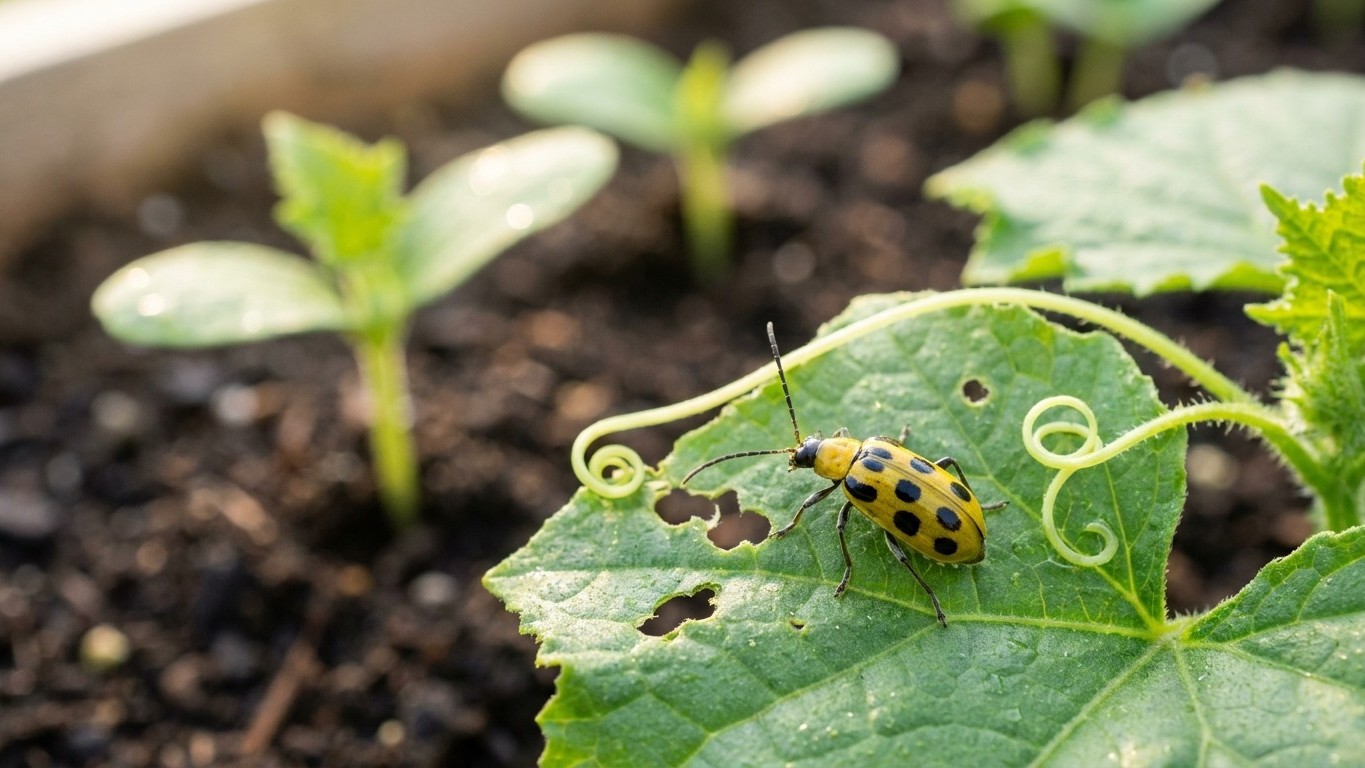

In Indiana, spotted cucumber beetles typically show up between mid-May and early June, right as cucurbit seedlings put out their first true leaves, and they stay active into September. The most reliable defenses are row covers timed to plant emergence, staggered planting dates that dodge the beetle’s peak flight, and targeted spraying only during flowering when populations cross a damage threshold. Waiting until you see chewed leaves is usually too late to prevent the bigger problem: bacterial wilt.
The Indiana Timeline: From First Emergence to Fall Decline

Spotted cucumber beetle (Diabrotica undecimpunctata howardi) doesn’t overwinter well in Indiana’s clay soils. Most of the adults that show up in Hoosier gardens each spring have migrated north from warmer states, riding wind currents once nighttime temperatures stay reliably above 50°F. That migration pattern explains why timing varies so much across the state.
Gardeners near Evansville and the Ohio River valley often see the first adults by mid-May. Farther north, around Fort Wayne or South Bend, the beetles rarely arrive in force before the first week of June. This roughly two-week lag tracks soil warming and matches the same north-south planting gradient Indiana gardeners already use for tomatoes and peppers.
Once established, spotted cucumber beetles produce one to two generations per season in Indiana, compared with three or more in the Deep South. Adults lay eggs at the base of cucurbit plants in June and July; the larvae, sometimes called southern corn rootworm, feed underground on roots for two to three weeks before pupating. A second wave of adults typically emerges in late July or August, which is why gardeners who thought they’d dodged the problem in June sometimes get hit harder in late summer.
Activity drops off sharply once nights consistently dip below 55°F, usually late September in central Indiana and a bit earlier up north. The beetles don’t die off immediately, though. Many simply migrate south again or tuck into leaf litter and mulch, looking for one last meal before the season closes.
Spotting the Damage Before It Spreads
The adult beetle is easy to identify: yellow-green body, about a quarter inch long, with twelve black spots arranged in three rows down the wing covers. It looks almost decorative until you find a dozen of them clustered on a single squash blossom.
Feeding damage shows up first on cotyledons and young leaves as small, irregular holes, sometimes described as shot-hole patterning. Adults also chew on flowers and can strip pollen before bees ever get a chance, which knocks down fruit set on cucumbers, squash, melons, and pumpkins. On seedlings, heavy feeding at the stem base can girdle the plant and kill it outright, something that catches a lot of first-time vegetable gardeners off guard in late May.
Below ground, the larval stage chews on roots and can tunnel into the base of stems. Plants with root damage often wilt during the hottest part of the day even when soil moisture looks fine, a symptom easy to mistake for drought stress or a watering problem.
Bacterial Wilt: The Bigger Threat Behind the Beetle
The beetle itself rarely kills a mature plant outright. The real damage comes from what it carries. Spotted cucumber beetle, along with its close relative the Striped cucumber beetle, transmits Erwinia tracheiphila, the bacterium responsible for cucurbit bacterial wilt. The bacteria live in the beetle’s gut and get deposited in feeding wounds, then move into the plant’s vascular system.
Cucumbers and muskmelons are highly susceptible; a plant that looked healthy on Monday can be a collapsed, wilted mess by Friday. Squash and pumpkins show more resistance, and watermelon is largely unaffected, according to plant pathology research from land-grant universities across the Midwest. Once a plant shows wilt symptoms from this bacterium, there’s no cure. The only real strategy is preventing the beetle from feeding on young plants in the first place, which is why early-season control matters more than late-season control.
What Actually Stops Spotted Cucumber Beetles in Indiana Gardens
Timing beats chemistry here. Because the beetles migrate in waves rather than emerging uniformly, a garden planted two weeks later or earlier than the neighborhood average sometimes escapes the worst pressure entirely. Indiana gardeners in the southern third of the state can sometimes get cucurbits up and past the vulnerable seedling stage before the first big flight arrives, if they plant in early May under protection.
Row covers are the single most effective physical barrier, but only if they go on at planting and come off before flowering starts, since cucurbits need pollinators once blossoms appear. Floating row cover made of spun polyester lets light and water through while blocking adult beetles from reaching seedlings during the highest-risk two to three weeks. Secure the edges with soil or landscape staples; beetles will find any gap.
A few other approaches consistently show up in extension research and pest management guides:
- Yellow sticky traps placed at plant height help monitor arrival timing so you know when to act, rather than guessing.
- Trap cropping with an early-planted, sacrificial cucurbit (often Blue Hubbard squash) draws beetles away from the main crop, since it’s highly attractive to them.
- Kaolin clay sprays applied to foliage create a physical barrier that discourages feeding without harming beneficial insects.
- Delaying transplant of susceptible varieties like cucumber and cantaloupe until after the first beetle wave passes reduces exposure during the most fragile growth stage.
- Removing plant debris and tilling under cucurbit residue in fall reduces overwintering habitat for any beetles that don’t migrate south.
When beetle numbers cross a real damage threshold, generally more than one beetle per plant on seedlings, insecticides become a reasonable option, but timing and choice matter. Spraying during flowering kills pollinators along with the pest, so any application should happen in early morning or evening after flowers close, or better yet, before flowering begins. Pyrethrin-based products break down faster and hit adult beetles hard with less residual harm to bees than some longer-lasting synthetic options. Neonicotinoid seed treatments, sometimes used commercially, carry documented risks to pollinators and aren’t something most home gardeners should reach for given the scale of a backyard plot.
Diatomaceous earth dusted around the base of seedlings offers a low-cost mechanical option, though it needs reapplication after rain and works better as a supplement to row covers than as a standalone fix.
Beneficial Insects and Natural Predators
Soldier beetles, tachinid flies, and certain nematode species prey on cucumber beetle eggs and larvae, though none of these provide the kind of fast knockdown a gardener needs once an infestation is visible on flowering plants. Braconid wasps parasitize adult beetles in some regions, but their impact in Indiana specifically hasn’t been well quantified compared to warmer states where beetle populations run higher year-round. Planting flowering herbs like dill and fennel near cucurbit beds can support these predator populations over a full season, which pays off more in year two and three of a garden than in the first year of a new bed.
Crop rotation helps limit larval buildup in soil, since the rootworm stage depends on cucurbit roots being present near where eggs were laid. Moving squash and cucumber beds to a different section of the yard each year, even just twenty feet away, disrupts that cycle enough to matter over a few seasons.
Resistant varieties exist but resistance in cucurbits tends to target the bacterial wilt pathogen rather than the beetle itself. Some modern squash and pumpkin cultivars bred for wilt tolerance survive beetle feeding better than heirloom cucumber varieties, which remain among the most vulnerable plants in a typical Indiana vegetable garden.
One detail that surprises a lot of Hoosier gardeners: spotted cucumber beetle isn’t limited to cucurbits. Adults will feed on corn silks, bean pods, and even soybean foliage when cucurbit hosts aren’t available, which is part of why row crop farmers in central Indiana track this pest alongside corn rootworm counts rather than treating it as strictly a garden problem.
Related guides
- Spotted cucumber beetle in Michigan: When It Shows Up and What Stops It
- Spotted cucumber beetle in Ohio: When It Shows Up and What Stops It
- Spotted cucumber beetle in Iowa: When It Shows Up and What Stops It
- Spotted cucumber beetle in Kansas: When It Shows Up and What Stops It
- Seedcorn maggot in Indiana
- Spotted cucumber beetle in Colorado: When It Shows Up and What Stops It
- Spotted cucumber beetle in New Mexico: When It Shows Up and What Stops It