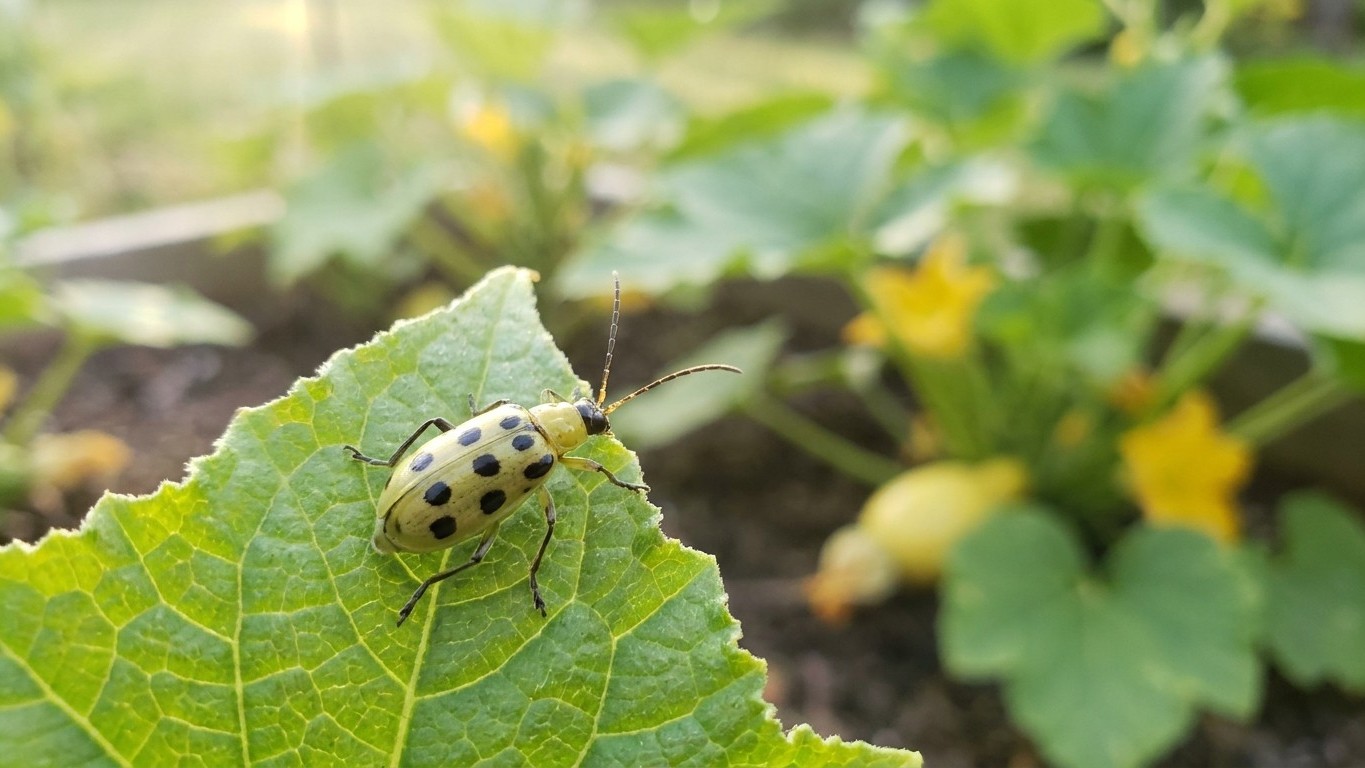

Spotted cucumber beetles show up in Alabama gardens as soon as the soil warms in early spring, and thanks to the state’s long growing season, they keep coming back for encore performances through the first frost. Stopping them comes down to three things: cleaning up garden debris where they overwinter, timing plantings to dodge their worst population spikes, and using row covers or targeted treatments once you spot the yellow-green beetles with the black polka dots on your squash and cucumber leaves.
What the Spotted Cucumber Beetle Looks Like

This beetle is small, roughly a quarter-inch long, with a pale yellow-green body and twelve black spots arranged across its wing covers. It gets confused with the striped cucumber beetle, which has three black stripes running lengthwise instead of spots. The distinction matters because the two species behave a little differently: striped cucumber beetles are the more aggressive vectors of bacterial wilt in cucurbits, while spotted cucumber beetles do more of their damage below ground, as larvae, and cause more cosmetic and structural harm to roots and tubers.
Adults have a long list of host plants. Cucumbers, squash, melons, and pumpkins top the menu, but they’ll also feed on beans, corn silk, peanut foliage, and the flowers of dozens of ornamental and vegetable species. That broad diet is one reason they’re so hard to starve out of a mixed home garden.
Alabama’s Timeline: From First Warm Days to Fall Harvest
Alabama’s climate stretches across several USDA hardiness zones, from cooler pockets in the north to the nearly subtropical Gulf Coast around Mobile and Baldwin counties. That range affects when beetles wake up. In south Alabama, adults can become active as early as late February or March during a warm stretch. In the Tennessee Valley and northern counties, they typically don’t appear in numbers until April.
Once temperatures settle into the 70s, the beetles move fast. A full life cycle, from egg to adult, can take as little as three to four weeks in Alabama’s summer heat, which means the state usually sees two to four generations per year. The first wave tends to hit young cucurbit seedlings hardest, right at the vulnerable cotyledon and first-true-leaf stage. A second and sometimes third wave shows up during flowering and fruit set in June and July, and a final generation can linger into September, feeding on late-planted squash and fall greens before cooler weather slows them down.
They don’t disappear entirely once frost arrives. Adults overwinter under leaf litter, garden mulch, and loose bark, and in the milder coastal counties, a hard freeze isn’t guaranteed every winter. That means some beetles can survive in a semi-dormant state and emerge again with barely a break, giving Alabama gardeners a longer effective season of pressure than growers in colder states ever deal with.
What the Damage Actually Looks Like
Adult beetles chew irregular holes in leaves and scar the surface of young fruit, leaving rough patches that make cucumbers and squash harder to sell or even just less appetizing on the kitchen counter. They also feed directly on flowers and pollen, which can reduce pollination rates on cucurbits that depend on bees to set fruit at all. On seedlings, a heavy beetle count can strip cotyledons fast enough to kill young plants outright before they ever get established.
Beyond the direct feeding, spotted cucumber beetles can transmit cucumber mosaic virus and, less efficiently than their striped cousins, bacterial wilt. A plant that suddenly wilts and dies mid-season despite adequate water is worth checking for the sticky, stringy sap test associated with bacterial wilt, though in Alabama that disease shows up less often than it does in cooler cucurbit-growing regions further north.
Southern Corn Rootworm: The Larval Stage
The larvae go by a different common name entirely: southern corn rootworm. These slender, cream-colored grubs live in the soil and feed on roots, and they’re a bigger economic problem for row-crop and vegetable farmers than the adults are. They tunnel into corn roots, chew scars into sweet potato and Irish potato tubers, and damage peanut pods underground. In home gardens, root damage often shows up as stunted, yellowing plants that seem to struggle despite decent weather and watering, a symptom easy to mistake for a nutrient problem until you dig up a plant and find chewed roots.
Stopping Them: Practical Controls That Work in Alabama
Fall cleanup matters more here than in states with reliably hard winters. Because Alabama’s mild season lets adults overwinter successfully in garden debris, clearing out spent cucurbit vines, mulch piles near old squash beds, and loose bark after harvest cuts down on the number of beetles that make it to spring. Rotating cucurbits to a different part of the yard each year adds another layer of disruption, since beetles that do survive the winter often emerge close to where they last fed.
Timing your planting is a low-cost tactic that Alabama Cooperative Extension System specialists often recommend. Delaying cucurbit seeding by even a week or two after the first beetle flush can let seedlings get past the fragile cotyledon stage before the heaviest early feeding pressure arrives. Floating row covers do the same job more directly: draped over transplants or seed rows at planting, they physically block adults from reaching the plants. The covers need to come off once flowers open, though, so pollinators can still get in to do their job.
A few additional tactics round out an integrated approach:
- Yellow sticky traps placed near cucurbit beds help monitor beetle numbers so you know when populations are climbing before damage gets severe.
- Trap cropping with Blue Hubbard squash, planted at the edge of a garden, pulls beetles toward a sacrificial plant and away from the main crop.
- Kaolin clay particle film sprayed on leaves creates a barrier that discourages feeding without harming beneficial insects.
- Beneficial nematodes applied to soil can reduce southern corn rootworm larvae before they damage roots and tubers.
When beetle counts climb past a manageable threshold, generally more than one beetle per seedling early on or five per plant during flowering, a targeted insecticide labeled for cucumber beetles becomes reasonable. Products containing carbaryl or permethrin are common choices, but timing the application for early morning or evening, when bees are least active on open blooms, protects the pollinators your squash and cucumbers still need to produce fruit. Spinosad and pyrethrin-based options offer a lower-impact alternative for gardeners trying to stay closer to organic standards.
Home gardens in Alabama’s Gulf Coast counties sometimes see a small resident population persist right through a mild winter inside cold frames or unheated high tunnels used for winter greens. Growers running that kind of season-extension setup often find exclusion netting worth keeping in place even during the off-season, since a beetle that survives December in a warm tunnel gets a two-month head start on the rest of the yard come spring.