
The spotted cucumber beetle typically shows up in Ohio gardens in late May, with populations building through June and peaking during the hot, humid stretch of July and August. Row covers installed before flowering, quick removal of dead plant debris in fall, and targeted use of spinosad or kaolin clay during peak activity are what actually knock this pest back. Waiting until damage is obvious rarely works, because by then eggs are already in the soil and the next generation is on its way.
Identifying the Spotted Cucumber Beetle

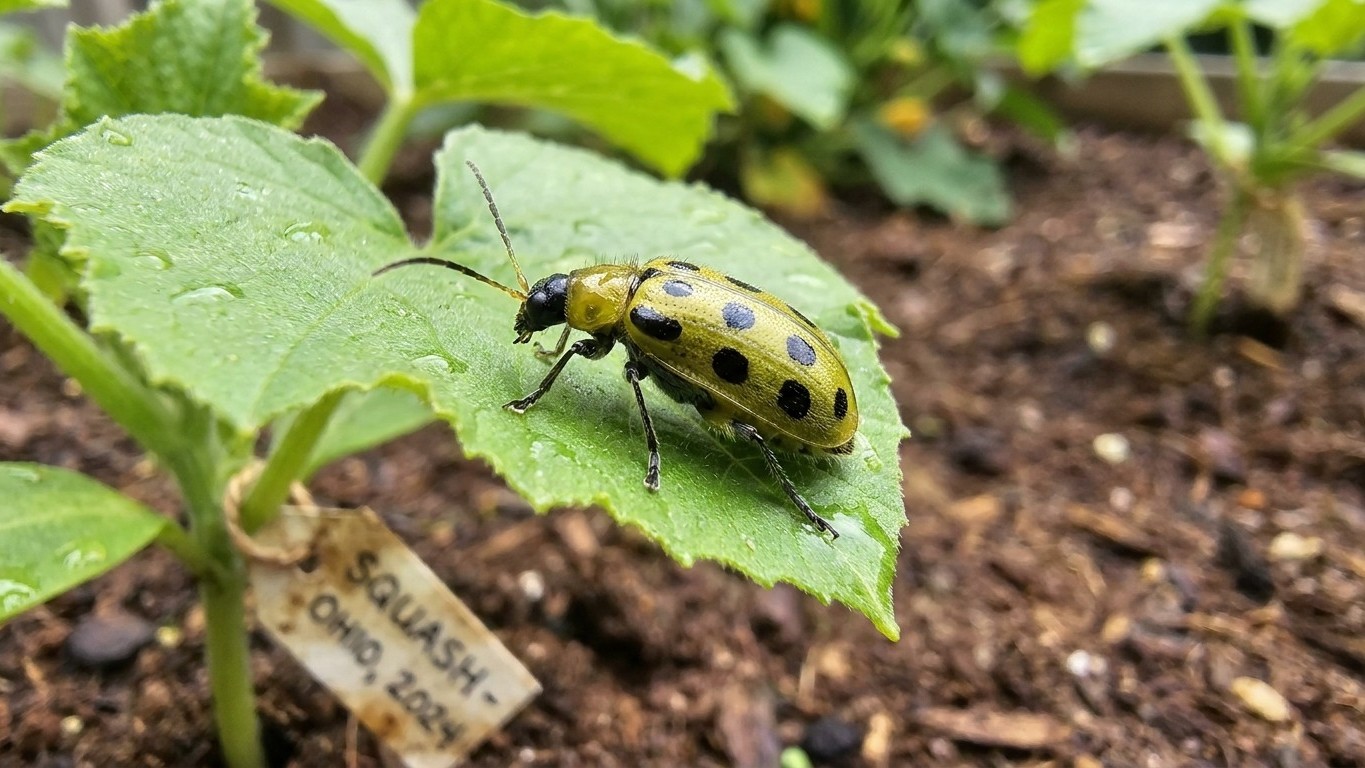
This insect measures about a quarter inch long, with a yellow-green body and twelve black spots arranged across its wing covers. The head and legs are black, and the overall shape is oval and slightly flattened, easy to miss when it’s tucked under a squash leaf. Gardeners in Ohio often confuse it with the striped cucumber beetle, but the difference is simple: stripes run lengthwise on one species, spots dot the other. Both belong to the same beetle family and cause similar headaches, but the spotted version has a wider host range and a nastier larval stage.
That larval stage goes by a different name entirely: southern corn rootworm. The larvae are thin, white, worm-like grubs with a brown head, living underground and chewing on roots rather than leaves. Anyone who’s pulled up a stunted seedling and found the roots gnawed to threads has likely met this stage without knowing it.
How It Differs From Other Cucumber Beetles
Ohio gardens see both spotted and striped cucumber beetles, sometimes in the same bed. The striped species tends to be the more aggressive early-season threat to young cucurbit seedlings and is the primary carrier of bacterial wilt, a disease that can collapse a cucumber vine within days. The spotted cucumber beetle feeds on a much broader menu, including beans, corn silk, and dozens of flowering ornamentals, which means control strategies aimed only at cucurbits will miss part of the problem.
When It Shows Up in Ohio, Season by Season
Adults become active as soil temperatures climb past 55 degrees, usually mid to late May across central and northern Ohio, a bit earlier in the Ohio River valley counties to the south. Southern Ohio’s warmer microclimate along the river often sees beetles a week or two ahead of Columbus or Cleveland-area gardens.
Unlike some pests that hibernate reliably in one spot, spotted cucumber beetle populations in the Midwest are partly replenished by adults that migrate up from warmer states each spring. That migration pattern means numbers can vary sharply year to year depending on weather systems further south, not just local winter conditions. A mild March in Ohio doesn’t guarantee a light beetle year if a warm front pushed a wave of adults north in April.
Ohio typically sees one full generation per season, occasionally stretching into a partial second generation in warmer years or in the southern third of the state. That second wave, when it happens, tends to show up in August, right as late-planted squash and melons are setting fruit. Cool, wet springs slow beetle activity, while a dry, warm June accelerates egg-laying and larval development in the soil.
Weather Triggers Worth Watching
Beetle activity tracks closely with degree-day accumulation, the same metric farmers use to predict corn rootworm emergence. A stretch of days above 80 degrees in June, common in most Ohio summers, speeds up the larval feeding cycle underground and shortens the window between egg-laying and adult emergence. Gardeners who track first-flower dates on their cucumbers or squash have a rough proxy: beetle pressure usually spikes within a week or two of the first blooms opening, since flowers and pollen are a major food source for adults.
What Gets Damaged and How
Adult beetles chew irregular holes in leaves and flowers, and they’ll happily feed on ripening fruit rinds if given the chance, leaving shallow scars that reduce a squash or melon’s shelf appeal even when the plant survives fine. Corn silk feeding is another common complaint, where beetles clip silks short enough to interfere with pollination and leave ears with missing kernels at the tip.
The bigger economic hit usually comes from below ground. Southern corn rootworm larvae tunnel into corn roots, weakening stalks enough that a summer windstorm can topple entire rows. In vegetable gardens, larvae will also bore directly into melon and cucumber fruit that touches bare soil, creating entry points for rot. Green beans aren’t spared either; larvae feeding on bean roots can stunt young plants before they’ve had a chance to establish.
Disease transmission is a smaller concern with this species compared to its striped cousin, but it’s not zero. Spotted cucumber beetles can carry and spread some of the same bacterial and viral pathogens that affect cucurbits, particularly when populations are dense and moving between plants during peak feeding.
What Actually Stops It
Control works best as layers rather than a single fix, since adults, eggs, and larvae each respond to different tactics.
Cultural and Physical Controls
Floating row covers over cucurbit seedlings block adult beetles from reaching young plants during the vulnerable first few weeks. They need to come off once flowers open, though, or pollinators get shut out along with the pests. Crop rotation matters more than most gardeners assume: moving cucurbits and corn to a different bed each year interrupts the larval life cycle in the soil, since rootworm larvae can’t travel far to find a new host. Clearing plant debris and tilling garden beds in fall exposes overwintering adults to cold and predators, cutting into the population that would otherwise restart the cycle come spring.
Delayed planting is another option worth considering in years with a known early beetle migration. Pushing cucumber and squash seeding back by a week or two so seedlings emerge after the first adult wave has passed can reduce the odds of severe seedling damage, though it trades off against a shorter harvest window.
Monitoring That Actually Catches Problems Early
Yellow sticky traps set at plant height near flowering cucurbits give a reliable early warning, since beetles are strongly attracted to yellow. Checking under leaves in the early morning, when beetles are less active and easier to spot, catches infestations before flower and fruit damage becomes visible. A simple threshold many Ohio State University Extension fact sheets reference for cucumber beetles generally: once counts exceed one beetle per plant on young seedlings, or five per plant on flowering plants, it’s time to act rather than wait.
Biological and Targeted Chemical Options
Beneficial nematodes applied to soil around the root zone can reduce larval survival, since certain nematode species actively hunt rootworm larvae underground. This works best as a preventive measure applied before larvae reach damaging numbers, not as a rescue treatment once roots are already compromised.
For adult beetles above ground, spinosad-based products offer control with less impact on pollinators compared to broad-spectrum insecticides, and they work well when applied in the evening after flowers close for the day, avoiding direct contact with foraging bees. Kaolin clay, sprayed as a fine particle film on leaves and fruit, deters feeding without killing beneficial insects, making it a reasonable choice for gardeners trying to limit pesticide use. Pyrethrin sprays knock down active adult populations quickly but break down fast in sunlight, meaning repeat applications are often necessary during a heavy infestation week.
Straight insecticidal soap has limited effect on adult cucumber beetles because of their hard wing covers, so gardeners expecting soap sprays to solve a beetle problem are often disappointed. It’s more useful against soft-bodied pests like aphids sharing the same bed.
Putting It Together for an Ohio Growing Season
The realistic playbook for most home gardens in Ohio starts with row covers at planting, moves to active scouting with sticky traps once flowers appear, and layers in spinosad or kaolin clay only if beetle counts cross that action threshold. Fall cleanup and crop rotation handle the longer game, reducing next year’s starting population rather than fixing this year’s problem.
Corn growers dealing with rootworm damage specifically should note that soil insecticide treatments at planting are far more effective against larvae than any foliar spray applied later to adults, since by the time adults are visible above ground, root damage from that generation’s larvae has already happened.
Related guides
- Spotted cucumber beetle in Michigan: When It Shows Up and What Stops It
- Spotted cucumber beetle in Kentucky: When It Shows Up and What Stops It
- Spotted cucumber beetle in Ontario: When It Shows Up and What Stops It
- Spotted cucumber beetle in South Carolina: When It Shows Up and What Stops It
- Spotted cucumber beetle in Colorado: When It Shows Up and What Stops It
- Spotted cucumber beetle in Iowa: When It Shows Up and What Stops It