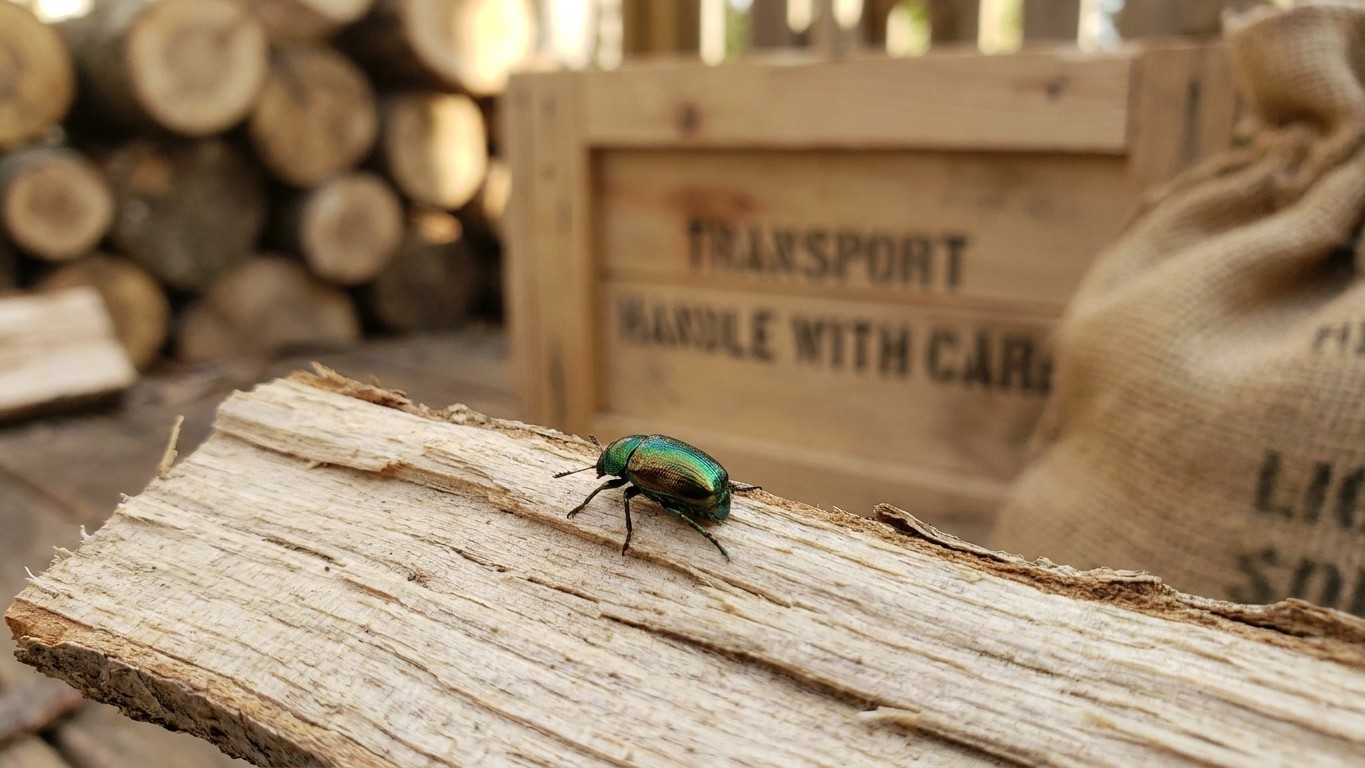

As of now, emerald ash borer has not been confirmed anywhere in Newfoundland and Labrador. That makes the province one of the last EAB-free zones left in Atlantic Canada, alongside a shrinking list of regions the beetle hasn’t reached. But “not detected yet” isn’t the same as “safe forever.” The insect has proven it can hitch a ride on firewood, nursery stock, and even packing material, and the province’s isolation only works as protection if people keep it that way.
The beetle itself, a metallic green wood-borer about the size of a grain of rice, has already killed hundreds of millions of ash trees since it turned up in Michigan back in 2002. It has since spread through Ontario, Quebec, the Maritimes, and parts of Manitoba. Newfoundland and Labrador sits geographically apart from that spread, and so far, that gap has held.
Emerald Ash Borer Status in Newfoundland and Labrador: No Detections Yet

No larvae, no adult beetles, no confirmed exit holes tied to Agrilus planipennis have turned up in surveys or public reports across the island or in Labrador. The Canadian Food Inspection Agency maintains regulated zones for EAB in provinces where it’s established, restricting the movement of ash wood, ash nursery stock, and firewood out of those areas. Newfoundland and Labrador falls outside any current regulated zone, which is a meaningful fact for anyone shipping wood products into the province or bringing firewood back from a trip to the mainland.
That said, monitoring traps (the purple prism traps you might spot hanging in tree canopies near ports or urban parks) have been part of routine surveillance efforts in various Canadian provinces for years. Their presence isn’t a sign of an infestation. It’s the opposite: a sign that agencies are watching closely precisely because the risk of an accidental introduction never hits zero.
Why the island’s geography has bought it time
Three factors have kept EAB out longer than almost anywhere else in eastern Canada, and none of them are permanent guarantees.
First, there’s water. Newfoundland and Labrador has no road or rail connection to the rest of the continent. Every vehicle, every load of firewood, every piece of nursery stock has to cross by ferry (mainly the Marine Atlantic routes between North Sydney and Port aux Basques or Argentia) or arrive by air or container ship. That’s a genuine chokepoint, and it’s exactly where CFIA inspection and public awareness campaigns focus their attention.
Second, the province’s forests just don’t offer much ash for the beetle to exploit. Newfoundland’s woodlands are dominated by balsam fir, black spruce, and white birch. True ash trees (the genus Fraxinus, which includes white ash and black ash) are scarce in the wild and mostly show up as planted street trees or ornamentals in towns and cities, not as a forest component the way they are in Ontario or the Maritimes. Fewer host trees means an accidental EAB introduction would have a harder time establishing and spreading compared to, say, southern Ontario’s ash-heavy river valleys.
Third, distance itself matters. EAB adults are decent fliers, but they don’t cross open ocean on their own. Every confirmed spread of this insect into new territory has followed human transport, usually firewood moved by campers, movers, or landscapers who didn’t realize what they were carrying.
The tree name that confuses everyone
Here’s where a lot of well-meaning residents get tripped up. Newfoundland and Labrador has plenty of mountain-ash trees (genus Sorbus) planted along streets and in yards, especially in urban parts of the island. Despite the name, mountain-ash isn’t a true ash at all. It’s more closely related to apples and roses than to the Fraxinus species that emerald ash borer actually attacks.
That distinction matters for two reasons. Anyone worried about EAB reaching their property should first figure out whether they actually own a true ash tree or a mountain-ash, because the second one simply isn’t at risk from this particular pest. And when reports of “dying ash trees” circulate locally, checking the species first can save a lot of unnecessary alarm, or worse, missed identification of a different, unrelated tree problem.
How to tell them apart quickly
True ash trees have compound leaves with five to nine smooth-edged leaflets arranged opposite each other on the stem, along with distinctive diamond-shaped bark patterns on mature trunks. Mountain-ash has similar-looking compound leaves but with more, narrower leaflets that have serrated (toothed) edges, and it produces clusters of white flowers in spring followed by bright orange-red berries in fall, something true ash never does.
Signs that would actually mean trouble
If EAB ever does establish itself in Newfoundland and Labrador, the early signs would likely go unnoticed for a while. That’s part of what makes this insect so damaging elsewhere: infestations often run one to three years before visible symptoms show up, by which point the beetle has already spread beyond a single tree.
Once symptoms appear, they tend to follow a predictable pattern:
- Canopy dieback starting at the top of the tree and working downward, often noticeable by midsummer
- Small D-shaped holes in the bark, about the width of a grain of rice, where adult beetles have chewed their way out
- Vertical bark splits revealing S-shaped or serpentine tunnels underneath, carved by feeding larvae
- Clusters of new shoots sprouting from the trunk or roots (called epicormic growth), a stress response as the tree tries to compensate for lost canopy
- Patches of bark stripped away by woodpeckers hunting for larvae underneath, sometimes called “blonding” because of the lighter wood color left exposed
Any one of these on its own could point to something else entirely, drought stress, a different borer, storm damage. But two or three showing up together on a true ash tree is worth reporting rather than ignoring.
What actually stops it from arriving
The single biggest lever residents control is firewood. Every provincial and federal agency working on invasive forest pests repeats the same message: buy firewood where you’ll burn it, and burn it where you buy it. Firewood transported from EAB-regulated provinces, even a small bundle tossed in the trunk for a camping trip, is the most common way this beetle jumps to new territory. Larvae and even adult beetles can survive hidden inside split logs for months.
Nursery stock is the second pathway. Ash saplings and ornamental ash shipped from infested regions have carried EAB before, which is exactly why CFIA regulates the movement of ash nursery material out of affected provinces. Anyone ordering ash trees for landscaping should ask a supplier directly where the stock originated and whether it’s coming from a regulated zone.
Reporting matters more than most people assume. A resident who spots a suspicious tree and photographs the D-shaped holes or the bark damage, then reports it through provincial forestry contacts or the CFIA’s reporting system, can trigger inspection before an isolated find turns into an established population. Early detection has been the difference, in other provinces, between removing a handful of trees and losing entire municipal ash canopies over a decade.
The Canadian Food Inspection Agency maintains detailed identification guides and regulated area maps for emerald ash borer, useful for anyone bringing wood-based materials into the province from elsewhere in Canada. Details are available through the agency’s official emerald ash borer information page.
Municipal tree inventories in some Newfoundland communities have started noting which street plantings are true ash versus mountain-ash or other species, partly in preparation should the pest ever cross the gulf. That kind of quiet bookkeeping doesn’t make headlines, but it’s the sort of groundwork that turns a potential outbreak into a contained, manageable problem instead of a repeat of what happened to urban ash populations in cities like Ottawa or Winnipeg, where tens of thousands of street trees had to come down once the beetle got a foothold.