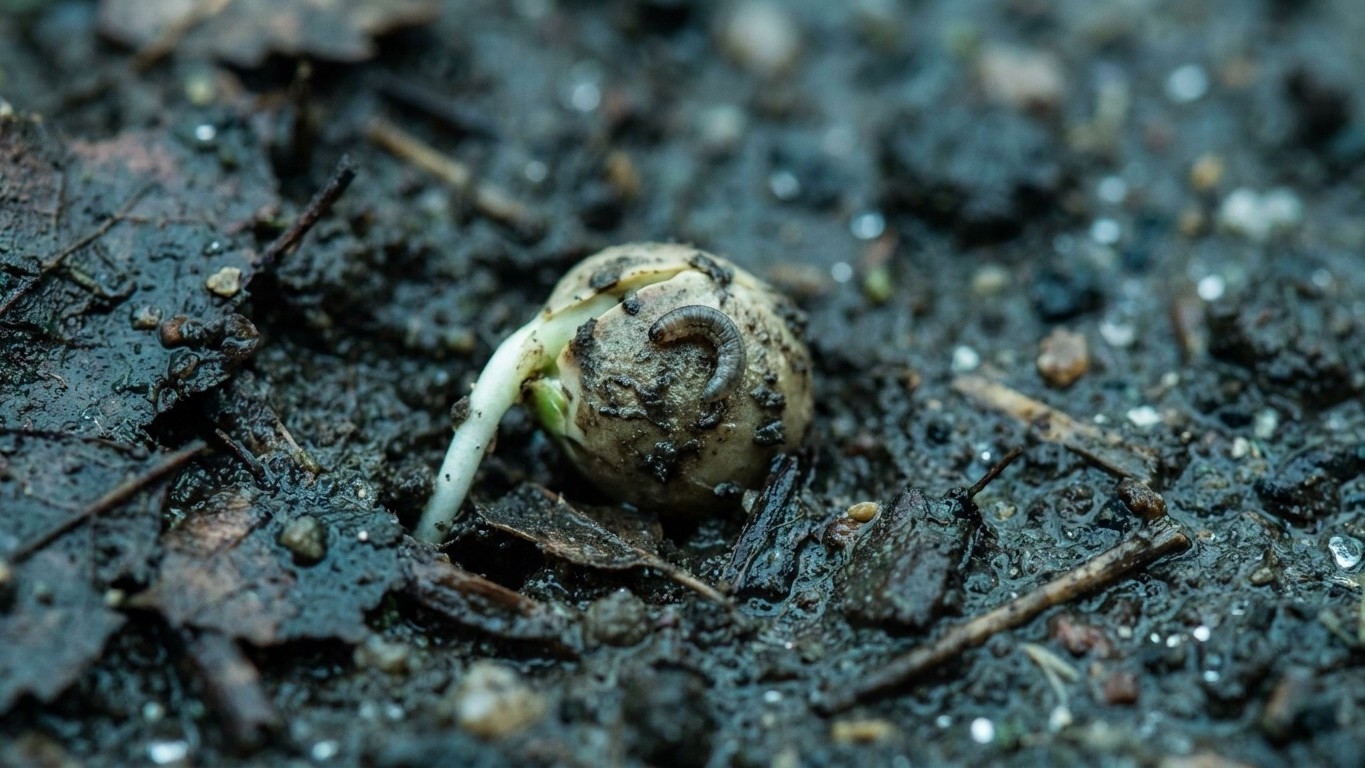

Seedcorn maggot shows up earliest and does the most damage in Newfoundland and Labrador during the wet, sluggish weeks right after the ground thaws, typically mid-May into early June on the Avalon Peninsula and a bit later farther west and north. The fly needs cool, saturated soil and rotting organic matter to lay eggs, and NL’s maritime spring delivers both in spades. What stops it isn’t a single spray. It’s timing your planting to skip the cold-soil window, keeping fresh manure and green residue out of the seed row, and helping seeds germinate fast so the larvae have nothing to eat.
This isn’t a pest most Newfoundlanders have heard of by name, but if you’ve ever planted a row of peas or beans in late May and watched half of them never come up, you’ve likely met it already.
Why Newfoundland and Labrador’s Climate Favors This Pest

The seedcorn maggot (Delia platura) is a small, gray-brown fly that looks almost identical to a housefly, only smaller, maybe a quarter-inch long. It’s not picky about geography. What it cares about is soil temperature and moisture, and that’s exactly where the island’s climate works against gardeners and small-scale growers.
Coastal fog, persistent spring drizzle, and ocean-cooled air keep soil temperatures in Newfoundland and Labrador lagging weeks behind inland Canadian provinces at the same latitude. While a grower in southern Ontario might see workable, warming soil by late April, much of the Avalon Peninsula and Central Newfoundland is still sitting on cold, saturated clay or podzolic soil well into May. St. John’s averages over 4.5 feet of precipitation a year, spread across more rainy days than almost any other Canadian capital, and a lot of that falls in spring. Add heavy, poorly draining soils common across much of the province, and you get a long stretch of cool, wet ground, precisely the habitat seedcorn maggot females look for when deciding where to lay eggs.
Labrador’s shorter, colder season pushes the risk window later, but doesn’t eliminate it. Anywhere the ground stays cold and damp for an extended period after snowmelt, before it warms enough for seeds to sprout quickly, the fly gets its opening.
Life Cycle and the Timing That Matters
The Soil Temperature Trigger
Adult flies emerge from overwintering pupae once soil temperatures climb into the low 50s Fahrenheit, roughly 10 to 12°C, measured a few inches down. That threshold usually arrives on the island in early to mid-May, though a cold, late spring, which NL sees more often than not, can push emergence into late May. The females are drawn to freshly disturbed, moist soil rich in decaying plant matter or manure. That’s the smell that tells them a good egg-laying site, and a coming meal for their larvae, is nearby.
Eggs hatch in a matter of days, and the small white maggots tunnel straight into planted seeds or the soft tissue of germinating seedlings before they ever break the surface. A seed that’s been hollowed out won’t sprout at all. A seedling that gets tunneled through its stem below ground often collapses or shows a wilted, stunted top even though nothing looks wrong above the soil line at first glance.
More Than One Generation a Season
Newfoundland and Labrador’s cool summers actually work in gardeners’ favor here compared to warmer provinces. Seedcorn maggot can produce three or more generations per year in milder regions, but the island’s short, cool growing season generally limits activity to one strong spring generation with a smaller, less damaging second one in mid to late summer. The real threat window is narrow: roughly the four to six weeks after soil temperatures cross that 50°F mark and before it warms past the low 60s, when seeds germinate quickly enough to outrun the pest.
Which Crops and Planting Conditions Are Most at Risk
Seedcorn maggot doesn’t attack plants once they’re established. It’s strictly a seed-and-seedling pest, which means the risk is concentrated entirely in that first direct-seeding window. In Newfoundland and Labrador gardens and market plots, the crops most often hit include:
- Peas and beans, especially when direct-seeded early into cold ground
- Sweet corn
- Cucumbers, squash, and other cucurbits started from seed outdoors
- Onions grown from seed rather than sets or transplants
- Beets and spinach sown early into wet soil
The common thread isn’t the plant species so much as germination speed. Any seed that sits in cold, wet soil for one to two weeks before sprouting gives the fly’s larvae a long feeding window. Crops started as transplants, or seeds sown into soil that’s already warmed and dried out a bit, largely dodge the problem because they’re up and growing before the maggots can do meaningful damage.
Fields or garden beds that received fresh manure, green cover crop residue, or a heavy dose of compost shortly before planting carry noticeably higher risk. The decomposing organic matter is what draws egg-laying females in the first place, and NL growers who amend soil with manure from livestock operations, common in areas like the Codroy Valley or around Musgravetown, should pay particular attention to timing that application well ahead of the seed row rather than right before planting.
What Actually Stops Seedcorn Maggot
Control comes down to making the soil an unattractive place to lay eggs and making germination fast enough that larvae run out of time.
Delay direct seeding until soil warms. Waiting even one to two extra weeks, until soil consistently reads above 55°F rather than jumping in at the first thaw, cuts risk substantially because germination speeds up and outpaces larval feeding. A basic soil thermometer, the kind sold for a few dollars at most garden centers, takes the guesswork out of this.
Warm the soil artificially. Black plastic mulch or clear plastic laid over beds a week or two before planting raises soil temperature several degrees, which matters a lot in a climate where the ground stays stubbornly cold into May. Raised beds also warm and drain faster than flat, in-ground rows, a real advantage on NL’s heavy clay soils.
Manage organic matter timing. Incorporate manure, compost, or cover crop residue at least three to four weeks before planting, giving it time to break down and lose its attractiveness to egg-laying flies. Avoid tilling fresh organic matter directly into the seed row right before sowing.
Improve drainage. Since the fly favors saturated soil, anything that helps water move through faster, whether that’s adding compost for structure over time, avoiding compaction, or simply choosing better-drained ground for early plantings, lowers the odds of an infestation.
Use transplants for vulnerable crops where practical. Starting squash, cucumbers, and corn indoors or in a cold frame and setting out established seedlings sidesteps the vulnerable seed stage entirely. This is standard practice for a lot of NL gardeners already, given the short season, and it doubles as pest insurance.
Consider treated seed for larger plantings. Commercially available insecticide- or fungicide-treated seed, common for corn and some vegetable seed lots, offers a layer of protection during the vulnerable germination period. Home gardeners planting a small backyard row usually don’t need this, but market growers seeding larger areas of peas, corn, or beans may find it worthwhile.
Rotate planting sites. Avoid planting the same susceptible crop, or following heavy manure application, in the same bed two years running. Pupae overwinter in soil, and rotating disrupts the buildup of a local population.
Telling Seedcorn Maggot Damage Apart from Other Problems
Poor germination in a Newfoundland spring garden gets blamed on a lot of things, cold snaps, slugs, birds pulling seeds, damping-off fungus, and it’s worth knowing what actually points to seedcorn maggot specifically. Dig up a few of the seeds or seedlings that failed to emerge. A seed that’s been fed on will look partially or fully hollowed out, sometimes with visible small tunnels. A seedling that came up wilted or collapsed at the base may show a maggot, small, white, and legless, about a quarter-inch long, still feeding inside the stem or root area just below the soil surface.
If instead you find seeds that are simply rotted and mushy with no tunneling, that’s more likely damping-off, a soil fungus problem that also thrives in the same cold, wet conditions but calls for different fixes, mainly better drainage and sometimes a fungicide seed treatment rather than delayed planting.
One detail that trips up a lot of first-time growers on the island: a spotty, patchy failure to emerge across a row, rather than uniform failure, often points to seedcorn maggot, since the flies lay eggs in clusters near attractive organic matter rather than evenly across a bed. If one section of a pea row came up fine and another twelve inches away failed almost completely, that patchiness is a useful clue before you even dig for maggots.