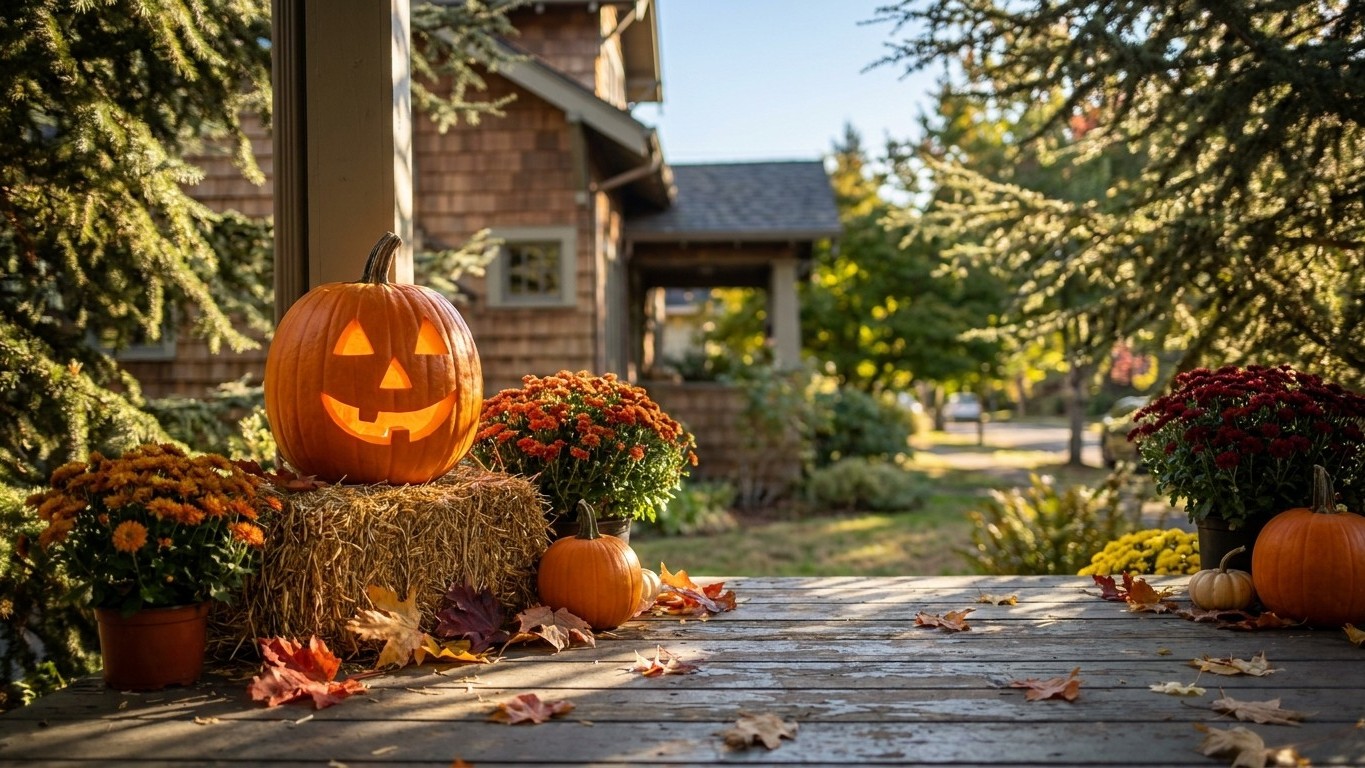

Around western Oregon, the mean first fall frost lands somewhere between November 11 and November 27, weeks after Halloween arrives. That means a pumpkin sitting on a Portland-area porch through October 31 almost never faces a freeze risk before trick-or-treaters show up. The real question isn’t “will it freeze before I carve it,” it’s how to keep a whole pumpkin in good shape during the weeks leading up to that date, since frost isn’t the thing working against you here.
The short answer

If you live in the Willamette Valley, Portland metro, or anywhere west of the Cascades, you have a wide window. The mean first fall frost for this region runs from around November 11 to around November 27, based on NOAA climate normals. That’s not a single date, it’s an average built from three decades of weather, so treat it as a general marker rather than a guarantee. But the practical takeaway is simple: frost is not the thing standing between you and a good jack-o’-lantern on October 31. It typically arrives one to four weeks after Halloween, which means you can buy a pumpkin in early October, store it properly, and carve it whenever you like without worrying that a hard freeze will ruin it beforehand.
This changes the whole calculation compared to states where frost shows up in early or mid-October. In western Oregon, the pumpkin’s enemy isn’t the thermometer dropping below 32 F, it’s everything else that happens to a cut squash sitting out for days: soft spots, mold at the cut edges, collapse. Since the region doesn’t force an early carving deadline through cold, you get to choose your own timeline based on how you want the pumpkin to look on the actual night.
One important caveat: this frost window applies to the western, marine-influenced part of the state, the area represented by weather stations like Portland’s. Central and eastern Oregon are high desert, with a much shorter growing season and frost dates that arrive considerably earlier in the fall. If you’re carving in Bend, Redmond, La Grande, or anywhere east of the Cascades, don’t borrow the Willamette Valley’s calendar. The climate is a different animal, and a pumpkin sitting outside there faces a real freeze risk well before Halloween in some years.
So for most of the state’s population centers, the short answer is: carve whenever suits your plans, anywhere from a week out to the night of, since frost isn’t forcing your hand. The bigger factor is storage, which the next section covers in detail.
Frost or heat: which one gets it here
The cold end
Start with the coldest month’s mean daily minimum for the Portland reference station: 36.2 F. That’s not the record low for the season, and it’s not a single frigid night, it’s the average low across the coldest month of the year. Sitting above freezing, that number tells you something useful: even in the depths of winter, western Oregon’s typical nightly low doesn’t plunge dramatically below 32 F on a regular basis. Combine that with a first fall frost that doesn’t usually show up until well into November, and the case for freeze damage before Halloween gets pretty thin. A pumpkin left on an uncovered porch through late October in Portland, Salem, or Eugene isn’t facing the same cold-snap risk that a pumpkin in, say, the upper Midwest would be facing on the same date.
The warm end
Here’s where western Oregon actually earns its reputation as tricky pumpkin territory: warmth, not cold. The ideal storage band for a whole pumpkin is 45 to 50 F, according to University of Illinois Extension. Late October daytime temperatures in the Willamette Valley regularly climb into the 50s and sometimes higher, especially in a mild stretch, and even overnight lows often sit right at or above that upper 50 F mark rather than dipping into the 40s. That means an uncovered pumpkin outdoors during the day can spend a good chunk of its pre-Halloween life running warmer than the ideal range, which speeds up softening and shortens how long it holds up once cut. In this territory, heat is the more realistic threat to a pumpkin’s shelf life than frost, which is the opposite of what a lot of colder-climate advice assumes.
Where to keep it until you carve
Given a mild, damp climate where late-October afternoons can run warmer than ideal and nights rarely freeze, the smartest move is finding the coolest, driest, darkest spot available rather than relying on the porch by default.
- Check an unheated garage or detached shed first. These spaces in western Oregon typically stay closer to the 45-50 F band than an open porch does during a warm afternoon, and they keep the pumpkin out of direct sun.
- A basement or crawl space works well if it stays dry. Oregon’s rainy season starts ramping up in October, so avoid any storage spot prone to dampness or standing moisture, which speeds rot regardless of temperature.
- Keep it off concrete and off direct ground contact. A wood shelf, cardboard, or a stack of newspaper underneath reduces moisture transfer from a cool slab or damp soil.
- Avoid the kitchen counter near a fruit bowl. Ripening fruits and vegetables, apples, tomatoes, potatoes, give off ethylene gas that accelerates a pumpkin’s aging, even before it’s carved.
- Skip the sunny windowsill or south-facing porch railing. Direct sun through glass or on exposed wood can push the surface temperature well past 50 F on a clear October afternoon, undoing the benefit of an otherwise mild climate.
- Leave the stem alone entirely. A pumpkin should never be carried or lifted by its stem. One to two inches of intact stem acts as a seal over the top; once it snaps off, that exposed spot becomes an entry point for rot, regardless of where you’re storing it.
No extension service publishes a specific number of days a carved pumpkin lasts, and none recommends bleach dips or petroleum jelly coatings as preservation methods, those come from general internet advice rather than research. What’s actually documented is simpler: choose a firm pumpkin with an intact stem and no soft spots, keep it whole and stored near 45-50 F for as long as possible, and carve it close to the day you plan to display it.
Checking this against your own county
Climate normals are built from long-term averages at specific weather stations, and western Oregon’s mild, marine-tempered valleys behave very differently from the high desert on the other side of the Cascades. For a frost date and growing-season estimate specific to your county, check with Oregon State University Extension Service, which maintains local frost data and seasonal guidance tailored to Oregon’s varied microclimates.
Common questions
Does a light frost ruin an uncarved pumpkin?
A light frost mainly affects the surface and the vine, not necessarily the interior of a healthy, mature pumpkin, but a hard freeze that penetrates the flesh will cause it to soften and break down. Since western Oregon’s frost typically arrives well after Halloween, this usually isn’t a factor before carving time.
Can I carve early and just keep it in the fridge?
A full-size pumpkin rarely fits in a standard refrigerator, and no extension source recommends this as a preservation method. Keeping a whole, uncarved pumpkin cool and dark remains the documented approach; carving close to the display date is the practical workaround for the “how long does it last” question.
Is a soft spot from October rain a sign of rot?
Yes. Any soft or mushy area on the skin, especially after a stretch of wet weather, is a sign that decay has started internally. University of Illinois Extension guidance points to firmness and an intact stem as the main indicators of a pumpkin worth keeping.
Does it matter if the pumpkin sits in the sun during the day?
It does. Direct sun can push the pumpkin’s surface temperature well above the 45-50 F storage range even on a cool October day, which speeds up softening. A shaded, covered spot works better than a sunny porch step, even in a mild climate like western Oregon’s.