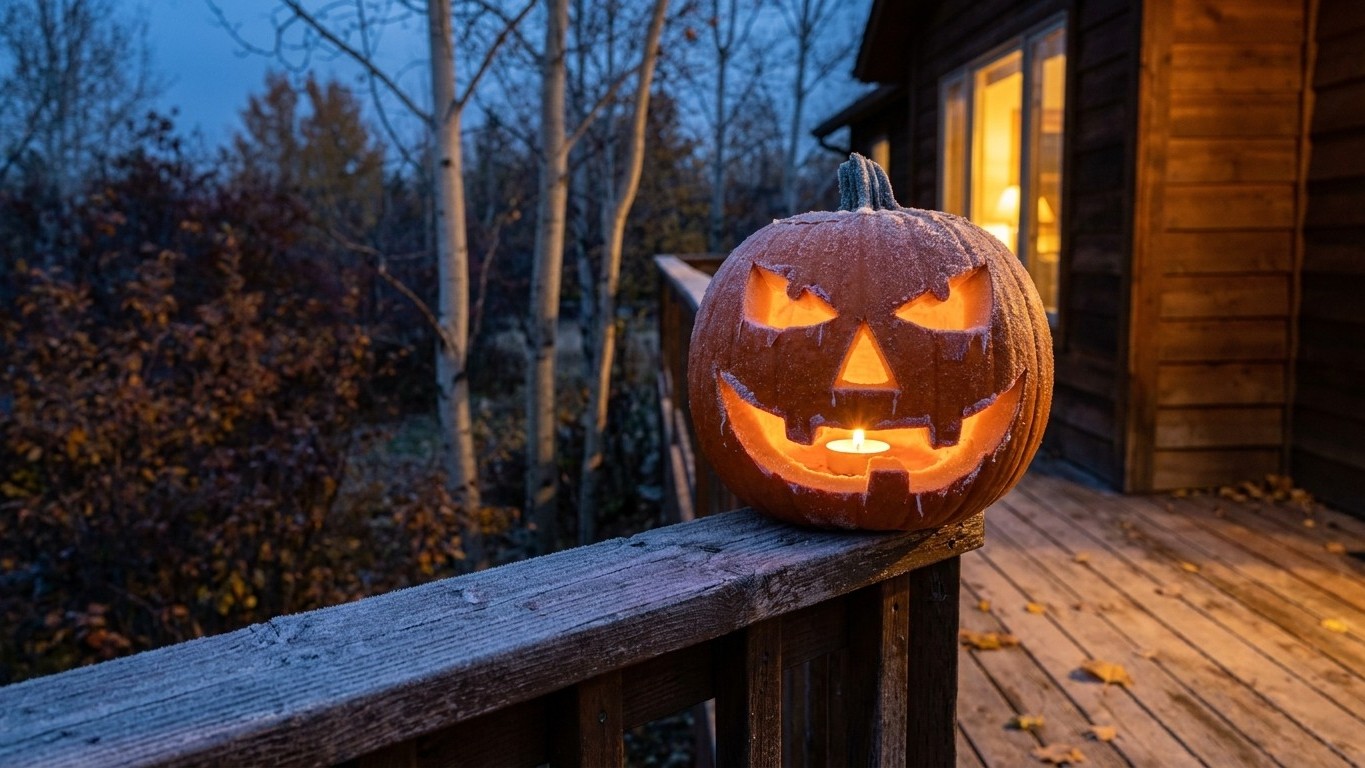

Boise’s mean first fall frost lands somewhere between October 7 and October 21, weeks before Halloween arrives. That gap matters more than most carvers realize: a pumpkin sitting outside from mid-October to October 31 in much of Idaho is very likely to face freezing air before the candle ever goes in. The short version is this: carve close to Halloween itself, and keep the pumpkin protected in the days leading up to it, because frost around here tends to show up well ahead of the holiday, not on it.
The short answer

Idaho’s growing season ends early by national standards. At the Boise reference station, the mean first fall frost falls somewhere in the window of October 7 to October 21, according to NOAA’s 1991-2020 Climate Normals. That’s a stretch of ten to twenty-four days before Halloween, not after it. And that’s the mild end of the state. Boise sits in a low valley; most of Idaho sits higher, colder, and reaches its first frost sooner, sometimes by weeks.
What that means for a porch pumpkin is straightforward. If you carve two weeks out and leave it exposed, there’s a real chance a frosty night gets to it before you ever light a candle. A frost date is an average, not a promise, so some years push later and some arrive earlier still. But the pattern across Idaho points the same direction: plan around frost showing up before Halloween, not after.
The practical window, then, is to hold off carving until the final several days before Halloween, ideally within about a week of it. That’s not a rigid rule so much as a response to what the climate here is actually doing. A pumpkin carved on October 25 and left on an open porch in a place where frost has already arrived is working against the weather from day one. A pumpkin carved on October 30, brought in overnight, and set back out for trick-or-treaters has a much better shot at looking sharp.
None of this changes what happens to the pumpkin before it’s cut. A whole, uncarved pumpkin is a different creature from a carved one: it can be kept for three to six months in a cool, dark spot between 45 and 50 degrees Fahrenheit, according to University of Illinois Extension. That’s the buffer that gives Idaho carvers room to work with. Buy the pumpkin early if the patch selection is better then, store it whole and untouched, and save the knife for the days closest to Halloween. The frost problem is real here, but it’s a scheduling problem, not a reason to skip carving altogether.
Frost or heat: which one gets it here
The cold end
Idaho’s issue in late October is cold, not heat, and the numbers back that up plainly. The mean daily minimum temperature during the coldest month at the Boise reference station is 25.4 degrees Fahrenheit, well below freezing and far below the 45 to 50 degree band a whole pumpkin wants for storage. That figure describes what a typical cold-month night looks like here, and it’s the number that decides whether outdoor storage works at all. By the time late October rolls around in most of Idaho, especially anywhere above the valley floors, nighttime temperatures are already flirting with or dropping past freezing. A pumpkin left on an exposed step overnight in that stretch is at real risk of a hard freeze turning its flesh soft and translucent, the telltale sign of freeze damage that no amount of careful carving can undo afterward.
The warm end
Heat simply isn’t the concern here the way it is farther south. Idaho doesn’t see the kind of late-October warmth that pushes pumpkins into the danger zone from the other direction, humid conditions and temperatures well above 50 degrees that speed up rot and soften rind. Even in the state’s lower valleys, late October afternoons might climb into a mild range, but nights drop fast, and it’s the nights that determine outcomes. So while a storage guide written for a warmer region might warn about pumpkins overheating in a garage or shed, that’s not the operative risk in Idaho. Here, the whole conversation is about keeping the pumpkin from freezing, not from getting too warm. That single fact should shape where a family decides to keep their pumpkin for the weeks leading up to Halloween.
Where to keep it until you carve
- An unheated but enclosed garage or mudroom. This is usually the closest thing a house in Idaho has to that 45-50 degree target: colder than the living room, but insulated enough to avoid the hard freezes that hit an open porch on a cold night.
- A basement or root cellar, if the home has one. Older homes across the state, especially in agricultural counties, often have a cellar space that stays remarkably close to the recommended range year-round, dark and steady.
- A shaded interior porch, not an exposed one. If the porch is at least partly enclosed and out of direct wind, it can work for short stretches, but check overnight lows against the forecast rather than assuming it’s safe.
- Away from any ripening fruit or vegetables. Apples, potatoes, and tomatoes all give off ethylene gas as they ripen, and that gas ages a stored pumpkin faster. Keep the pumpkin on its own shelf, not in the same crate as the apple harvest.
- Never on bare ground outside overnight once frost risk sets in. Ground-level cold pools first. A pumpkin resting directly on cold soil or concrete on a frosty night is more exposed than one raised even a few inches on a board or shelf.
One more detail worth repeating from the pumpkin patch itself: choose a pumpkin with one to two inches of stem still attached, and never carry or lift it by that stem. The stem acts as a seal over the top of the fruit; once it breaks off, that spot becomes an open entry point for decay, storage conditions aside. A pumpkin with a solid, heavy feel, no soft spots, and an intact stem starts the storage clock in a much stronger position than one that’s already lost that seal at the patch.
Checking this against your own county
Everything above is built around the Boise reference station, and Boise is Idaho’s mildest, lowest-elevation corner. Move into the Panhandle, the mountain valleys, or the higher agricultural counties and frost typically arrives earlier and harder than what’s described here. Before locking in a carving date, check current conditions and local frost guidance through University of Idaho Extension, which maintains county offices across the state and can speak to what’s actually happening in a specific elevation and microclimate. A backyard at 5,000 feet in a mountain valley operates on a different calendar than a yard in a low-lying valley floor, even within the same state, and the Extension office covering that county is the most direct way to confirm it.
Common questions
How long does a carved pumpkin actually last once it’s cut?
This isn’t published by university extension research, and no reputable source puts a firm number on it, so anything claiming an exact day count should be treated with skepticism. What is established is how to stack the odds in your favor: start with a well-chosen pumpkin, keep it whole as long as possible, and carve as close to the day you’ll display it as you reasonably can.
Does one hard freeze ruin a whole pumpkin?
A hard freeze can cause real damage, softening the flesh and rind in a way that shows up as translucent, mushy patches once things thaw. A single light frost is less predictable in its effects, but a whole pumpkin exposed to a real freeze overnight is at meaningfully higher risk of spoiling early.
Is it better to carve early or wait until the last few days?
Given how early frost tends to arrive across Idaho, waiting until the final several days before Halloween to carve, while keeping the pumpkin whole and properly stored beforehand, gives the best shot at a pumpkin that still looks good on the night it matters.
What if my part of Idaho is colder than Boise?
Assume frost arrives sooner than the Boise window suggests, since higher elevations and northern counties routinely see earlier and harder frosts. Confirm timing with your county’s University of Idaho Extension office rather than relying on the valley-floor numbers alone.