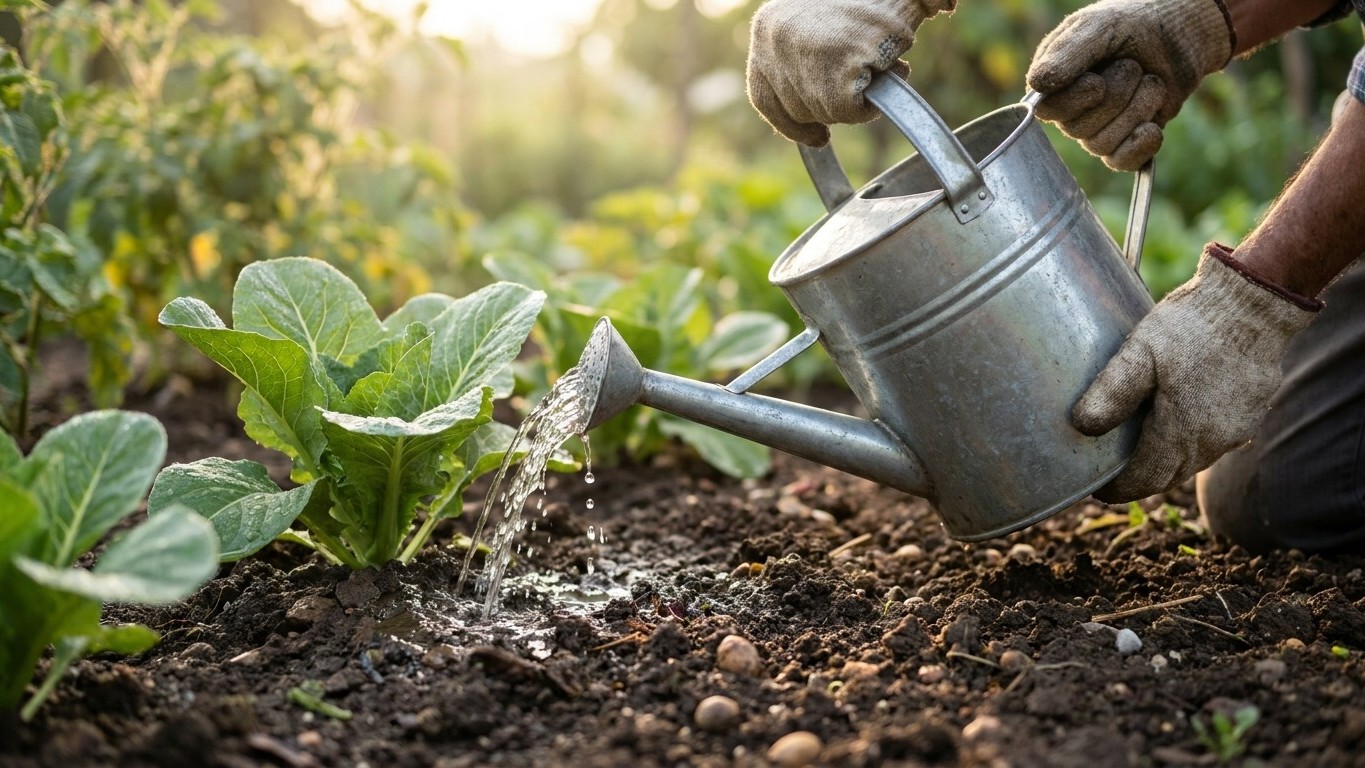

Deep, infrequent watering beats a daily sprinkle every time. Water early, at the base of the plant, only when the soil is actually dry a couple of inches down, not on a fixed schedule. Watering Through a Dry Spell in Quebec means understanding that the province’s cooler summers bring less evaporation than in much of the U.S., but rules still vary by municipality, so check with your local water authority before you set a routine.
How much, how often

Shallow, frequent watering trains roots to stay near the surface, where the top inch of soil heats up fast and dries out just as quickly. Deep, infrequent watering does the opposite: it pushes roots down to where moisture actually lingers, which makes the whole plant more resilient during a dry stretch. The habit of watering “a little every day” is one of the most common ways gardeners waste water and weaken their own plants at the same time.
Quebec’s climate helps here more than people realize. The Montreal reference station averages zero days a year at 90°F or above, according to Environment and Climate Change Canada’s 1981-2010 normals. That absence of real heat means the soil surface doesn’t bake the way it does in a hot, dry U.S. summer, so the temptation to overcompensate with daily watering is rarely justified.
The frost-free window matters too. On average, the last spring frost falls around May 6 and the first fall frost around October 5 at that same station, but these are averages, not guarantees. In one year out of two, frost arrives later in spring or earlier in fall than that midpoint, and northern or upland parts of the province run well behind Montreal’s schedule. That window is roughly the stretch when active watering makes sense; outside it, plants are dormant or the ground may still be frozen.
A simple routine to follow
- Check before you water. Push a finger or a trowel two inches into the soil near the root zone. If it’s still moist, skip the watering entirely.
- Water early in the day. Morning watering, ideally before 9 a.m., lets moisture soak in before the sun climbs and lets foliage dry before evening, which cuts down on fungal disease.
- Aim at the base, not the leaves. A soaker hose or the base of a watering can delivers water to the roots without wetting leaves that stay damp overnight, a technique that’s especially important when Watering Pots and Containers in Quebec, where limited soil volume means water needs to reach the roots directly rather than running off the surface.
- Soak deeply, then stop. One thorough soaking that reaches six to eight inches down does more good than three shallow ones spread across a week.
- Adjust for your soil. Sandy ground drains fast and holds little, so it needs shorter, more frequent soakings than heavy clay, which can hold a week’s worth of water but drowns roots if watered again before it’s had a chance to dry. Clay soil should never be worked or soaked while it’s still wet, that’s how you get compaction that takes years to undo.
Restrictions and rules
Watering restrictions in Quebec are set at the municipal level, not provincially, which means the rules where you live can look nothing like the rules in the next town over. Some municipalities limit outdoor watering to certain days of the week or certain hours, others restrict it only during declared drought periods, and some have no formal restriction at all outside of general water-conservation bylaws. Because these rules change from year to year and even season to season depending on reservoir levels, there’s no single figure that applies province-wide.
What can be said with confidence: because Quebec’s summers run cooler than much of the U.S., with essentially no days reaching 90°F at the reference station, sustained heat waves that trigger emergency restrictions are less common here than in warmer regions. That doesn’t mean restrictions don’t happen, a dry spell combined with high municipal demand can still prompt a temporary watering ban, particularly in denser suburban areas where lawn irrigation spikes water use all at once.
Before setting up any regular watering schedule, sprinkler timer, or irrigation system, check with your municipal water department or your local municipalité régionale de comté (MRC) for the current rules. For general agricultural and horticultural guidance at the provincial level, the Ministère de l’Agriculture, des Pêcheries et de l’Alimentation du Québec (MAPAQ) is a useful starting point, though it won’t have your municipality’s specific bylaw. Fines for violating a watering ban are enforced locally, and enforcement has gotten stricter in several regions over the past few summers as municipalities try to stretch treated water supplies further.
Using less
Most water waste in a home garden doesn’t come from watering too much, it comes from watering inefficiently. A few changes to how and where water is applied can cut consumption noticeably without asking anything of the gardener beyond a little upfront setup.
- Mulch, two to three inches deep. A layer of shredded bark, straw, or leaf mulch around plants slows evaporation from the soil surface dramatically, which means longer stretches between waterings and less water lost to the air before roots ever touch it.
- Drip irrigation or soaker hoses. Overhead sprinklers lose a real share of their output to evaporation and wind drift before the water even reaches the ground. Drip lines put water directly at the root zone, which is both more efficient and gentler on plants that don’t like wet foliage.
- Group plants by water need. Putting thirsty vegetables next to drought-tolerant perennials means one or the other is always getting the wrong amount. Zoning the garden by need lets you water each section only as often as it actually requires.
- Work organic matter into the soil. Compost and other organic amendments improve how well soil holds moisture, particularly in sandy plots that otherwise drain too fast to be efficient. Better water retention means fewer trips with the hose.
- Collect rainwater where it’s legal. A rain barrel under a downspout can supply a surprising amount of water: an inch of rain falling on 1,000 square feet of roof works out to roughly 600 gallons of runoff. Quebec doesn’t see the long, bone-dry summer stretches that some U.S. regions do, which means barrels here tend to refill more reliably through the season than in a climate with a truly dry season. Still, actual rainfall varies by region and by month, so check municipal bylaws on rain barrel use and consult Environment Canada’s local climate data if you want to size a barrel to your specific area.
Common questions
How early can I start watering in spring?
Since the average last spring frost at the Montreal-area reference station falls around May 6, most active garden watering shouldn’t need to start much before mid-May in that region. But that date is a midpoint, not a guarantee, frost can arrive later than average in half of all years, and northern or higher-elevation parts of the province lag weeks behind. Watch your local forecast rather than a calendar date.
Does Quebec’s cooler climate mean I can water less than gardeners in warmer states?
Generally, yes. With an average of zero days a year reaching 90°F at the reference station, evaporation rates are lower than in much of the U.S., so soil retains moisture longer between waterings. That said, sandy soil, a windy site, or a stretch without rain can still dry out a garden quickly regardless of air temperature.
When should I stop watering in the fall?
Watering demand drops off as the season cools and growth slows, generally tapering off around the average first fall frost date of October 5. As with spring, treat that date as a rough middle point rather than a hard cutoff, since frost timing shifts from year to year and by region.
Where do I find the actual watering restrictions for my area?
There’s no single province-wide rule, so check with your municipality or MRC directly, since bylaws on watering days, hours, and drought restrictions are set locally. For broader agricultural and horticultural resources, MAPAQ’s website is a reasonable starting point, but it won’t list your town’s specific watering schedule.