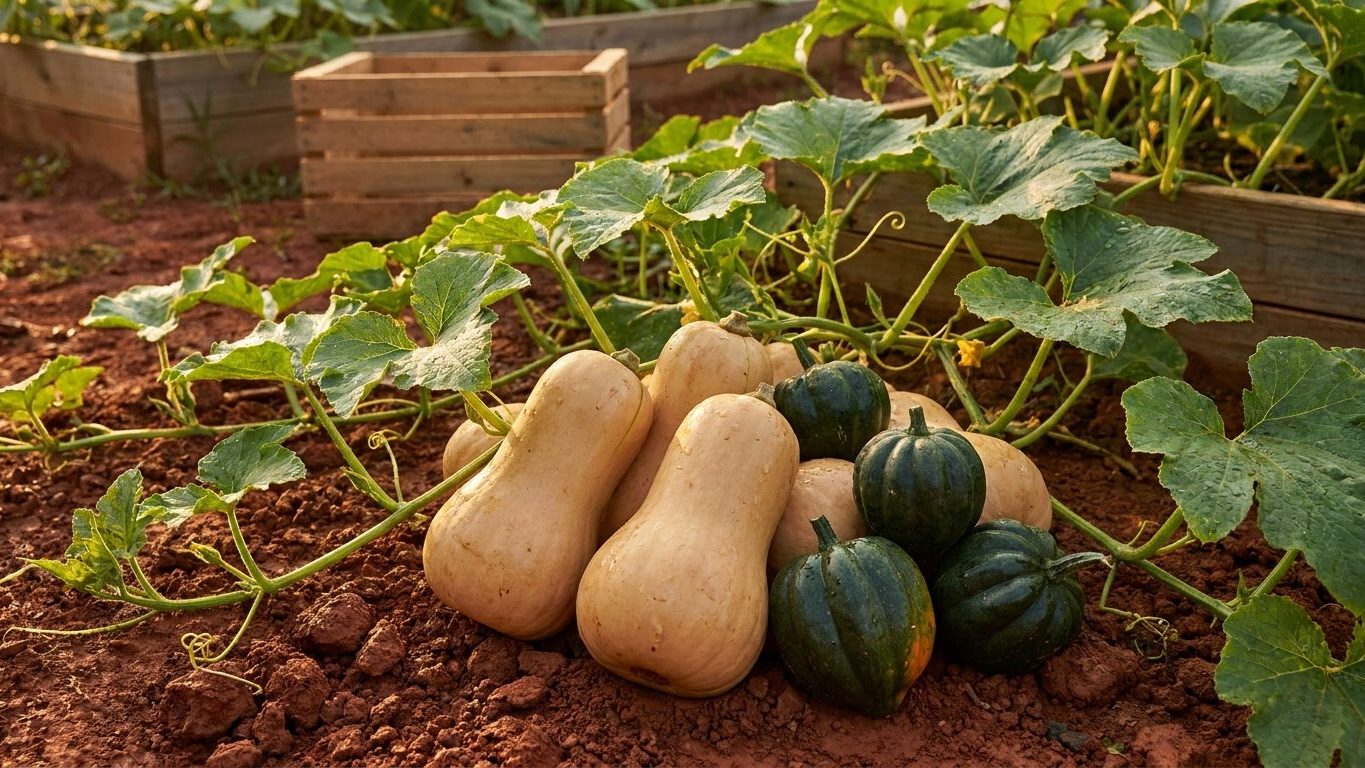

Short-season, cool-tolerant types win in Quebec: acorn, delicata, spaghetti squash and the quicker buttercup or kabocha varieties. Long-season Hubbards, giant maxima types and heat-hungry heirloom butternuts are the ones to skip or grow only with a serious head start.
The short answer for Quebec
Start with the number that actually runs the show: a mean frost-free window of about 152 days, from a last spring frost around May 6 to a first fall frost around October 5. That sounds generous next to a lot of northern gardens, but it’s a mean date, not a guarantee, so in roughly half of all years the real window is shorter than that. Anyone planning around the average without a buffer is planning for a coin flip.
That single fact sorts winter squash into three groups. Acorn and delicata, both running 80 to 100 days to maturity, sit comfortably inside the window even in a below-average year. Spaghetti squash, usually 90 to 100 days, lands in the same safe zone. Buttercup and kabocha types, often 95 to 110 days, still fit but with less margin, and do better started as transplants three to four weeks before the last frost rather than direct-seeded.
Butternut is the trickier case. Many varieties run 100 to 120 days, which eats almost all the slack in a 152-day mean window and leaves nothing if spring runs cold or fall arrives early. It’s workable with transplants, black plastic to warm the soil, and row cover on both ends of the season, but it’s not the low-effort choice here. Hubbard and the giant maxima squash, often 110 to 120-plus days, are the ones that consistently run out of runway.
One more number matters for how these plants behave once they’re growing, not just whether they finish: the reference station records an average of 0.0 days a year above 90°F. Quebec gardeners aren’t managing heat stress the way a Kansas or Georgia grower would. Growth here is paced by an accumulation of mild warm days rather than any blast of real heat, which is exactly why maturity timing, not heat tolerance, is the variable that decides success.
What will not work here

Long-season squash is the first casualty. Hubbard, and most giant maxima types bred for 110 to 120 days or more, are trying to fit into a window that averages 152 days and, by the very nature of a mean date, comes in shorter than that in half the years on record. There’s no cushion left for a cool May or an early October. These varieties aren’t impossible in Quebec, but they demand a controlled head start most backyard gardens won’t bother giving them.
The heat number causes a subtler failure. Several kabocha and butternut varieties rely on hot late-summer days to convert stored starch into sugar and to dry down and harden the rind for winter storage. With an average of 0.0 days above 90°F at the reference station, that heat spike simply doesn’t arrive. Fruit can size up and look ready while staying bland inside, or curing incompletely, which shows up later as squash that rots in storage a few weeks after harvest instead of keeping through winter the way the seed packet promised.
Then there’s the water side of the equation, and it cuts against the usual assumption. Summer rainfall here runs about 10.6 inches across June, July and August, with June the driest month at 3.42 inches and July and August each a touch higher. That’s not a drought pattern, so a grower who waters heavily out of habit is solving a problem that mostly doesn’t exist. The real risk with that much summer moisture, paired with cool nights, is fungal: powdery mildew and downy mildew move fast through vining winter squash planted too tight for air to move between the leaves.
The fix isn’t less water. It’s more space and better airflow: full spacing on the tag rather than a squeeze, and thinning or lifting the densest inner leaves once vines fill in, so the canopy dries between rain events instead of staying damp for days.
What changes across Quebec
The 5b figure above (Canadian hardiness system, not USDA) belongs to the reference station near Montreal, and only there. Quebec is not one climate wearing one number. The Laurentians, Abitibi-Témiscamingue, Saguenay-Lac-Saint-Jean, the Gaspésie and anywhere with real elevation gain routinely run colder and shorter-season than the St. Lawrence valley reading this page is built from.
This page doesn’t carry a second station’s numbers, so it won’t guess at how many zones colder those regions run. What it can say is the practical shift: a garden north of the valley or higher in elevation should treat the fastest-maturing options in the first section, acorn, delicata, spaghetti, as the default rather than the cautious choice, and should assume even fewer warm-heat days than the 0.0 already recorded at the reference station. Transplants started indoors, black plastic mulch, and row cover at both ends of the season buy back some of that lost margin.
None of that replaces knowing your own zone. Natural Resources Canada’s Plant Hardiness Zone map lets a reader look up their own municipality directly rather than borrowing a number built for Montreal’s suburbs. A garden forty minutes north of the reference station can sit a full zone or more colder, and that difference is worth checking before betting a season on butternut.
Where to check this for your own county
Every figure on this page traces back to one weather station and one hardiness reading, both located in the Montreal area. That’s useful for a province-wide starting point, but a county or regional recommendation will always beat it, because it’s built from local trial data rather than a single reference site.
Quebec’s agriculture ministry, MAPAQ, is the place to look next. Two things are worth searching for there specifically: a regional planting calendar for your MRC or agricultural region, which will adjust the frost dates used above to something closer to your actual location, and any variety trial results for winter squash conducted in your area. Quebec’s provincial network runs cultivar trials across several growing regions precisely because a variety that thrives near Montreal doesn’t automatically perform the same way in the Bas-Saint-Laurent or the Outaouais.
Treat this page as the province-wide baseline it is, not the final word. If a county-level source lists a different maturity cutoff or a different variety shortlist than what’s above, that local recommendation should win, since it’s drawing from conditions actually measured in that area rather than extrapolated from one station eighty or more kilometers away.
Checking this against your own garden
Frost dates and hardiness zones describe an average garden that doesn’t exist. The plot in front of you settles the real question, and three signs tell you more than any calendar date.
Soil warmth by feel comes first. Squeeze a handful of soil at planting depth. If it feels cold and damp rather than merely cool, seeds will sit and sulk rather than germinate, no matter what the calendar says about the date being past the mean last frost.
Watch for the first flush of male flowers next. Winter squash produces males before females, and how early or late that first flush shows up compared to a typical year tells you whether your particular spot is running warmer or cooler than the valley average this season.
Finally, track how fast the first true leaves follow the seed leaves. A quick turnaround signals a warm microclimate, maybe a south-facing slope or a sheltered spot against a wall, that can support a longer-season variety than the general guidance above would suggest. A slow one is the garden telling you to stay with the fastest maturing types on this page, regardless of what the reference station recorded.