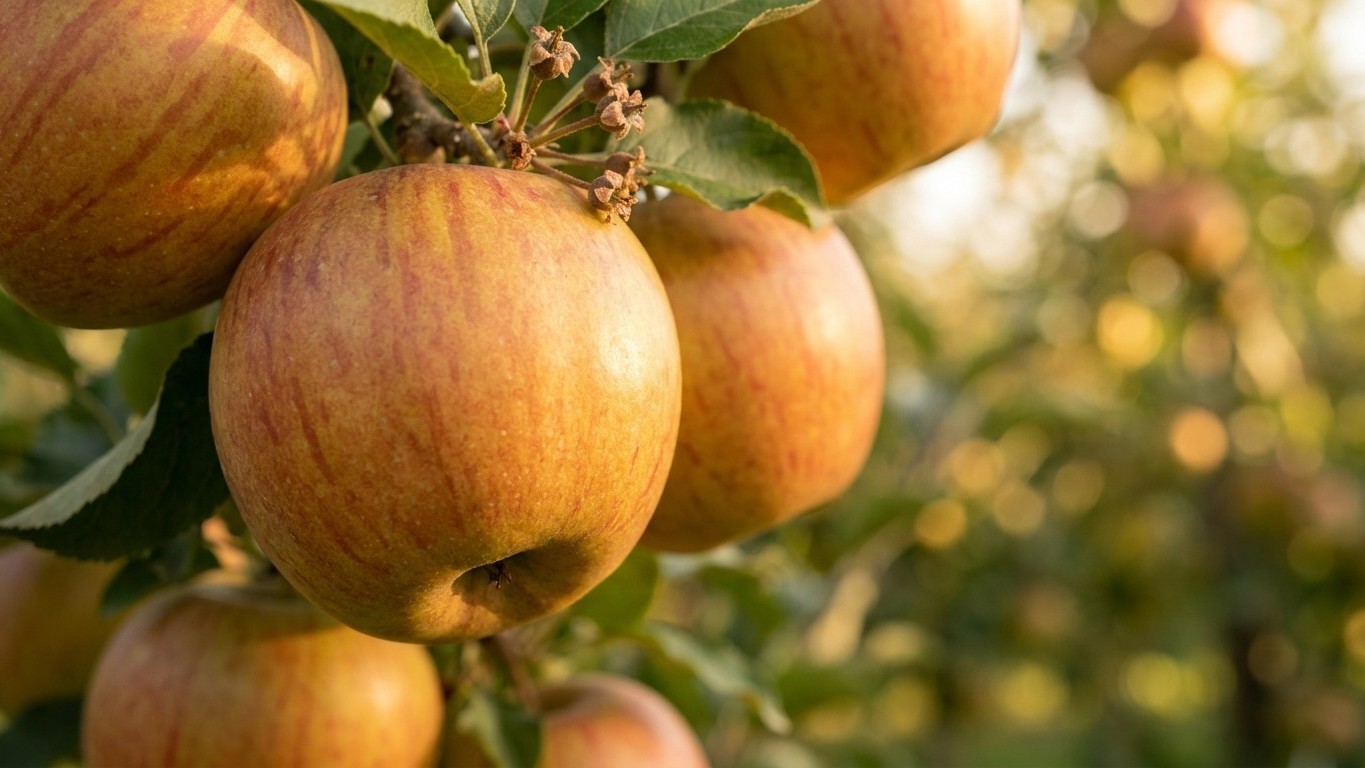

Most Vermont apples are ready between early September and mid-October, with exact timing set by variety and by how close an orchard sits to the state’s first fall frost, which lands October 3 to October 13 around Burlington. Farther into the hills, that window closes sooner, and pickers need to watch the fruit itself rather than a date on a calendar.
When apples are ready to pick in Vermont
Growers who wait for a specific week every year get burned eventually, because the tree doesn’t care what the calendar says. What matters is the stage: background skin color shifting from green to yellow underneath the red blush, seeds turning from white to brown, and the fruit separating from the spur with an easy upward twist rather than a pull. A starch-iodine test, which many county fairs and the University of Vermont Extension demonstrate each fall, gives a clearer read than color alone, since some red varieties hold their skin tone well before they’re actually mature.
The frost calendar still matters, just not the way people assume. Around Burlington, the first fall frost arrives October 3 to October 13, per NOAA’s 1991-2020 Climate Normals for station USW00014742. That’s a guide for how much ripening time a late-season apple has left on the tree, not a hard stop, since a light frost won’t ruin fruit still hanging. But Burlington sits right on Lake Champlain, the mildest pocket in the state. Move up into the Green Mountains or out toward the Northeast Kingdom, and both the growing season and the harvest window shrink substantially. No published figure in this dataset covers those regions specifically, so an orchard at 1,500 feet in Caledonia County should plan on picking meaningfully earlier than a farm on the Champlain plain, not on the same schedule.
Hardiness and chill are two separate questions
Two different filters decide whether a Vermont apple tree even gets to harvest day. The first is winter hardiness: whether the wood survives the cold at all. Burlington’s coldest month averages a daily minimum of 12.9°F, per NOAA NCEI’s 1991-2020 Climate Normals, and that number is what separates trees bred for the Upper Midwest and northern New England from varieties suited to warmer states. The second filter is chill accumulation, the hours of cold needed before a tree can flower normally in spring. A variety bred for a mild winter climate needs far less accumulated chill, so it breaks dormancy and flowers early wherever it’s planted. In Vermont, where the last spring frost falls April 30 to May 10 around Burlington (and later at elevation), an early bloom is exactly what gets caught by that frost. The safer call here is to plant cold-hardy, higher-chill varieties suited to northern New England rather than low-chill stock developed for southern nurseries, because the trade for earlier bloom is a real chance of losing the flower crop before it ever sets fruit.
Which ones keep, and which must be eaten
Not every apple off a Vermont tree belongs in a root cellar. Some varieties are built to hold their texture and flavor for months in cold storage; others start softening within weeks no matter how carefully they’re kept, and treating them the same way just wastes a fall’s worth of picking.
McIntosh, Vermont’s signature apple and still one of the most widely planted in the state, ripens early and softens fast. It’s an eating and cider apple first, not a long-term keeper, and most growers expect it to be at its best within a month or two of picking rather than sitting in storage until spring. Cortland and Empire fall into a similar middle ground: good for several weeks of cold storage, fine for pies and sauce later in the season, but not the apples to bank on for March.
Late-harvest varieties are the ones that reward patience in the cellar. Northern Spy, an old Vermont-region variety still grown by some orchards, is known for holding firm and tart well into winter under proper cold storage. Roxbury Russet, one of the oldest named apple varieties in North America and long associated with New England orchards, has a similar reputation as a long keeper with a dense, dry flesh that doesn’t break down quickly. Honeycrisp, now common across northern orchards, keeps reasonably well in cold storage too, though it’s more sensitive to storage temperature swings than the older russet types.
The practical takeaway is to sort at picking time, not later. Bruised, early-drop, or soft-textured fruit should go toward cider, sauce, or the kitchen counter within days. Firm, late-season, unblemished apples are the ones worth the effort of a cold cellar or a root cellar setup, because they’re the only ones genetically built to reward it. Mixing a crate of McIntosh in with a crate of Northern Spy in the same storage bin just means the McIntosh spoils and, in the process, speeds up spoilage in everything nearby.
Storing them through a Vermont winter
Vermont’s own climate does some of the storage work for free, which is a small advantage most home growers overlook. An unheated garage, mudroom, or root cellar in a state where the coldest month averages a daily minimum of 12.9°F (Burlington figure, NOAA NCEI 1991-2020 Normals) gets reliably cold enough to slow ripening without any mechanical refrigeration, at least once outdoor temperatures settle in for the season. The trick is keeping the storage space just above freezing, not letting it dip low enough to actually freeze the fruit solid, which ruins texture even if the apple looks fine from outside.
Target conditions for long-term apple storage sit close to 32°F to 40°F with high humidity, roughly 90 percent, to keep the fruit from shriveling. A dirt-floor root cellar or a basement corner near an uninsulated wall often gets close to this range naturally in a Vermont winter. Wrapping apples individually in newspaper, or layering them in perforated plastic bags to hold in some humidity while still letting air move, cuts down on the spread of rot from one bad apple to its neighbors. Apples also give off ethylene gas as they age, which speeds up ripening in anything stored nearby, so keeping them away from potatoes and root vegetables in the same bin isn’t just a folk habit, it’s a way to keep both crops from breaking down faster.
Checking stored fruit every few weeks matters more than most people expect. One softening or leaking apple in a crate can take down several neighbors before the whole batch gets pulled and inspected. Growers looking for detailed guidance on cellar setup, humidity control, or variety-specific storage windows can find seasonal publications through the University of Vermont Extension, which is the land-grant extension service for the state and the closest thing to a local authority on the subject.
What goes wrong here
The single most common mistake in Vermont orchards is picking on a fixed date instead of reading the fruit, then discovering in storage that the apples were harvested too early or too late for their variety’s normal keeping window. Underripe apples picked out of impatience never develop full flavor and often shrivel faster in storage, not slower, because their skin hasn’t finished sealing.
Frost timing causes its own headaches, particularly for growers at higher elevation who assume the Burlington-area frost dates apply to their own orchard. Since the first fall frost around Burlington lands October 3 to October 13 but the Green Mountains and Northeast Kingdom run colder and earlier, a late-season variety left on the tree “one more week” based on lowland timing can get nipped before it’s fully mature. No dataset here documents exact frost dates for those higher regions, which is itself worth knowing: growers there need to track their own local conditions rather than borrow Champlain Valley numbers.
Humidity is the other recurring problem, but it cuts both ways. A cellar too dry shrivels apples within weeks; a cellar too damp with poor airflow breeds mold and rot, especially in a state where Vermont’s naturally humid growing season already leaves orchards prone to apple scab and other fungal issues on the tree itself before harvest even happens. Add rodents and deer looking for a late-season meal in a rural storage shed, and the list of things that can undo a good harvest gets longer than most first-time growers expect. Most of these problems trace back to the same root cause: treating “Vermont” as one climate instead of checking conditions at the actual orchard’s elevation and exposure.
Common questions
Can apples be picked before they’re fully ripe and finish ripening indoors?
Some varieties continue to soften and develop flavor off the tree, but they won’t develop the same sugar content or storage life as fruit left to mature fully in the orchard. This works better as a way to salvage a crop ahead of an early frost than as a routine harvest strategy.
Does a light frost on the tree ruin apples still hanging?
A brief, light frost usually doesn’t damage fruit that’s close to mature, though repeated hard freezes will affect texture and encourage rot. The bigger risk is a frost hitting a variety that isn’t mature yet, since immature fruit handles cold exposure worse.
Why do some Vermont orchards plant older varieties like Roxbury Russet instead of newer ones?
Older New England varieties were selected over generations specifically for cold hardiness and long storage life in a climate like Vermont’s, which is exactly what many modern varieties bred for other regions weren’t optimized for.
Where can Vermont growers get region-specific planting and storage advice?
The University of Vermont Extension is the state’s land-grant extension service and publishes seasonal guidance tailored to Vermont growing conditions, which is more reliable than advice written for a different climate zone.