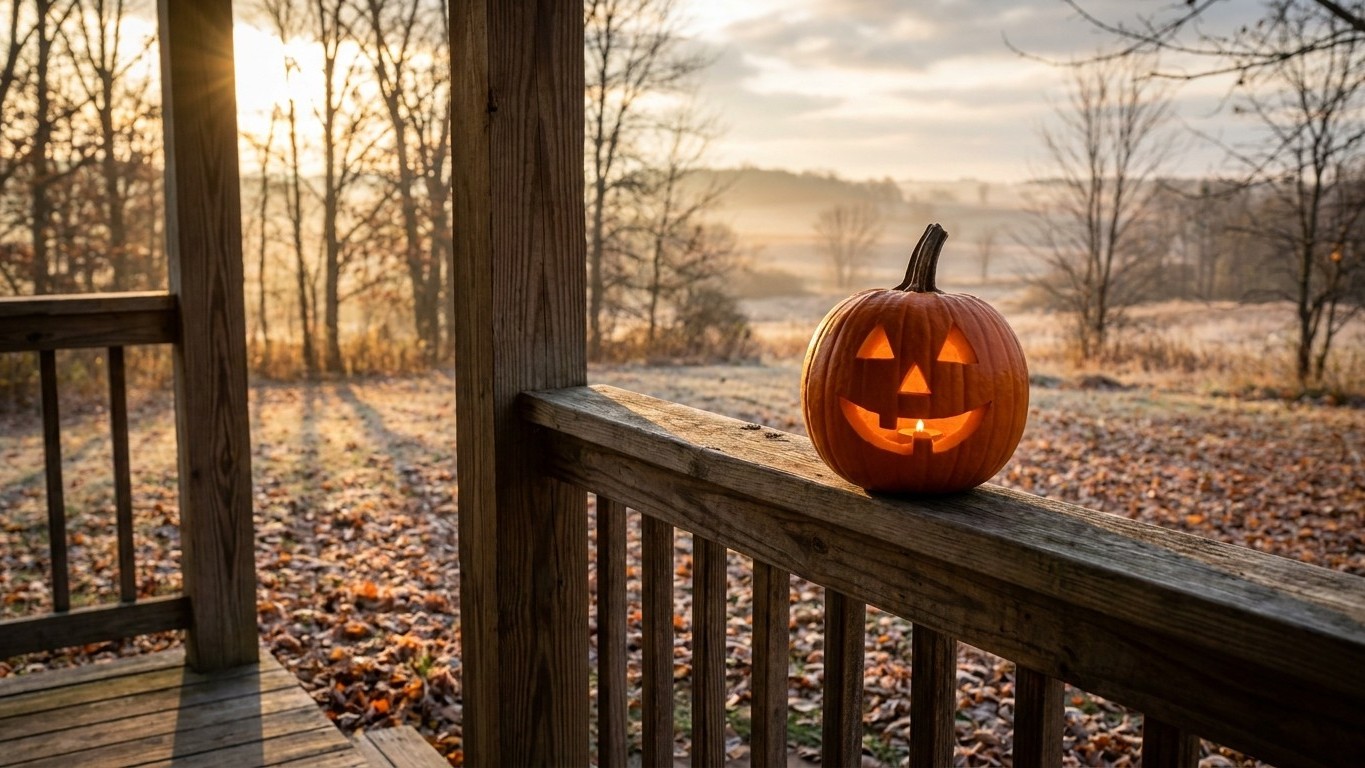

Wisconsin doesn’t hand out one answer for the whole state. Along Lake Michigan, fall lingers into late October. Head inland, or north toward Lake Superior, and frost shows up weeks earlier. The honest answer to “when” depends on which Wisconsin you’re standing in, and how you plan to store the pumpkin once it’s carved.
The short answer

At the reference weather station used for Wisconsin’s official climate normals, a lakeshore site representative of the Milwaukee area, the mean first fall frost lands around October 17 to October 29. That’s a range, not a single date, and it’s an average built from three decades of data, not a promise for any given year. Measured against Halloween, that puts the typical first frost anywhere from about two days to two weeks before October 31, depending on where in that window a given fall falls.
What that means in practice: along the immediate lakeshore, a pumpkin sitting outside has a real chance of making it close to Halloween before frost becomes a serious concern. But the lake effect that produces this window is local. It doesn’t reach far inland, and it doesn’t reach north at all.
The caution attached to this data matters more than the range itself. Inland southern Wisconsin, Madison, Janesville, the farmland between the lakeshore counties and the Mississippi, typically sees its first freeze in early October. That’s weeks earlier than the lakeshore average, and it moves the safe carving window earlier by the same margin. Northern Wisconsin, from Wausau up through the Northwoods and along Lake Superior’s inland side, freezes earlier still, sometimes well before mid-October.
So the window to carve, expressed in days before Halloween, isn’t one number for the whole state. Near the lake, a pumpkin can reasonably wait until close to Halloween itself. Inland and north, the safer play is to treat frost as a two-to-four-week-earlier event and plan the carving date around that, not around the calendar page marked October 31.
None of this is about whether a pumpkin can survive a light frost sitting on a porch, it usually can for a night or two. It’s about what happens after: repeated freezing and thawing softens the rind and speeds up rot, whole or carved. The safest strategy anywhere in Wisconsin is to keep the pumpkin whole and protected until you’re within a few days of when you actually want it carved, then bring it out.
Frost or heat: which one gets it here
The cold end
Wisconsin’s problem in late October is cold, not heat. That’s true from the lakeshore to the Northwoods, it just arrives on a different schedule. The state’s own winter numbers make the trajectory clear: the reference station’s coldest month has a mean daily minimum of 17.2°F. That’s not an October figure, it’s deep winter, but it shows how fast and how far Wisconsin temperatures fall once autumn turns. A pumpkin’s recommended storage band, 45 to 50°F, sits comfortably above where Wisconsin nights are heading by late October almost everywhere except right along the lake.
That’s the risk that matters here: a pumpkin left outside past its region’s typical frost date isn’t going to overheat, it’s going to freeze, thaw, and freeze again, and each cycle breaks down the flesh a little more. In the north, where frost can arrive weeks before Halloween, that cycle can start well before most households are thinking about carving at all.
The warm end
Warmth isn’t the Wisconsin problem, and it’s worth saying plainly so nobody wastes effort guarding against it. Late-October days here, even a mild lakeshore stretch, don’t typically climb into a range that would push a stored whole pumpkin toward premature softening from heat. Occasional warm afternoons happen, especially in the southern counties, but they’re short-lived and don’t offset the overnight cooling that defines the season. If a Wisconsin pumpkin fails before Halloween, cold and moisture are almost always the reason, not heat.
Where to keep it until you carve
Wisconsin’s late-October reality, cool days trending colder, means the goal is finding a spot that holds steady in that 45-50°F band without dipping into freezing. Here’s a practical order to work through:
- Start with an attached but unheated garage. In much of Wisconsin this tracks close to the target range through most of October, and it keeps the pumpkin out of direct sun and wind.
- A three-season porch or mudroom works nearly as well, especially on the lakeshore where the moderating effect of the lake keeps swings gentler than inland.
- A cool basement is the fallback once night temperatures start threatening frost, which happens earlier inland and up north than it does near Milwaukee.
- Keep it away from apples, potatoes, and tomatoes wherever it’s stored. Ripening produce gives off ethylene gas that ages a pumpkin faster, regardless of temperature.
- Avoid the furnace room and anywhere near a heating vent. Wisconsin homes run heat early in the season, and a pumpkin held too warm indoors ages just as fast as one left out in a hard freeze.
- Check the stem before you settle on a storage spot. A pumpkin with an inch or two of intact stem holds up through weeks of storage far better than one where the stem has already broken off and left the top exposed.
Checking this against your own county
The frost data here comes from one lakeshore reference station, and Wisconsin’s geography, three hundred miles from the Illinois border to Lake Superior, means your county’s actual first frost could land well outside that window. Before locking in a carving date, check current-season frost guidance from the University of Wisconsin-Madison Division of Extension. County offices there track local frost history and can tell you how your area typically compares to both the lakeshore average and the earlier inland and northern patterns described above.
Common questions
How long does a carved pumpkin actually last?
No extension service publishes a specific number of days for a carved pumpkin, and none publishes a preservation method for one. What’s actually documented applies to whole pumpkins: choose one with an intact stem, store it whole between 45 and 50°F away from ripening produce, and carve as close as possible to the day you’ll display it.
Does frost ruin a pumpkin outright?
A single light frost usually doesn’t destroy a pumpkin, but repeated freezing and thawing softens the rind and speeds up decay. That’s the real risk in Wisconsin, not a one-time cold night.
Is northern Wisconsin really that different from Milwaukee for this?
Yes. The lakeshore reference window of around October 17 to October 29 reflects the moderating effect of Lake Michigan. Inland southern Wisconsin typically freezes in early October, and northern Wisconsin earlier than that, so a carving plan built around the Milwaukee-area window can be weeks too optimistic further north or inland.
Can I just carve early and store the carved pumpkin somewhere cold?
That’s not what the documented storage guidance covers, it applies to whole pumpkins only. The one control a buyer has over how a pumpkin holds up is choosing one with a solid, intact stem and no soft spots at the patch, then keeping it whole until close to carving time.