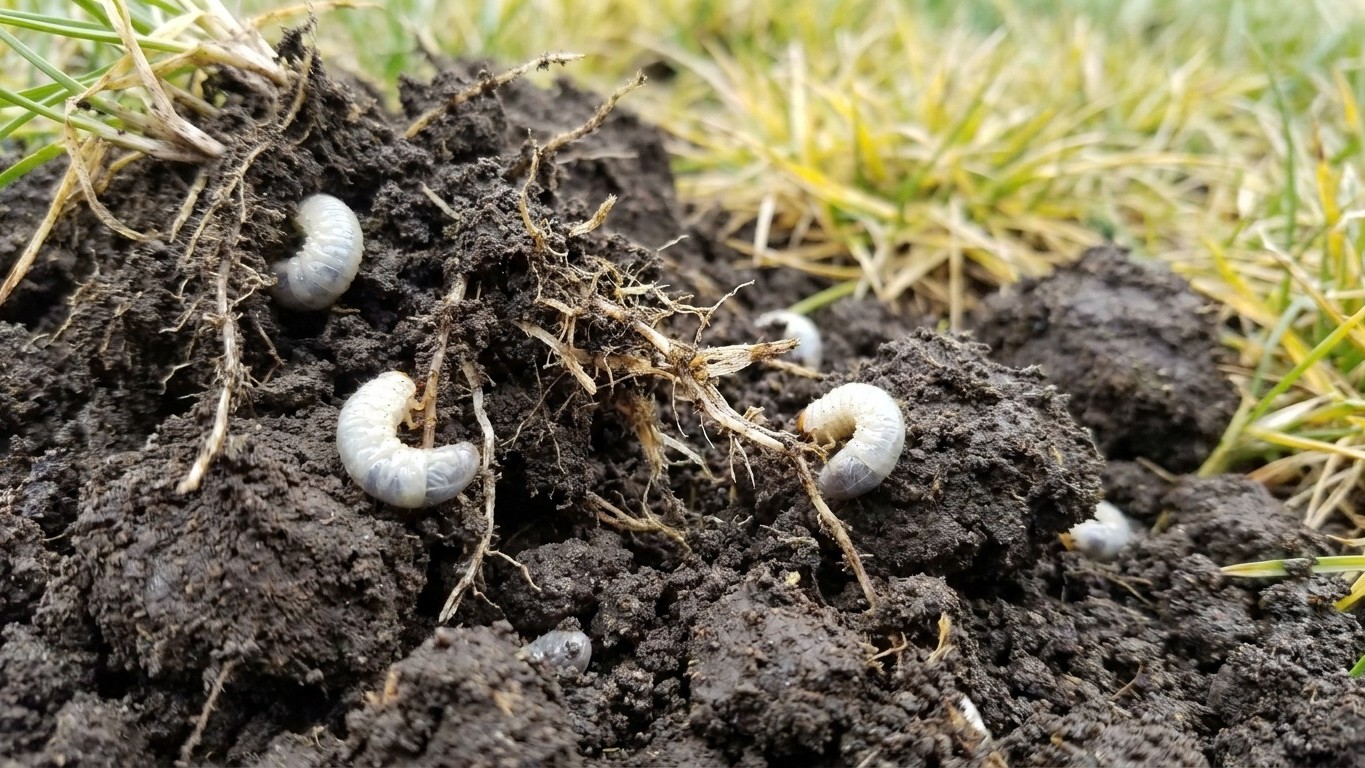

White grubs turn up in Wisconsin lawns and garden beds mainly from late July through September, when the larvae feed hardest on roots just under the surface. There’s no single named window from the state extension service for this pest specifically. What stops it: cultural timing, not spot-treating, and mostly things done before the grubs are already chewing roots.
The weeks to watch

The University of Wisconsin-Madison Division of Extension’s home garden pest guide (A2088) doesn’t publish a dedicated emergence window for white grubs the way it does for a few other insects. What it does say, broadly, is that most home-garden pests don’t build up to noticeable numbers until mid-August, and that root and stem damage from soil-dwelling larvae tends to show up later in the season rather than early. For white grubs, that general pattern is the best guide Wisconsin gardeners have without inventing a date the extension office doesn’t give.
Adult beetle flight
Adult beetles, whether Japanese beetles or the various May and June beetles that produce white grubs, emerge and mate through June and into July. This is when they lay eggs in turf and garden soil, usually favoring moist, well-watered ground.
Grub feeding stage
Eggs hatch into young grubs by late July or August, and this is the stage that does root damage. Feeding continues into September before the larvae move deeper to overwinter, then resume briefly the following spring before pupating.
Reading the calendar from your last frost

Wisconsin’s last spring frost falls between April 16 and April 29, according to NOAA’s 1991-2020 climate normals for the state’s southern climate station. That date matters less for white grubs than it does for above-ground pests, because grubs answer to soil temperature and moisture, not the calendar square a gardener circles for planting tomatoes. A late frost pushes back the whole chain: soil warms later, adult beetles fly later, eggs go in later, and grubs hatch later.
There isn’t a sourced week-count tying transplant date to first grub damage for this pest. What the extension guide does establish is the mid-August mark for peak garden pest abundance generally, which lines up with when grubs are actively feeding. The arithmetic a gardener can actually run looks like this:
- Start from your local last frost date, April 16 to April 29 depending on where in southern Wisconsin you garden.
- Count forward through the growing season to mid-August, the point the extension service flags as when most home-garden insect pests, grubs included, reach their heaviest activity.
That gives a season-long window, not a single day, and it’s the honest range the data supports.
What it attacks, and what the damage looks like

The first sign is almost never the grub itself. It’s a patch of lawn that goes brown and pulls up loose like a carpet, or a vegetable plant that wilts on a cool morning when the soil is plenty moist, a sign the roots underneath simply aren’t there anymore to draw water. Skunks and raccoons digging up turf at night are often the first real clue, since they’re after the grubs themselves.
The larval stage does essentially all the damage. Adult beetles, if they’re Japanese beetles, feed on foliage and flowers above ground and are a separate problem from the root-feeding their offspring cause below it. Once a grub has severed a root system, nothing applied to the leaves or soil surface brings that root back. Crops and plantings commonly hit include:
- Lawn and turfgrass roots, especially in sunny, well-irrigated areas
- Strawberry beds, where root loss shows up as stunted, wilting plants
- Carrots, potatoes, and other root vegetables
- Corn seedlings, where root damage can topple young plants
- Ornamental plant beds bordering lawn areas
How Wisconsin sits in this pest’s range

White grubs, in one species or another, are close to universal across states that grow turfgrass or vegetables, which puts Wisconsin squarely inside the range rather than near an edge of it. The difference between Wisconsin and, say, a Gulf Coast state isn’t whether the insect shows up, it’s how fast its life cycle runs. Some of the white grub species common in the upper Midwest, the May and June beetles in particular, take three years to complete a single generation in Wisconsin’s cooler soil, compared to a single year for Japanese beetles or for the same species in warmer climates further south.
That slower cycle means a Wisconsin lawn or garden can carry grubs from more than one age class in the soil at once, since three separate cohorts may be present in different years of development. It also means damage can look inconsistent year to year, heavy one season and mild the next, depending on which cohort is in its most destructive feeding year.
What actually works against it

Cheapest and earliest steps do the most good, since almost nothing reaches a grub once it’s deep in the root zone.
- Cut back on irrigation in July and August. Adult beetles seek out moist soil to lay eggs, so a lawn kept on the dry side during flight season is less attractive to egg-laying females in the first place.
- Hand-pick adult beetles in early morning when they’re sluggish, and drop them into soapy water. Fewer adults mean fewer eggs laid that season, though this does nothing for grubs already in the soil from a prior year’s eggs.
- Rotate vegetable plantings away from beds that showed grub damage the previous season, since larvae already Established in that soil will still be there the following spring.
- Clear fall debris and reduce thatch buildup in lawns, removing some of the organic matter grubs and overwintering beetles use for cover.
- Encourage natural predators like birds, by leaving damaged turf exposed rather than covering it, letting them dig out grubs before they mature.
Milky spore, a naturally occurring soil bacterium marketed for grub control, is a common recommendation gardeners bring up. It was developed and tested mainly in warmer regions, and results in Wisconsin’s cooler soil have been inconsistent in university trials, so it isn’t a reliable fix here the way it’s sometimes sold as being. Once grubs have already severed a plant’s roots, no cultural measure reverses that damage; the plant either survives on what root mass remains or it doesn’t, and the practical goal shifts to Protecting the rest of the bed or lawn for next season.
Common questions
Do white grubs come back every year in the same spot?
Often, yes, especially in lawns that stay consistently moist through July and August, since that’s exactly the condition that draws egg-laying beetles back to the same ground season after season.
Can I tell white grubs apart from other soil pests without digging?
Not reliably. Brown, loose turf that pulls up easily, or wilting plants in moist soil, both point to root feeding, but confirming a white grub means turning over a patch of sod and looking for the C-shaped, cream-colored larvae themselves.
Is a heavy grub year in Wisconsin connected to the weather that spring?
Soil moisture and temperature during the June-July egg-laying window matter more than spring weather alone. A wet, mild early summer tends to favor higher egg survival, which shows up as heavier grub damage by late August.