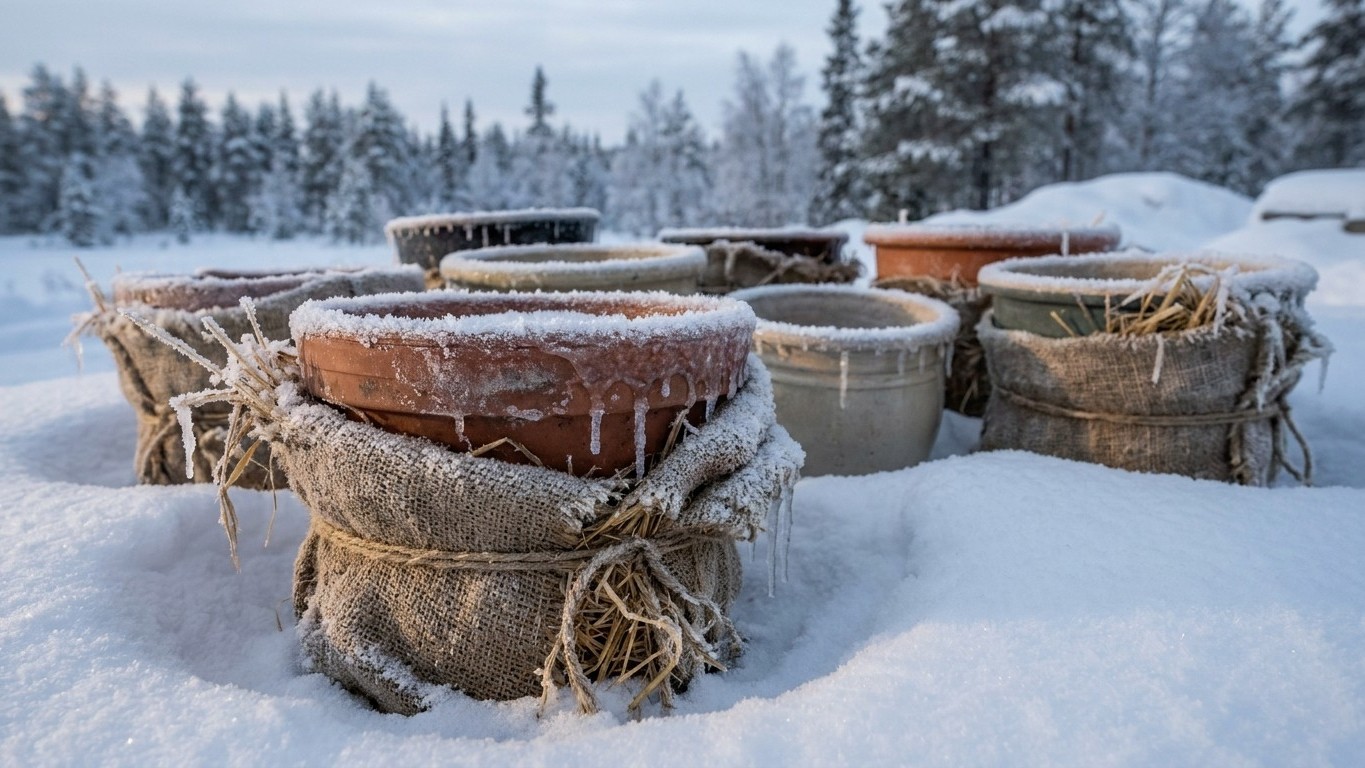

Spring bulbs in containers survive a Yukon winter only with help: the ground insulates roots, but a pot does not, and it freezes clear through. In Whitehorse’s coldest month, the average nightly low sits at -2.6°F, and the surrounding hardiness zone, in the Canadian system, is 1b, the harshest bracket that scale carries. That cold is not the problem here. The container is. Move it, insulate it, or force the bulbs indoors instead.
Why this matters in Yukon

Start with the number that decides everything else: -2.6°F. That is the average nightly low in Whitehorse’s coldest month, according to Environment and Climate Change Canada’s 1981-2010 climate normals. It is not a record low, and it is not a rare cold snap. It is the ordinary temperature the reference station logs, night after night, for weeks at a stretch.
That figure settles one of the two reasons gardeners force spring bulbs before it even becomes a question. Forcing exists because most spring bulbs need twelve to fourteen weeks below 45°F before they will bloom, and in places where winter never gets that cold, or barely holds it for a few weeks, the gardener has to manufacture the chill in a refrigerator or an unheated garage. Yukon has the opposite situation. A coldest-month average minimum of -2.6°F blows past twelve to fourteen weeks of cold without any effort from the gardener. Nobody in Whitehorse is short on winter.
The real problem is the pot, not the season
Cold that keeps bulbs alive in the ground can still kill the same bulbs in a container, and that is the second reason gardeners baby containers indoors. In a garden bed, frost bites the top few inches while the soil mass below stays insulated, buffered by the earth around and beneath it. A container has no such buffer. Once air temperature drops far enough, a pot freezes solid, roots and all, straight through to the drainage hole.
Yukon’s Canadian hardiness zone, 1b, comes from Natural Resources Canada’s 1991-2020 normals for Whitehorse, and it is about the coldest bracket the national system publishes for a populated area. That number applies to a bulb planted in open ground. It does not carry over to the same bulb sitting in a pot on a deck or a porch step, because a container generally needs something like two zones of hardiness margin above what the ground requires. In a place already at the coldest end of the Canadian scale, that margin does not exist outdoors unless the pot is moved, insulated, or both.
So the situation here is the container problem, not the missing-chill problem. Yukon growers do not need to fake winter. They need to keep a pot from turning into a block of ice with a bulb frozen inside it.
How to do it here
Since Yukon does not lack cold, the method is about giving bulbs a controlled dose of it and then protecting the container itself, rather than trying to conjure a chilling period that already exists outdoors in abundance.
- Choose bulbs with a short cold requirement, since they force faster and tolerate a smaller margin of error in a place where indoor space to chill them is limited.
- Pot the bulbs in fall, in a container with a drainage hole, using fresh potting mix rather than soil dug from the garden.
- Give the pot twelve to fourteen weeks below 45°F but above freezing. Outdoors, that window barely exists here: with a coldest-month average low of -2.6°F, an unheated garage or shed can slide below freezing too, not just below 45°F. A refrigerator drawer holds a steadier range, but keep it away from ripening fruit, because the ethylene gas fruit releases can kill the flower bud forming inside the bulb before it ever opens.
- Check the container against the bulb’s stated hardiness. As a rule, a pot left outdoors needs to be roughly two zones hardier than the bulb calls for. In Canadian zone 1b that margin does not exist, so plan on moving the container into an unheated but reliably above-freezing space, or burying it to the rim in mulch, rather than leaving it exposed through the chilling weeks.
- Once the chilling period is complete, bring the pot into a bright room held around 60 to 65°F. Bloom typically follows within two to four weeks.
- Water enough to keep the soil barely moist, never soggy, through both the chilling stage and the bloom stage, and turn the pot a quarter turn every few days so the stem grows straight instead of leaning toward the light.
Which bulbs are worth it
Not every spring bulb repays the effort of forcing or the trouble of protecting a pot through a Yukon winter. The ones with a short cold requirement come into bloom faster and take up less space in a refrigerator drawer. The ones with tall, top-heavy stems tend to topple once they hit bloom, especially in a lightweight container that cannot anchor them the way garden soil does.
Bulbs that force reliably in a Yukon container
- Crocus: one of the shortest cold requirements among common forcing bulbs, and a stem low enough that it never needs staking.
- Hyacinth: sturdy, upright, and forgiving of a slightly shorter chilling period than tulips need.
- Grape hyacinth (muscari): compact and dense, so a whole pot fills in without any single stem falling over.
- Dwarf daffodils, such as short-stemmed ‘Tete-a-Tete’ types: a shorter chill than trumpet daffodils and a stem height that suits a small pot.
Bulbs that sulk
- Standard tall tulips: a longer chilling period than crocus or hyacinth, and a stem height that leans and flops once the bloom opens.
- Trumpet daffodils: tall enough to need staking indoors, which defeats the point of a simple forced pot.
- Fritillaria: uneven forcing results and a tall, awkward habit in a container.
- Giant alliums: a long cold requirement paired with a stem that towers over anything a windowsill pot can support.
One thing softens the calculation. Because Yukon’s Canadian zone 1b rating already keeps most spring bulbs from reliably returning outdoors year after year, forcing a bulb indoors costs nothing extra in the long run. It was headed for the compost pile after one season regardless.
What goes wrong, and when you can still fix it
Leaves but no flower
This means the cold period ran short. The flower bud forms inside the bulb during chilling, and if the bulb spent less than twelve to fourteen weeks below 45°F, the bulb has enough stored energy to push up leaves but not enough development to open a bloom. There is no rescue for the plant already showing this. The fix applies only to next season’s bulbs, timed to the full chilling window.
Flower on a stem too short to see
This points to a bulb warmed too fast, or moved into bright, warm light before the stem had a chance to elongate. Once the flower has already opened on a stunted stem, nothing brings the stem back up to height this season. Next time, move the pot into indirect light for the first several days after chilling, then increase light gradually rather than all at once.
Rot in the pot
Soft, discolored bulb tissue during the chilling stage almost always traces back to a container without real drainage, or a drip tray left full of standing water. Rot is not reversible. A bulb that has gone soft will not firm back up and will not bloom. The only fix is prevention on the next attempt: a pot with an open drainage hole, and a saucer emptied after every watering.