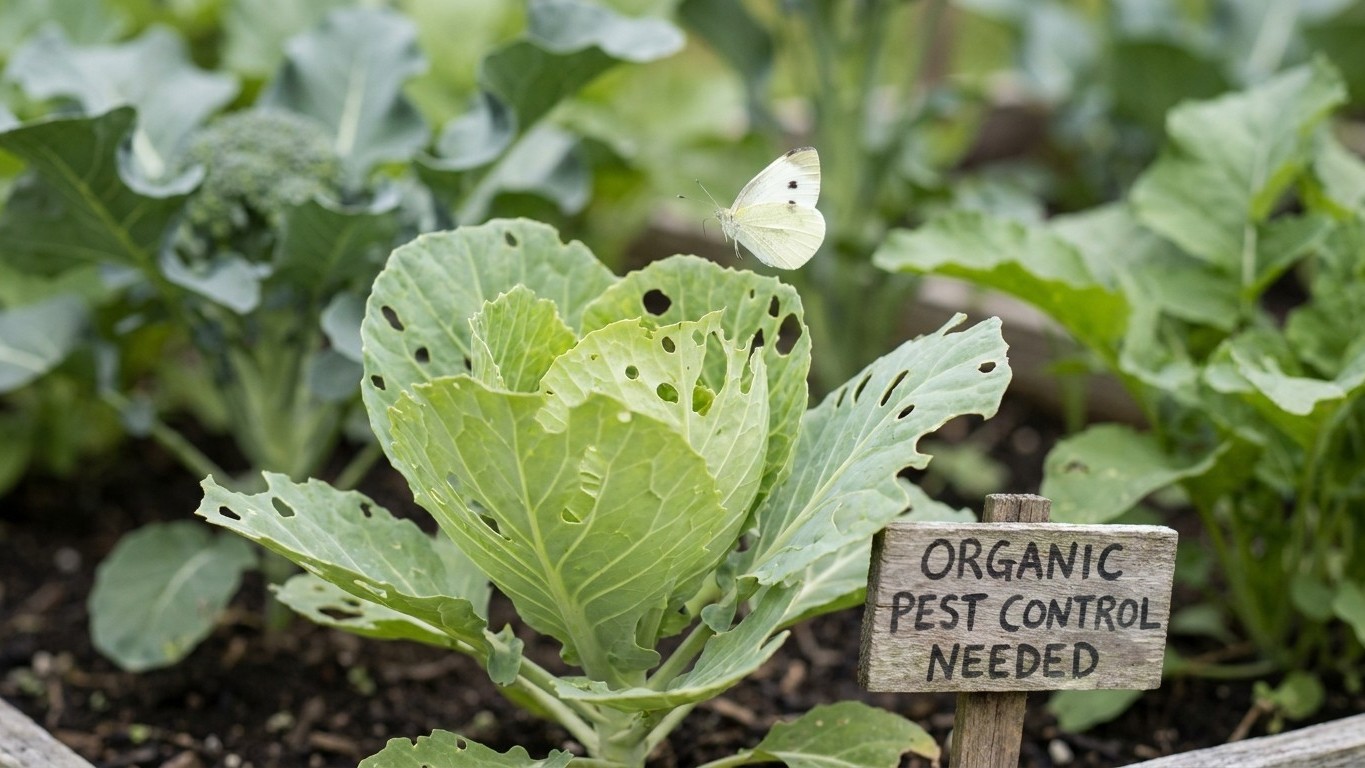

Cabbage worms show up in West Virginia gardens every year, and the state’s own extension service places their arrival squarely in June, right alongside Japanese beetles and aphids. That timing matters more than any calendar date, because it tells you which of your cole crops need protection before the caterpillars start chewing.
When Cabbage worms turns up in West Virginia

WVU Extension lists cabbage worms among the pests to watch for in June, grouped with Japanese beetles and aphids in its year-round garden pest guide. That’s a named window for this specific insect, not a guess pulled from a general pest calendar. It follows a broader seasonal arc the extension service lays out for the whole growing season: slugs, Colorado potato beetle, and flea beetle pressure build in April; asparagus beetles, cucumber beetles, and Colorado potato beetle eggs appear from May; then cabbage worms enter the picture in June, the same month aphids start clustering on new growth.
What that June flag really means is that the larvae have had time to hatch, feed, and reach a size where damage becomes visible. The adult, a small white butterfly, has usually already been active for weeks before anyone notices chewed leaves, since it’s the caterpillar stage that does the eating, not the adult. Gardeners who wait until they see the butterfly fluttering around their broccoli are already behind. By the time WVU Extension’s calendar flags cabbage worms in June, eggs have often been laid on the undersides of leaves for a week or more.
This doesn’t mean the pest is absent in May or July. It means June is when the extension service’s own monitoring puts the population and the visible damage on the radar for West Virginia gardeners specifically. Treat it as the point where checking your cole crops stops being optional.
Reading the calendar from your last spring frost
West Virginia’s last spring frost falls somewhere between April 9 and April 23, based on NOAA’s 1991-2020 climate normals for the Charleston station. That’s a range, not a single day, and it should stay that way in your planning. Charleston sits in a river valley, and higher elevations across the state freeze noticeably later into spring, sometimes weeks later, so a grower in the Eastern Panhandle highlands or up in the mountains should lean toward the later end of that window, or further, rather than the Charleston normal.
Cabbage worms don’t check a calendar. They respond to soil and air temperature, to when cole crop transplants go into the ground, and to when the adult butterflies become active enough to lay eggs. An early frost-free spring pushes everything forward; a cold, stretched-out one delays it. What stays consistent is the relationship between transplanting and damage: gardeners typically see the first chewed leaves within two to four weeks of setting out cabbage, broccoli, or kale transplants, once the plants have leafed out enough to feed a hungry caterpillar.
That window is your cue for row covers. If you transplant near the early end of the frost range, say around April 9 in the valleys, covers should go on at transplanting and stay put through most of June, since that’s when WVU Extension’s own data flags peak cabbage worm activity. If you’re planting later, near April 23 or after, adjust the cover schedule forward by the same stretch. Either way, the frost date is a normal to plan around, not a guarantee that pests or weather will cooperate.
What it attacks, and what the damage looks like
Most gardeners spot the damage before they ever spot the worm. Look for irregular, ragged holes chewed through leaves, sometimes so extensive that only the tougher veins remain, giving the leaf a skeletonized, lace-like look. Dark green or black droppings, called frass, often collect in the leaf folds or down near the base of the plant where the caterpillars have been feeding and resting.
The targets are cole crops: cabbage, broccoli, cauliflower, kale, collards, and brussels sprouts. Cabbage heads are especially frustrating, because the caterpillars work their way between the outer wrapper leaves and into the developing head itself, where they’re hidden from view until you slice the cabbage open at harvest and find chewed inner leaves and frass tucked between the layers.
Why the larval stage matters
It’s the larva, a velvety green caterpillar that blends almost perfectly with the leaf surface, that does all the feeding damage. The adult butterfly, small and white with a few dark wing spots, doesn’t chew on your plants at all; its only job is finding host plants and laying eggs on the undersides of leaves. That distinction decides what a gardener can actually do about it. Once you’re looking at holes in the leaves, you’re looking at larval damage already in progress, which means any control that only targets adult butterflies flying through the garden is too late to save that generation of leaves. The caterpillars themselves keep feeding until they pupate, so the window for intervening runs from the moment eggs hatch until the larva is ready to leave the plant and form a chrysalis, often tucked on the underside of a leaf or on nearby structures.
How West Virginia sits in this pest’s range

Cabbage worms are documented in 2 territories on this content network, which puts West Virginia in a narrower documented range rather than a broad, coast-to-coast pattern. A wide range across many territories usually means the pest is everywhere and the only real difference from place to place is timing, when it peaks in a given climate. A narrow range like this one, with just two territories on record, suggests West Virginia sits closer to an edge of where this pest’s presence is currently tracked and documented in this dataset, rather than sitting in the geographic middle of a well-mapped, coast-to-coast infestation pattern.
That doesn’t tell you anything about how severe an infestation might be in a given West Virginia garden, and it’s not a ranking against other states. It simply reflects how the documentation is built out across this particular set of pages. What it does mean practically is that a West Virginia gardener has less regional-specific published guidance to draw on than someone gardening in a state with a longer documented history of this pest, which is exactly why leaning on WVU Extension‘s own June flag, rather than a generic national pest calendar, is the more reliable anchor for timing decisions here.
What actually works against it
Start with the cheapest, lowest-effort options, because for cabbage worms they’re also the most effective ones.
- Timing of planting: setting out transplants early in the frost window (closer to April 9 in the valleys) gives cole crops a head start on growth before the June population surge WVU Extension flags, so plants can better tolerate some leaf loss without collapsing.
- Row covers: a lightweight fabric barrier physically blocks the adult butterfly from reaching the leaves to lay eggs in the first place. The mechanism only works if the cover goes on before adults are active and stays sealed at the edges; once a butterfly has already laid eggs under the cover, or the cover is removed too early, this protection stops mattering.
- Hand-picking: checking the undersides of leaves for the small yellow eggs or green caterpillars and removing them by hand works well early in an infestation, when the worms are still on the outer leaves and visible. It stops being practical once caterpillars have worked their way inside a developing cabbage head, where they’re hidden between the wrapper leaves and can’t be picked off without pulling the head apart.
- Crop rotation: moving cole crops to a different part of the garden each year disrupts the pupae that overwinter in soil or garden debris near where the previous crop grew, reducing the local population that emerges the following spring.
- Clearing debris: removing old cole crop residue after harvest takes away the sheltered spots where pupae would otherwise overwinter close to next year’s planting site.
None of these measures reach a caterpillar once it’s already tunneled deep into a cabbage head’s inner leaves. At that point, the only realistic move is harvesting and cutting away the damaged sections, since physical barriers and hand-picking both depend on the worm being visible and accessible on an exposed leaf surface.
Common questions
Do cabbage worms only affect cabbage?
No. They attack any cole crop, including broccoli, cauliflower, kale, collards, and brussels sprouts, since all of these plants belong to the same family the adult butterfly targets for egg-laying.
How soon after transplanting should I put on a row cover?
Cover plants at transplanting, ideally before the June period WVU Extension flags for cabbage worm activity. Since damage often appears within two to four weeks of transplanting once plants leaf out, waiting until you see chewed leaves means the cover is already too late for that generation.
Can I tell cabbage worm damage apart from other leaf-chewing pests?
Look for the combination of ragged, irregular holes plus dark frass in the leaf folds, along with a velvety green caterpillar on the leaf underside if you look closely. That combination, paired with cole crops as the host plant, points to cabbage worms rather than flea beetles or other chewing pests WVU Extension tracks earlier in the season.