
Only a handful of insects reliably damage tomatoes in Alberta, and the short, cool growing season keeps several common North American tomato pests out entirely or limits them to occasional years. Cutworms and flea beetles show up almost every spring; aphids and spider mites follow the heat; Colorado potato beetle and tomato hornworm are the ones worth knowing but rarely worth losing sleep over here.
What this comes down to in Alberta

Alberta’s growing season runs, on average, from the last spring frost around May 21 to the first fall frost around September 16, based on climate normals for the Calgary International Airport station. That’s roughly 118 frost-free days in a good year, and it’s the reason Alberta’s tomato pest list is shorter than a garden guide written for Ohio or Georgia. Several pests that need a long, hot stretch to complete more than one generation simply don’t get the chance here, while a few cool-tolerant insects have the run of the place from the moment the soil warms enough to plant.
Here’s what actually turns up, roughly in the order you’ll meet it.
Cutworms
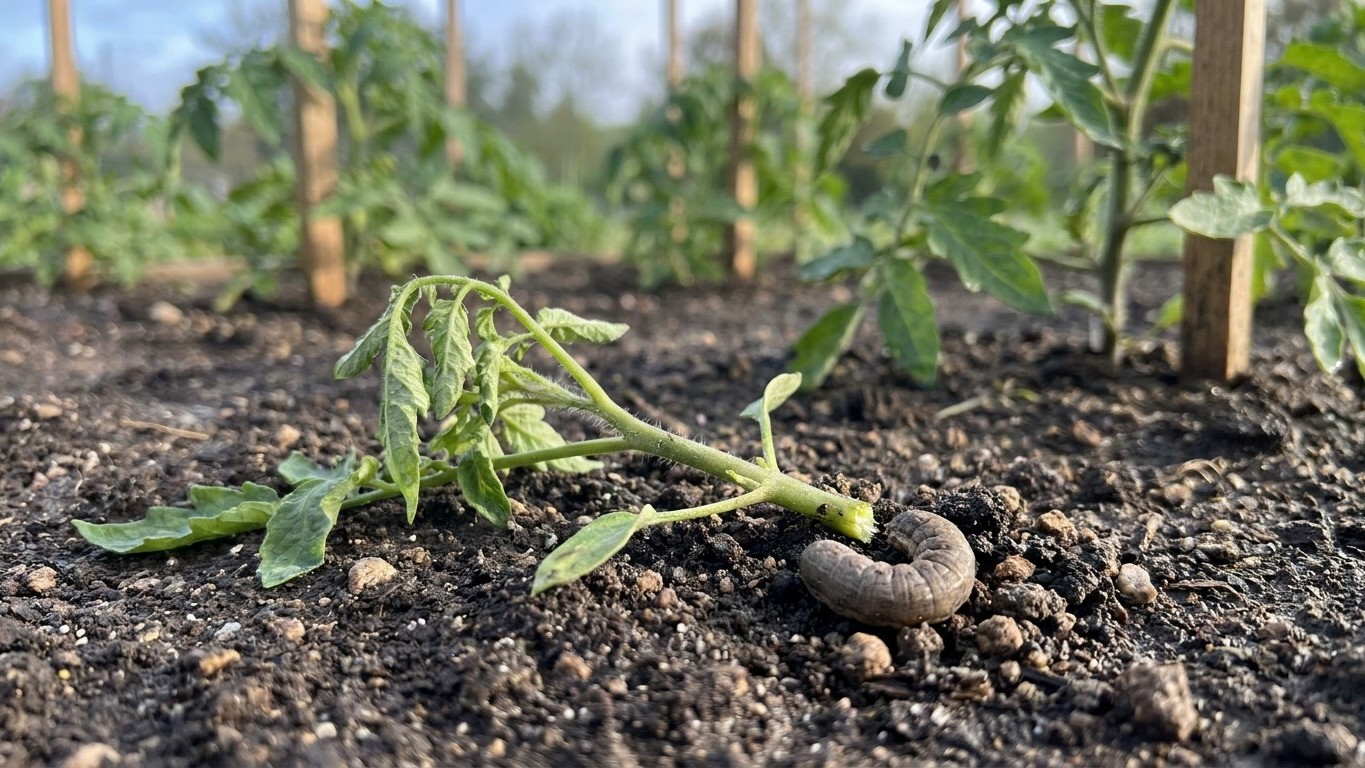
Cutworms are the first pest most Alberta gardeners fight, usually within a week or two of setting out transplants. The larva is a fat, grey-to-brown caterpillar about an inch long that curls into a tight C-shape when disturbed and hides in the soil by day. It feeds at night, chewing clean through a young stem right at the soil line, so a healthy seedling is simply toppled over by morning. A cardboard or foil collar pushed an inch into the soil around each stem stops it cold.
Flea Beetles
Flea beetles arrive around the same time as cutworms, while plants are still small. The adult is a tiny, shiny black beetle, barely 1/16 inch long, that jumps like a flea when you brush the leaf. It chews small round holes through the foliage, leaving a “shot-hole” pattern that looks worse than it usually is on an established plant. Floating row cover over freshly transplanted seedlings keeps the adults off during the vulnerable first few weeks.
Aphids
Aphids can show up any time after transplant, but they build into real numbers as June warms up. They’re small, soft-bodied insects, green or black, that cluster in tight groups on the undersides of leaves and along stems, sucking sap and leaving behind a sticky residue called honeydew. Heavy infestations curl and yellow the leaves. A strong jet of water or insecticidal soap, applied early, usually keeps them from spreading.
Colorado Potato Beetle
Colorado potato beetle turns up in early to mid summer once both soil and air have warmed. The adult is about 3/8 inch long with a yellow-orange shell striped in black; the larva is plump, orange-red, and soft. Both stages chew large, ragged holes through leaves and can strip a plant fast if left alone. Hand-picking adults and larvae off the foliage works well on a home-garden scale, since populations rarely reach the pressure they do in commercial potato fields nearby.
Spider Mites
Spider mites favor the hottest, driest stretches of an Alberta summer, typically July into August. They’re barely visible to the naked eye, reddish or pale, and live on the undersides of leaves, spinning fine webbing when numbers build. Damage shows as a fine yellow or bronze stippling across the leaf surface. A forceful water spray on the underside of the foliage, plus keeping plants from drying out, does more than most sprays.
Tomato Hornworm
Tomato hornworm is the pest gardeners ask about most and see least. It needs warmth and time to complete its life cycle, and Alberta’s short season means it’s genuinely uncommon here, showing up mainly in unusually warm, late summers. When it does appear, it’s hard to miss: a green caterpillar up to 4 inches long with white diagonal stripes and a curved horn on its rear end, capable of stripping whole branches of leaves and chewing into green fruit overnight. Hand-picking is the standard response, since it’s rarely present in numbers large enough to justify anything more.
Working it out for your own garden
Identifying which of these six you’re dealing with comes down to three questions: when in the season are you seeing it, where on the plant is the damage, and what does the culprit actually look like. Timing narrows things fast. A seedling toppled with a clean cut near the soil line in the last week of May or first week of June, right around when transplants typically go in after the frost risk from that May 21 average has passed, points straight to cutworm, not flea beetle, since flea beetles chew leaves, not stems.
Location does the rest of the work. Damage on the underside of leaves with fine stippling and faint webbing, showing up during a hot, dry stretch roughly six to eight weeks ahead of the September 16 average fall frost, meaning sometime in July, reads as spider mites rather than aphids, even though both are small and easy to miss at a glance. Aphids cluster in visible colonies and leave sticky residue; mites don’t.
Run the same logic on size and color before reaching for any treatment. A shiny black insect the size of a pinhead that jumps when touched is a flea beetle. A soft, plump caterpillar with diagonal white stripes and a horn is a hornworm, and given how rarely it appears in Alberta, it’s worth double-checking you’re not looking at a look-alike moth caterpillar before you assume the worst. A striped yellow-and-black beetle on the leaves in June or July, alongside orange-red larvae, is Colorado potato beetle, not a random visitor.
The practical habit is to check plants every few days starting the week transplants go in, since cutworms and flea beetles do their damage in that narrow early window, then shift your attention to the undersides of leaves once the hot, dry part of summer sets in, since that’s when mites become the concern. Matching the calendar to the pest saves a lot of guesswork with sprays.
What changes across the state
Alberta is not one climate, and the pests that matter shift with it. The Calgary reference point sits at moderate elevation on the prairie; move into the foothills or higher ground and cooler soil delays cutworm and flea beetle activity by a week or more, simply because the ground takes longer to warm to the point where larvae become active and adults emerge.
Southern Alberta, around Lethbridge and Medicine Hat, runs warmer and drier than the Calgary reference point, which means spider mites tend to arrive earlier and hang on longer through a longer stretch of hot, dry weather, and it’s also where a warm year is most likely to give tomato hornworm the heat it needs to complete its cycle. Northern Alberta, up toward Peace River, runs the other direction: a shorter, cooler season means fewer aphid generations pack into a summer, but cutworms and flea beetles remain just as much of an early-season problem, since neither needs sustained heat to do damage.
None of this changes which pests are possible, only how early they show up and how much pressure they build before the season runs out. A gardener in the foothills should expect everything on this list to arrive later and milder than a gardener in the Lethbridge area, with the same lineup either way.
The mistakes this state punishes
The most common mistake is skipping cutworm collars because the soil still feels cold. Cutworm larvae are active in the soil before the average May 21 frost date even passes, so a gardener who waits for “warm enough” weather to bother with a collar is often protecting the plant a week too late, after the damage is already done.
The second is watching for aphids too early and then losing interest. Alberta’s cool spring delays aphid buildup into June, well after most of the anxious early-season checking has stopped, so infestations often go unnoticed until the leaves are already curling. Checking leaf undersides once a week through June, not just in the first two weeks after transplant, catches it while a simple water spray still handles it.
The third is letting drought stress build during a hot, dry Alberta July and then trying to fix a spider mite outbreak with a single heavy watering. Mites take hold on stressed, dry plants, and by the time the stippling is obvious, the population is usually well established. Consistent watering through the driest weeks does more to prevent the problem than any treatment does to cure it afterward.
Checking this against your county
The Calgary-based figures here are a starting point for the whole province, not a promise for any one yard. Foothills gardens, northern counties, and anything at unusual elevation will see these pests arrive on a shifted calendar. Alberta’s own agriculture resources, at alberta.ca/agriculture-and-irrigation, and your local county or municipal extension office are the places to confirm what’s actually active in your specific area this season.
Common questions
Do tomato hornworms actually occur in Alberta?
Yes, but not reliably every year. The province’s short, cool season limits its life cycle, so it tends to appear mainly in unusually warm summers, more often in the warmer south than elsewhere in the province.
What’s the very first pest to watch for after transplanting?
Cutworms and flea beetles both show up almost immediately after transplant, often within the first one to two weeks, and are the reason collars and row covers matter most in that early window.
Are Colorado potato beetles a big problem for tomato plants in Alberta?
They show up on tomatoes in early to mid summer and can chew significant holes in the foliage, but home-garden numbers are usually manageable with regular hand-picking rather than requiring a spray program.
Do I need to spray tomatoes preventively in Alberta?
No single pest here shows up reliably enough or in high enough numbers to justify a preventive spray schedule. Checking plants regularly and treating the specific pest you find, once you’ve confirmed what it is, works better than spraying on a calendar.