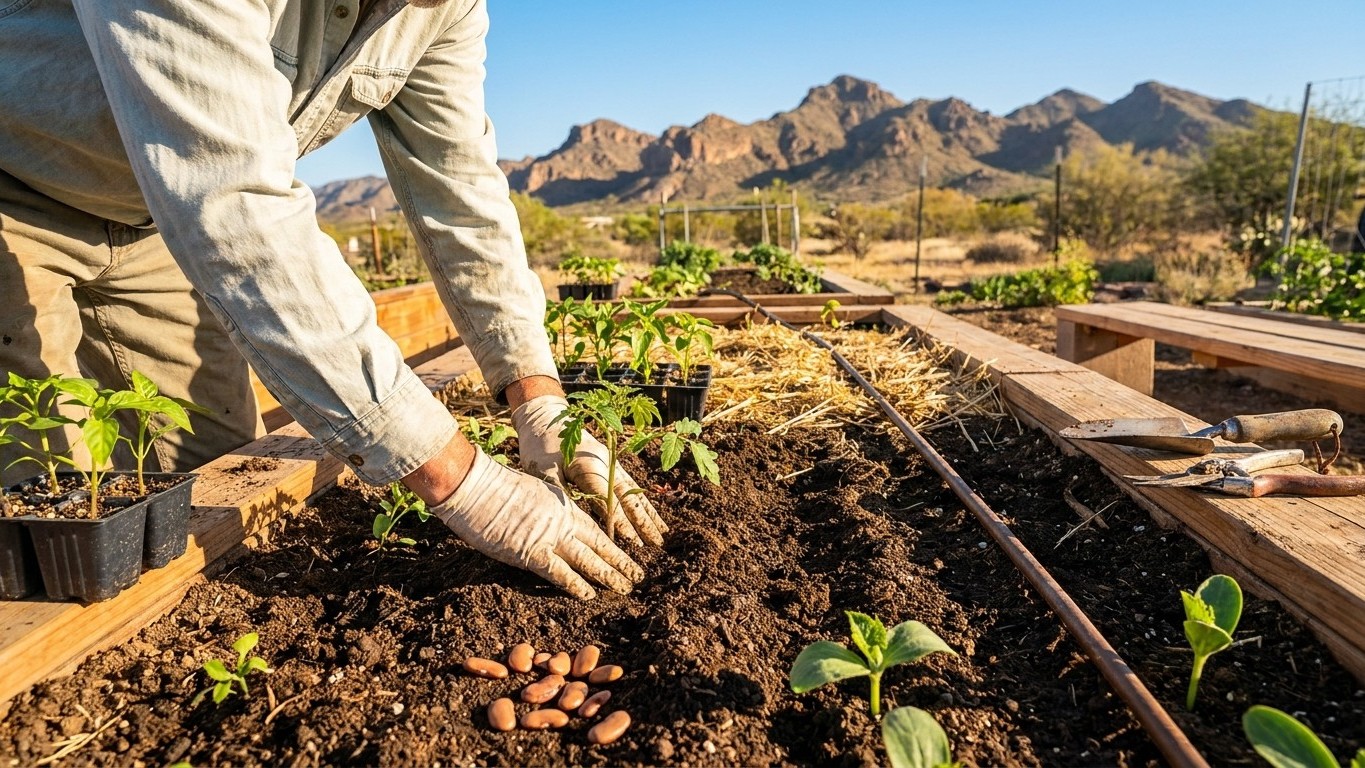

In low-desert Arizona (Phoenix, Tucson, Yuma), April belongs to warm-season crops: beans, squash, melons, corn and okra go straight into the ground, and tomato, pepper and eggplant transplants go out now before summer heat shuts down fruit set. Cool-season crops like lettuce and spinach are finishing, not starting. High-elevation Arizona (Flagstaff and similar country) is a different climate and still runs on a spring frost calendar.
What goes in the ground in April

The thing that decides an Arizona planting calendar isn’t frost. It’s heat. NOAA’s 1991-2020 Climate Normals for the Phoenix station (USW00023183) list a 365-day frost-free season there, and a hard freeze reached that station in only 6 of 30 recent springs, usually as a brief cold snap between late December and mid-January. By April, that window has been closed for months. The limiting factor for the rest of spring and into summer is the opposite problem: heat that arrives fast enough to stop tomatoes and peppers from setting fruit for weeks at a stretch.
That changes what “planting in April” means in the low desert. It’s not a frost-safety question, it’s a race. Direct-sow beans, corn, squash, melons, cucumbers and okra now, while soil has warmed enough for fast germination but before daytime highs climb into the range that stresses seedlings. Set out tomato, pepper, eggplant and basil transplants early in the month if they aren’t in the ground already, since every week of delay shortens the window before summer heat suppresses fruit set on tomatoes and peppers.
Cool-season crops still standing (lettuce, spinach, peas, broccoli, cabbage) are on their way out, not going in. Planting new rounds of these in April in the low desert is a losing bet; they’ll bolt or stall as temperatures rise.
Arizona’s USDA Plant Hardiness Zones run from 4b to 10b across the state, a range built on average annual extreme minimum temperature. Low-desert areas sit at the warm end of that range; high-elevation country sits at the cold end, and still carries real spring frost risk in April. There, stick to hardy greens, peas and onion-family crops until local frost has reliably passed, and treat any warm-season planting as a gamble until then.
| Region | April frost risk | What to plant now |
|---|---|---|
| Low desert (Phoenix, Tucson, Yuma) | Effectively none; season is frost-free per NOAA normals | Beans, corn, squash, melons, okra, tomato/pepper/eggplant transplants |
| High country (Flagstaff and similar elevation) | Still present; frost dates not published here | Hardy greens, peas, alliums; hold warm-season crops |
What to start under cover
In the low desert, the backward count that matters isn’t from a frost date, it’s from the heat threshold that stops fruit set. Since specific low-desert heat-onset dates aren’t published in the source data used here, the practical approach is arithmetic gardeners can run themselves: tomato, pepper and eggplant seedlings typically need six to eight weeks indoors before they’re ready to transplant. If those transplants should be in the ground by early April to get a full harvest window before summer heat arrives, seed should already be started; if not, buying started transplants from a local nursery closes the gap faster than starting from seed this late.
The two failure modes are the same ones gardeners hit everywhere, just compressed into a shorter window here. Start too early under lights or in a warm windowsill and seedlings get leggy and rootbound before outdoor conditions are ready, then sulk for weeks after transplanting. Start too late and the seedlings go into the ground just as heat is ramping up, so they never get the mild-weather establishment period they need before stress hits.
For high-elevation growers, the same backward-count logic applies but runs off the local last-frost window instead of a heat threshold. Since that date varies by elevation and isn’t part of the low-desert data cited here, checking a county-level source before starting seed indoors is the safer move than assuming a statewide date.
Melons, cucumbers and squash generally do better direct-sown than started under cover in Arizona’s heat-driven climate, since their root systems resent transplant disturbance and they catch up fast once soil has warmed.
What is ready to pick
Low-desert gardens are still harvesting the last of the cool-season crops in April: lettuce, spinach, cilantro, peas, broccoli, cabbage and root crops like carrots and beets should come out now, before rising heat pushes them to bolt and turn bitter. A head of lettuce that’s started to send up a central stalk is done; pull it rather than waiting for it to fill out further.
Citrus that ripened over winter (oranges, grapefruit, lemons depending on variety) may still be finishing up on the tree in parts of the low desert, and artichokes planted the previous fall can be producing their first buds. Check chard and kale plantings too; they tolerate rising heat better than lettuce and often keep producing into late spring if kept watered.
High-elevation gardens are unlikely to have much coming out of open ground in April. Anything under a cold frame or low tunnel (spinach, hardy lettuce, kale) is the more realistic harvest source, along with sprouts or microgreens started indoors. For stored crops from the previous fall (winter squash, potatoes, onions), this is a good month to check them over: soft spots, sprouting eyes on potatoes, or a musty smell mean it’s time to use or discard rather than let rot spread to the rest of the batch.
The jobs that matter this month
Water rhythm needs to shift now, before it becomes urgent. As daytime highs climb through April in the low desert, established beds and new transplants both need more frequent irrigation, and a layer of mulch around new plantings buys real protection against the soil drying out between waterings. Waiting until plants show stress to increase watering usually means damage has already happened below the surface.
Clear out finished cool-season crops promptly rather than letting them linger. Bolting lettuce and spinach attract aphids, and those aphids move on to nearby transplants once their host plant collapses. Pulling spent crops now and turning that space over to summer planting keeps pest pressure from building.
Stake and cage tomatoes and set trellises for beans, cucumbers and melons before the plants sprawl. It’s far easier to install support structures over a young plant than to wrestle one into a cage after it has already fallen over its neighbors. This is also the month to build or buy shade structures for later use; heat-driven leaf scorch on peppers and tomatoes arrives fast, and shade cloth put up in advance is far more effective than shade cloth added after damage shows.
Scout for early pest activity: whiteflies and aphids build populations quickly as temperatures rise, and catching them on a handful of plants is far easier than dealing with an established infestation across a whole bed. Check drip irrigation lines and emitters now too, since a clogged emitter that goes unnoticed in cool weather becomes a dead plant once heat sets in.
Succession-sow beans and summer squash every couple of weeks through the rest of spring to spread out harvest and hedge against any single planting struggling with heat or pests.
What not to do in April
The most common low-desert mistake is planting a full round of new cool-season crops because a cool morning felt like spring. Lettuce, spinach and peas seeded in April will bolt before they mature; if cool-season crops are wanted, that window closed weeks earlier and the next chance comes in fall.
The opposite mistake shows up in high-elevation gardens: setting out tomatoes or peppers because a warm afternoon felt like summer, only to lose them to a frost that arrives days later. Air temperature during the day says nothing about overnight lows at elevation; check a forecast for the coming week before making that call, not just the current afternoon.
Heavy nitrogen fertilizer applied to tomatoes and peppers right as they start flowering pushes leafy growth at the expense of fruit set, which is exactly the wrong trade when the plant needs every week of cooler weather it can get to set a crop before heat arrives. A lower-nitrogen, phosphorus-forward feed at planting time serves fruiting crops better than a heavy nitrogen boost later.
Delaying shade cloth or windbreak installation until plants already show scorch also costs more than it saves; by the time damage is visible, the plant has already lost tissue it won’t fully recover.
Checking this against your own county
A statewide April guide is a starting point, not an instruction. Elevation swings across Arizona are extreme, from below sea level in parts of the low desert to well over 7,000 feet in the high country, and that difference alone can shift planting windows by a month or more between two towns in the same state. Local microclimates, soil type and water source add further variation even within the same county.
The University of Arizona Cooperative Extension publishes county-level guidance and planting calendars that account for local elevation and conditions, and it’s the better reference for a specific address than any statewide month-by-month list, including this one.
Common questions
Is April too late to plant tomatoes in low-desert Arizona?
Early April is generally the last comfortable window for setting out tomato transplants in the low desert. Planting later still works but shortens the harvest period before summer heat suppresses fruit set, so earlier in the month beats later.
Does Phoenix get frost in April?
NOAA’s 1991-2020 Climate Normals for the Phoenix station list a 365-day frost-free season, and freezing temperatures there occurred in only 6 of 30 recent springs, typically between late December and mid-January. By April, frost risk in the low desert is not a practical concern.
Can I still direct-sow lettuce and spinach in April?
In the low desert, no; rising heat will push new plantings to bolt before they mature. In high-elevation Arizona, cool-season greens can still go in if the local frost window has passed, since that climate stays cooler further into spring.
What’s the biggest difference between gardening in Flagstaff and Phoenix in April?
Phoenix gardeners are managing heat and racing to get warm-season crops established before it intensifies. Flagstaff-area gardeners are still watching for frost and generally can’t plant warm-season crops safely yet. The two calendars run almost opposite to each other in the same month.