
The shape of that soggy patch already told you what’s wrong. A rounded dip that fills after storms means a low spot in the grade. A straight ribbon of ponding along a fence or foundation means the hardscape was set without enough slope. A ragged, spreading stain with dull, thinning edges means compacted soil choking under foot traffic. Read the outline before you touch a shovel — the fix that holds depends entirely on which of these three you’re actually standing on.
What you are looking at

Shape and color are the diagnosis
The tell is a patch of lawn that stays wet, spongy, or visibly puddled for a stretch after every rain, while the grass around it dries out on schedule. The shape usually tells you what you’re dealing with before you dig anything. A rounded or oval depression that fills after every storm is a low spot in the grade. A long, straight strip that ponds along a fence line, driveway, or the foundation of the house points to a grading problem created when that hardscape went in. An irregular, spreading patch that gets bigger every year, with the edges bleeding into duller, thinner turf, is compaction working outward from foot traffic or equipment.
Grass sitting in standing water changes color before it changes texture. Expect a dull olive or yellow cast first, moving toward gray-brown and finally black as the crown rots. The blades often go limp and mat down flat rather than standing up, and the soil underneath feels soft enough to leave a footprint that doesn’t spring back. In a true low spot, this discoloration tracks the shape of the depression exactly. If the wet, discolored area doesn’t match any dip you can see or feel underfoot, look upstream instead: a buried drain line or a neighboring property’s runoff can be dumping water onto a patch of otherwise flat lawn.
Watch how the wet area behaves across a season, not just after one storm. A spot that only shows up after heavy rain and disappears within a day or two is a grading nuisance. One that stays soggy through a whole wet spell and reappears in the same footprint every time significant rain falls means the soil underneath has lost its ability to drain, not just its slope.
What it is not
The thirty-second root test
A lawn that’s simply yellow and thin in a wet-looking area is not automatically a drainage problem. Dog urine leaves a small, tight circle of dead grass with a dark green ring around the outside, rarely bigger than a dinner plate, and it shows up on flat ground with no puddling at all. Brown patch and other fungal diseases spread as irregular but distinct rings or smoky-edged patches that appear during warm, humid stretches on soil that isn’t sitting wet at all. For the wider range of lawn issues that get confused with each other, see Lawn Problems before you assume the worst.
Grub damage is the other common mix-up, because grub-killed turf often looks dead in a spreading, irregular patch much like a compacted area. The difference is underfoot: grab a handful of the dead grass and pull. If it lifts away from the soil like a loose carpet, with no roots holding it down, you’re looking at grubs eating the root system, not water sitting on top of it. If the grass resists and the roots stay anchored, the problem is what’s happening to the soil, not something eating it from below.
- Small, sharp-edged dead circle with a green ring: likely dog urine, not drainage.
- Smoky or tan patches that appear fast in humid weather and don’t hold water: likely a fungal disease.
- Turf that lifts like a rug with no roots attached: grubs, not compaction.
- Soft ground that holds a footprint and grass that stays wet two or more days after rain stops: a genuine drainage problem.
One more test worth doing before you assume the worst: dig a small hole, about a shovel’s depth, in the wet area and see how quickly the water in it drops. If it drains visibly within a short wait, you likely have a slow but functioning soil profile that just needs help shedding surface water. If the hole stays full and doesn’t move, the compaction or the water table underneath is deeper than a quick fix will solve.
What actually causes it
Standing water is a mechanical problem before it’s a plant problem. Soil is made of solid particles and pore space, and water sitting in that pore space pushes out the oxygen roots need to function. Compacted soil is the most common cause in yards that get regular foot traffic, parked equipment, or heavy clay to begin with: the particles get pressed together, the pore space shrinks, and water that would normally move down through the profile has nowhere to go but sideways or up. A grading problem does the same thing without touching the soil structure at all. If the yard slopes toward the house, a fence line, or a low corner instead of away from it, water collects there by gravity no matter how loose the soil is.
Timing: damage shows up weeks after the water does
Cool-season lawns, tall fescue and Kentucky bluegrass among them, tend to show the damage from standing water during the wet stretches of spring and again in late fall, when saturated soil sits alongside cooler air and the grass is already growing slowly. The yellowing or blackening you see is usually the result of root suffocation that started days or weeks earlier, not something happening in the moment you notice it. Warm-season lawns, including St. Augustinegrass and centipedegrass, are more likely to show ponding damage in the middle of a rainy summer, when soil stays saturated and warm at the same time and rot organisms in the crown move fastest.
A downspout emptying next to the foundation, a sump pump discharge line aimed at the yard instead of the street, or a neighbor’s regraded property sending runoff over the property line are all mechanical causes with nothing to do with the grass species growing there. None of these fix themselves as the lawn greens up in spring. If the water is still finding the same low spot the following year, the cause is the ground, not the turf on top of it.
Fixing it
Start with the cheapest fix that matches what you found in the diagnosis above. If the screwdriver test showed compacted soil across a broad area rather than one low pocket, core aeration is the first move: it pulls plugs of soil out of the lawn and gives water somewhere to go besides sideways. It’s inexpensive to rent or hire, and while it does not fix a true grading problem, it buys real drainage improvement in a compacted lawn that isn’t actually low.
When the problem is a shape, not just the soil
A genuine low spot needs fill, not just aeration. Add topsoil in layers, tamping each layer before adding the next, so the fill doesn’t settle into a fresh depression a few months later. Match the surrounding grade as you go, then seed or sod the repaired area once it’s level, choosing a species suited to the site rather than whatever seed happens to be left in the garage. Reseeding the wrong grass for the site just recreates the bare patch the next time conditions turn against it.
Because a spot that has been sitting wet has often lost its grass entirely, use the repair as a chance to match the replacement to the site instead of just patching in whatever was there before. Clemson Cooperative Extension’s HGIC 1214 fact sheet and Penn State Extension’s lawn establishment guidance rate the common lawn species by mowing height and tolerance, which matters most in a low spot that will always be a little wetter and more trafficked than the rest of the yard.
| Grass | Season | Mowing height | Drought tolerance | Wear tolerance |
|---|---|---|---|---|
| Tall Fescue | Cool-season | 2.5 to 3.5 in | Fair | Fair |
| Kentucky Bluegrass | Cool-season | 2 to 3 in | Fair | Good |
| Zoysiagrass | Warm-season | 0.75 to 2 in | Good | Very good |
| St. Augustinegrass | Warm-season | 2.5 to 4 in | Good | Fair |
None of these figures shift with a spot’s drainage history. Mowing habit and drought rating come from the plant itself, according to Clemson Cooperative Extension (HGIC 1214) and Penn State Extension’s lawn establishment guidance, so pick the row that matches how much wear and sun the repaired patch will actually get, not how the rest of the lawn happens to be planted.
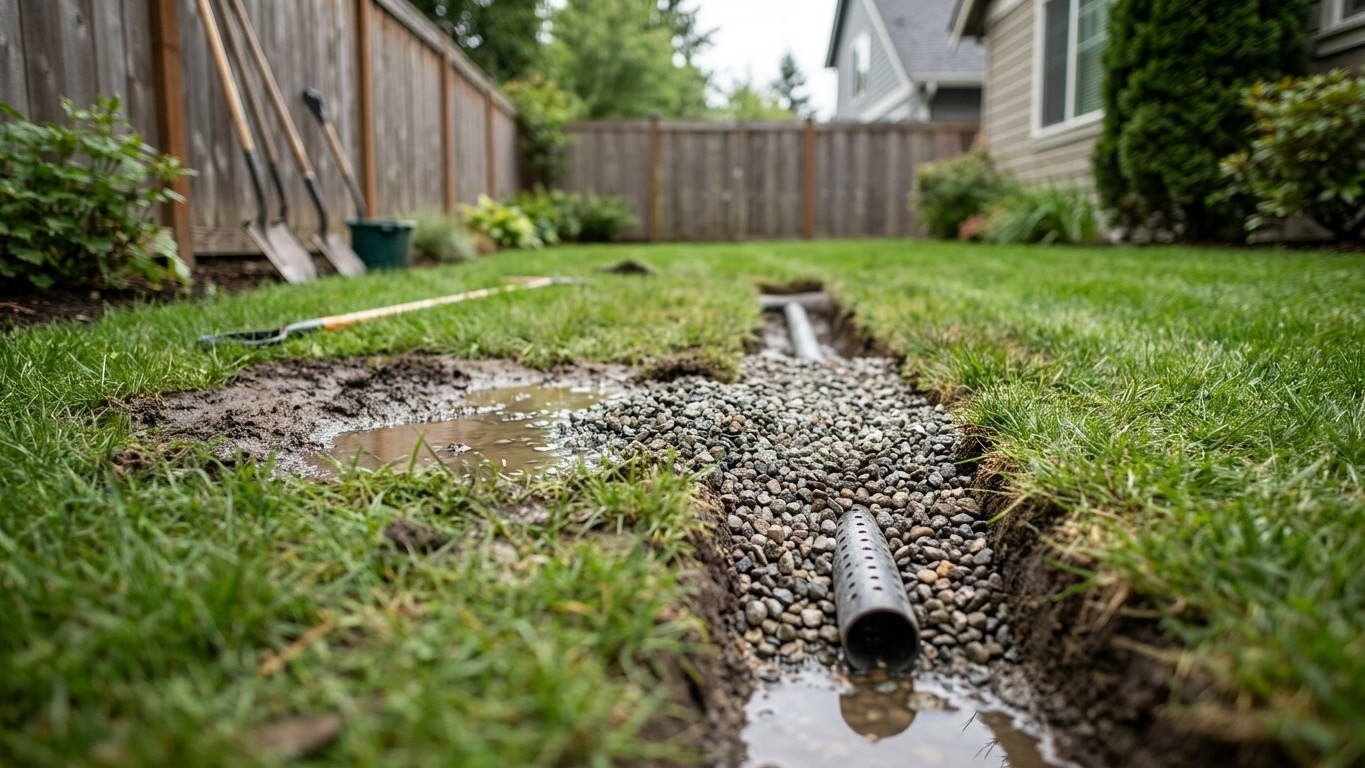
For a low spot that stays wet no matter how much fill you add, a French drain (a gravel-filled trench with a perforated pipe running to a lower discharge point) or a dry well is the next step up, and it’s a job most homeowners hire a landscaper for rather than dig themselves. Redirecting downspouts and extending sump discharge lines away from the lawn is far cheaper and should happen before any digging, since it removes water that a drain would otherwise have to handle.
If the grass in the wet spot has simply gone dormant rather than died outright, give it time before you reseed anything: roots that still hold when you tug them are the tell that recovery is still possible. A lawn that’s dormant from waterlogging or heat stress often greens back up on its own once the water problem is actually fixed, and reseeding over a lawn that was going to recover anyway wastes both seed and money.
Keeping it from coming back
Mowing height and watering rhythm
The habit most often behind a lawn that keeps flooding in the same spot is mowing too short. Scalping compacts and stresses the turf right where it’s already struggling to drain, thins the canopy that would otherwise slow surface runoff, and leaves soil more exposed to the beating of heavy rain, which packs it down further. If the wet patch already lost its grass once to scalping and standing water together, see A Scalped Lawn: What Happens After You Cut Too Short for how far a low mow sets a lawn back and how it recovers.
Watering habit is the second lever, and it works in the opposite direction from what most people assume. Frequent, shallow watering keeps the top couple inches of soil saturated more of the time, which gives newly repaired low spots less capacity to absorb the next rain before they pond again. Deep, infrequent watering trains roots downward and leaves more air space near the surface to buffer a storm. If you’re not sure whether a spot is actually drowning or just dormant and thirsty-looking, that distinction matters: see Yellow Lawn: Hunger, Drowning, or Simply Dormant before you change a watering schedule based on color alone.
Check the grade again a full year after any repair, once the soil has settled through a wet season and a dry one. Fill added in a single pass often drops as it compacts naturally, and a spot that looked flat in the fall can be a shallow bowl again by the following spring. Walking the whole lawn after a heavy rain and marking where water actually sits, rather than relying on memory, is the cheapest maintenance step in this entire process, and it’s the one that catches a new problem before it becomes a bare patch again.
Common questions
How long can grass sit in standing water before it dies?
There’s no single safe window because it depends on temperature, the grass species, and how saturated the soil already was going in. Warm, saturated soil kills roots faster than cool water sitting on dormant turf, so the same puddle that does no lasting harm in early spring can kill grass outright in the middle of a hot, humid summer.
Will grass seed even grow in a spot that stays wet?
Seed will germinate in wet soil, but seedling roots drown in the same conditions that kill established turf, so germination isn’t the problem. Fix the standing water first, then seed, or the new grass fails the same way the old grass did.
Can I just fill the low spot with sand instead of topsoil?
Straight sand drains fast but doesn’t hold the nutrients or moisture grass roots need between waterings, and it can create a layered soil profile that drains unevenly once topsoil settles on top of it. A blended topsoil, added and tamped in layers, gives grass roots something to establish in while still improving on the compacted soil it’s replacing.
Is a French drain overkill for one small puddle?
For a single small depression that fills after heavy rain and drains within a day or two, regrading and aeration usually solve it without the cost of a drain. A French drain earns its cost on a spot that stays wet through a whole season, sits near a foundation, or has already resisted a regrading attempt.