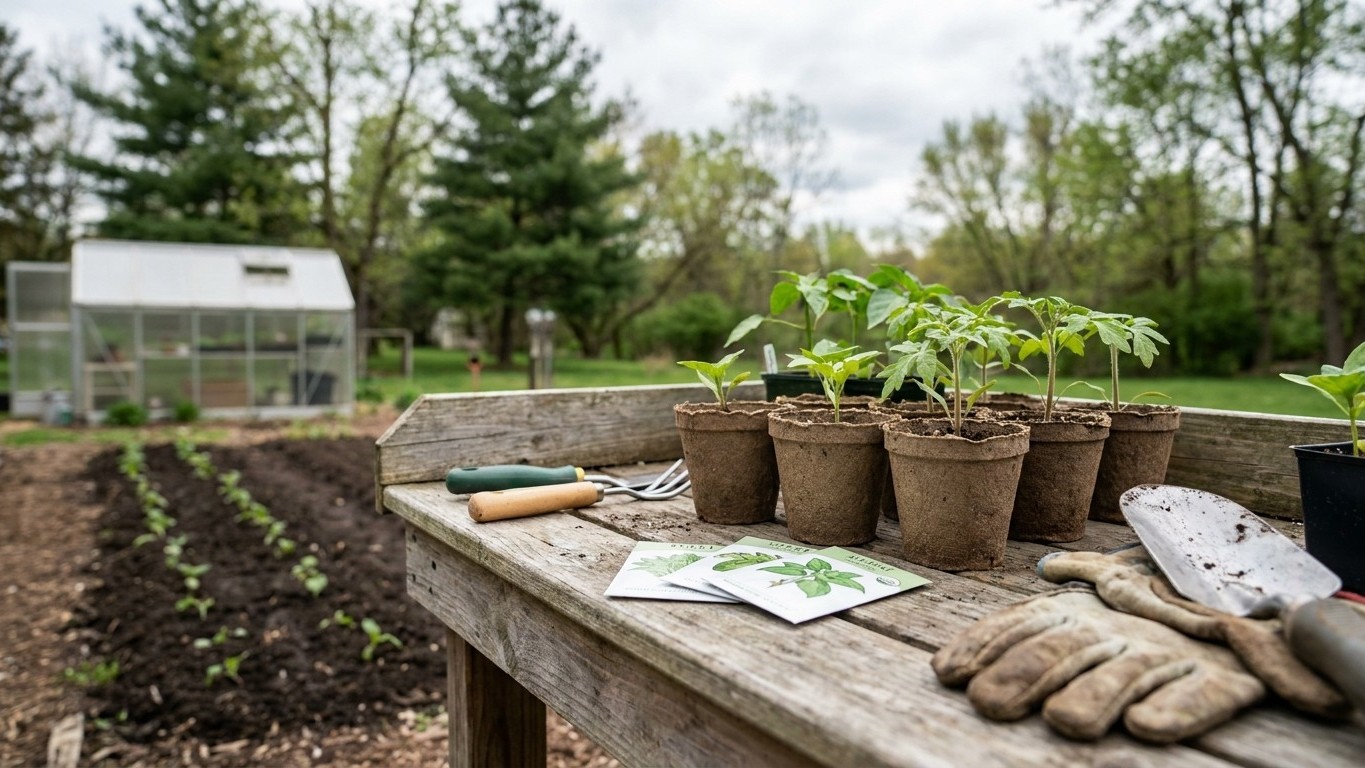

April in Saskatchewan sits well ahead of the frost line, so the honest answer is that almost nothing tender goes into open ground yet. The mean last spring frost at Saskatoon runs May 18, and that’s a midpoint, not a safe date. What you can do this month is plant the hardiest crops on workable soil, get seedlings started indoors, and use the four weeks to set up everything that makes May and June go smoothly.
What goes in the ground in April

Soil temperature decides this month, not the page of a calendar. Saskatchewan ground in April is often still partly frozen underneath, waterlogged from snowmelt, or simply too cold for seeds to do anything but rot. The mean last spring frost at Saskatoon is May 18, and that figure is an average of thirty years of data: in half of those years, frost arrived later. Treat April as sitting inside the frost window, not past it.
That rules out anything tender. Tomatoes, peppers, squash, beans, and corn have no business in open soil this month, full stop. But a handful of crops shrug off a light frost and can go in once the soil is workable, meaning it crumbles in your hand instead of sticking in a cold, wet clump. Onion sets and shallots tolerate cold soil and a late frost, and get an early root system going before summer heat arrives. Garden peas are the classic April gamble that usually pays off: they germinate in soil as cool as the high 30s Fahrenheit and can handle a frost once they’ve sprouted. Spinach and other cold-hardy greens can go in as direct seed on the tail end of the month if the ground has thawed and drained.
What still counts as gardening this month
If the soil is still frozen solid in your yard, that’s not a failure, that’s Saskatchewan. Use a cold frame or a low tunnel to get a two-to-three-week jump on those same hardy greens and peas, warming the soil underneath before the open garden is ready. Bare-root fruit trees, canes, and dormant perennials can go into prepared holes as soon as the ground can be dug, well before any leaf growth starts. Indoors, this is prime time for forcing rhubarb crowns or chicory roots in a dark, cool spot for an early harvest that has nothing to do with outdoor frost risk at all.
What to start under cover
Work backward from the frost window instead of a fixed date. With a mean last frost of May 18, and the real possibility of frost well into late May in cooler pockets, tomatoes and peppers started indoors need six to eight weeks before they go outside, which puts their seeding right around now, into the early weeks of the month. Slower growers like celery or onions from seed want eight to ten weeks and should already be underway or going in immediately.
Cucumbers, squash, and melons are different animals: they hate root disturbance and grow fast, so starting them indoors too early just means fighting rootbound, leggy transplants by the time it’s safe to put them out. Three to four weeks before the transplant date is plenty for these, which for most Saskatchewan gardens means waiting until closer to the frost window itself rather than starting them alongside the tomatoes now.
Two mistakes show up every spring. Starting too early leaves you with tall, pale, stressed seedlings sitting in small pots for weeks longer than they should, stretching toward whatever light they can find. Starting too late means the plant never reaches transplant size before the ground and air are warm enough to take it, costing real weeks of the short growing season. A bright window rarely gives seedlings enough light on its own here; a basic grow light run twelve to sixteen hours a day keeps stems stocky instead of stretched.
What is ready to pick
Little to nothing comes out of the open garden in April in Saskatchewan, and there’s no point pretending otherwise. Anything still standing outdoors from the previous season, kale, leeks, or parsnips left under snow cover, can be dug as soon as the ground softens enough to get a fork in, and cold often sweetens their flavor rather than ruining it. Check them for soft or mushy spots before eating; a leek that’s turned slimy at the base didn’t make it through winter cleanly.
Cold frames planted the previous fall or early this spring may already be giving up spinach, mâche, or hardy lettuce leaves, picked a few outer leaves at a time so the plant keeps producing. Indoors, sprouts and microgreens are the fastest fresh food this month, ready in a week to ten days from seed on a windowsill, with no soil or outdoor weather involved at all.
This is also the month to go through the root cellar or pantry stash. Stored squash softening at the stem end, potatoes throwing long pale sprouts, or onions gone soft in the neck are all signs they’re on the way out, better used now than left to rot further. Sort through bins and use the ones showing early trouble first, before they take neighboring produce down with them.
The jobs that matter this month

April carries more weight in the Saskatchewan garden calendar than the empty planting list suggests. Dormant pruning of fruit trees, currants, and raspberry canes should happen before buds break, cutting out dead, crossing, or diseased wood while the plant’s structure is still easy to see without leaves in the way. Wait even a few weeks too long and you’re cutting into active growth, which stresses the plant and invites disease into fresh wounds.
Seed ordering has a real deadline too, even if it doesn’t feel like one. Popular varieties, especially short-season vegetables bred for prairie growing seasons, sell out earlier every year, and a seed packet ordered in April beats one ordered in May when the shelf is already picked over.
Soil testing and amending pays off best done now, while beds are still empty and amendments have weeks to work into the soil before anything gets planted. A soil test run through a lab tells you whether you actually need lime, sulfur, or extra nitrogen, rather than guessing and either wasting money or overcorrecting. Turning the compost pile, once it’s thawed enough to work, speeds up decomposition and gets finished compost ready for when transplants go in.
Round out the month with the unglamorous jobs: sharpening and oiling tools before the season’s heavy use starts, checking fencing and raised bed frames for winter damage, and walking the stored crops one more time for anything starting to turn. None of this is filler. Skip the pruning window and you’re pruning into active growth next month; skip the soil test and you’re amending blind all season.
What not to do in April
The classic April mistake in Saskatchewan is trusting the air instead of the soil. A stretch of 60-degree afternoons feels like spring, but the ground eight inches down is often still in the 40s or colder, and warm-season seeds planted into that soil simply sit and rot rather than germinate. Wait for the soil itself to warm, checked with a simple soil thermometer, rather than for a few sunny days on the forecast.
A related error follows any mild spell: pulling row covers, cold frame lids, or mulch off too early because it looks like winter’s over. The mean last frost of May 18 means frost, sometimes a hard one, is still statistically likely for weeks after any warm snap. Uncovered hardy greens and fruit tree blossoms caught by a late frost can lose the whole season’s harvest in one night. Keep protection in place, and keep an extra layer of frost cloth ready even after planting the hardy crops.
Nitrogen timing trips people up too. A heavy dose of nitrogen fertilizer applied to fruit trees or perennials this early pushes soft, fast growth right before that growth is most vulnerable to a late frost. Hold off on nitrogen-heavy feeding until the frost risk has genuinely passed, and lean on phosphorus and potassium for root and bud development in the meantime.
Checking this against your own county
A province-wide month is a starting point, not an instruction. Saskatchewan stretches from the northern forest edge to the dry southern plains, and elevation, local lake effect, and simple latitude shift these windows by weeks in either direction. The frost figures here come from the Saskatoon SRC station; a garden further north or at higher elevation should expect to plant later, and a garden in the milder southern grain belt may see workable soil somewhat sooner.
For local frost data and planting guidance specific to your part of the province, check the Saskatchewan agriculture and agribusiness resources before finalizing your own April schedule.
Common questions
Can I plant anything outdoors in Saskatchewan in April?
Onion sets, shallots, garden peas, and cold-hardy greens like spinach can go in on workable soil late in the month, but tender warm-season crops still need to wait for the frost window to close.
What hardiness zone is Saskatchewan?
Saskatoon sits in Canadian hardiness zone 3a, based on Natural Resources Canada’s system. That’s a Canadian rating built from seven climate variables, not a USDA zone, and the two systems don’t convert directly onto the same scale.
When is the last frost in Saskatchewan?
The mean last spring frost at Saskatoon is May 18, but that’s a 30-year average, not a guaranteed cutoff. Frost arrives later than that in roughly half of all years, so treat late May as still within reach.
Is it too early to start tomato seeds indoors in April?
No, it’s close to ideal. Counting six to eight weeks back from a late-May transplant date lands seed-starting for tomatoes and peppers right around the early-to-mid part of the month.
Gardeners who plant by the Moon can check the April 2027 moon planting calendar, a tradition rather than a proven method.