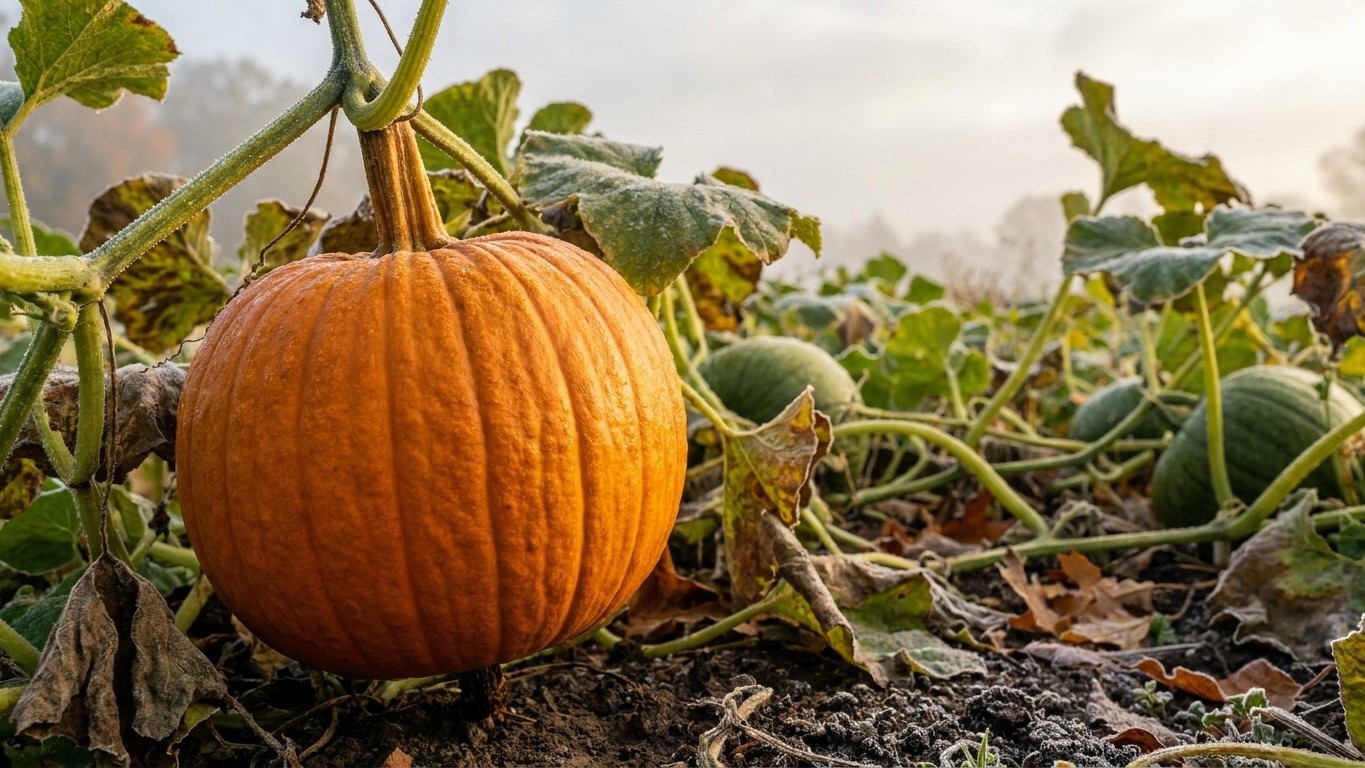

The frost window in Maryland runs from late October to early November, and a pumpkin needs 45 to 55 days of growing time after its flower opens, not after the seed goes in the ground. That gap between flowering and frost is the entire question. Whether a given pumpkin makes it depends on catching the right flowering window, which starts well before most gardeners think about it.
The short answer
Maryland’s first fall frost arrives somewhere between October 26 and November 5, based on NOAA’s 1991-2020 climate normals for the 30 to 70 percent freeze-probability band. That’s the wall every pumpkin vine in the state is racing against. For a deeper look at Will Pumpkins Ripen Before Frost in Maryland?, work backward from there: Utah State University Extension puts pumpkin maturity at 45 to 55 days after flowering, counted from the moment a female flower opens, not from the day seed goes into the ground. Cross that range against the frost window and the result isn’t a single date, it’s a working window.
Run the earliest frost date (October 26) against the slower end of the maturity range (55 days) and the safe cutoff for flowering lands close to September 1. Run the latest frost date (November 5) against the faster end of the range (45 days) and that cutoff stretches out toward September 21. Somewhere in between, around September 11, sits a rough midpoint. That’s not a guarantee, it’s a gut-check: flowers opening anytime from roughly the first week of September through the third week of September are in the range where a pumpkin can still color up and harden before a hard frost shuts the season down.
Geography moves that window. Western Maryland, the mountainous counties of Garrett and Allegany, runs weeks behind this statewide window, which compresses the safe flowering period even further for anyone gardening up there. The Eastern Shore’s milder climate pushes in the other direction, giving growers near the Bay a bit more cushion on the back end of the season. Neither region should assume the statewide dates apply directly to their own backyard.
The practical takeaway: count backward from your local frost expectation, not forward from your planting date. A flower that opens in early September has room to spare. A flower that opens in early October, on a vine that got a late start or stalled out in a hot, dry July, is running out of runway before it even gets going.
When to sow here
Maryland’s last spring frost falls between April 3 and April 16, and it’s tempting to treat that date as the green light for pumpkin seed. It isn’t. Soil temperature lags air temperature by weeks, and pumpkin seed needs the soil itself to reach 65°F before it germinates reliably rather than rotting in cold, damp ground. For a closer look at When to Sow Pumpkins in Maryland, the frost date alone isn’t enough. It tells you when the air has warmed up. It doesn’t tell you when the dirt has.
- Let the last spring frost window (April 3 to April 16) pass before doing anything with bare soil, since a late freeze can still damage exposed seedlings.
- Check actual soil temperature at planting depth with a soil thermometer rather than guessing from the calendar. Sowing before the soil hits 65°F risks weak germination and rot.
- Remember the lag: soil catching up to 65°F after the last frost takes real time, measured in weeks, not days, because bare or lightly mulched ground warms slowly even once the air feels like spring.
- Use row covers to compress that waiting period. A row cover can buy about two weeks, letting seed go into slightly cooler soil under protection while the cover traps daytime heat and shields young seedlings from a late cold snap.
- Back-time the whole plan from the flowering window worked out above. If flowers need to open by the first three weeks of September, count backward through germination, vegetative growth, and the vine’s first weeks of flowering to land on a sowing date that leaves enough runway.
None of this replaces watching the actual plant. A cool, wet spring can push soil temperature later than the calendar suggests, and a warm one can pull it earlier. The soil thermometer beats the wall calendar every time.
What goes wrong here
Maryland’s season length is long enough for pumpkins in most years, but the margin isn’t huge, and a handful of predictable failures show up whenever the timing slips.
- A late flower that never colors. This happens when sowing gets pushed into June or later, often because of a wet spring or a gardener waiting too long for soil to warm on its own. The flower opens after the safe window, and the fruit is still green when frost hits. The remedy is sowing inside the calculated window from the section above, using row covers if needed to get an earlier start rather than waiting on the calendar alone.
- A fruit caught by frost before the rind hardens. A pumpkin can set fruit and even take on some orange color while the rind underneath is still soft. A hard freeze at that stage stops the process cold. Watch the forecast as the frost window approaches, and harvest with the stem attached ahead of a hard freeze rather than risking one more week on the vine. The source material here gives no specific storage temperature or keeping time, only that pumpkins should be kept where they won’t freeze once cut.
- A vine that dies back before the skin hardens. Foliage disease, heat stress, or insect damage can kill the leaves a vine needs to finish curing the fruit, even when frost is still weeks away. Squash bugs and cucumber beetles are common culprits behind early vine decline in this region, and both pests already have their own dedicated pages on this site worth checking if leaves are yellowing before the fruit looks ready. Keeping vines healthy through midseason, and harvesting promptly once color is set rather than leaving fruit on a failing vine, limits the damage.
Checking this against your own county
The statewide frost window is a starting point, not a substitute for local data. Maryland spans mountain valleys, the Piedmont, and the Bay’s milder shoreline, and frost timing shifts noticeably across that range. Before locking in a sowing date, check with the University of Maryland Extension, which maintains county-level guidance and can point to more localized frost expectations than a single statewide window allows. A quick call or visit to the local office is worth more than assuming the state average applies to a specific backyard, especially in Western Maryland or right along the water.
Common questions
Can I still sow pumpkins in Maryland in July?
It’s tight. Working backward from the flowering window described above, a July sowing leaves little margin, since the vine still needs time to grow before it flowers, and then 45 to 55 days after that to ripen. It’s not automatically doomed, but the safety cushion is largely gone.
Does living near the Chesapeake Bay change my timing?
Yes. The Eastern Shore’s milder conditions push the frost window later than the mountainous western counties, giving Bay-area gardeners a bit more room on the back end of the season.
What happens if my flower opens after the safe cutoff?
The fruit may not fully color or harden before frost. It can sometimes still be used for cooking even if it hasn’t reached full maturity, but it likely won’t have the hardened rind associated with a fully ripened pumpkin. Storage guidance beyond “keep it where it won’t freeze” isn’t published in the source material used here.
Should I cover pumpkins if frost is coming but they’re not quite ripe?
A temporary cover overnight can protect against a light frost threat, but if a hard freeze is forecast, harvesting with the stem attached beforehand is the safer move rather than gambling on one more week of ripening.