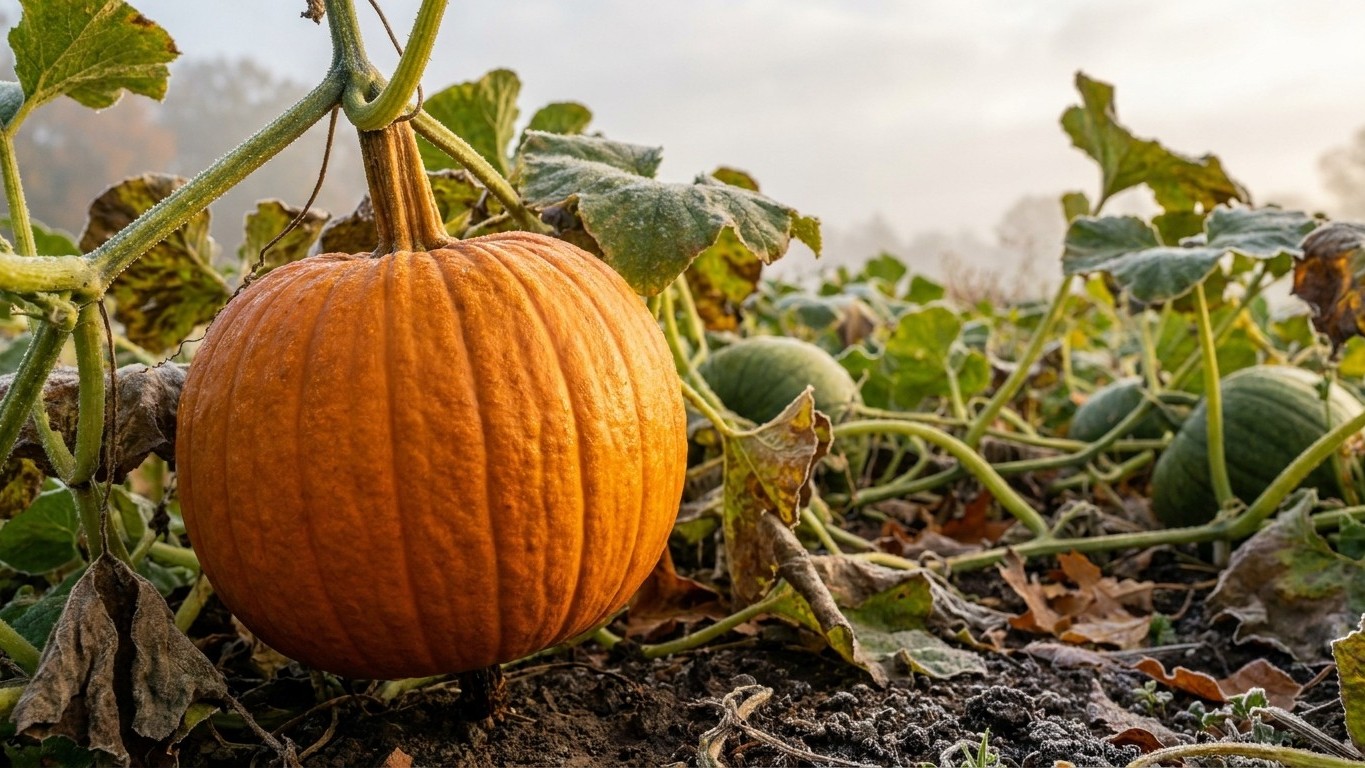

South Dakota gardeners can grow a ripe pumpkin most years, but the window is tighter than the seed packet suggests. The fruit doesn’t count days from when you drop a seed in the ground. It counts from when the flower opens. Miss that deadline by even a week or two, and you’re left carrying green pumpkins into the garage before the first hard freeze.
The short answer
South Dakota’s first fall frost, based on NOAA NCEI 1991-2020 Climate Normals for station USW00014944, typically arrives somewhere between September 24 and October 4. That’s the wall, and it’s exactly what makes gardeners ask Will Pumpkins Ripen Before Frost in South Dakota? Everything about pumpkin timing in this state gets built backward from that wall, and the building block is Utah State University Extension’s figure: pumpkins need 45 to 55 days from flowering to reach a hardened, colored, market-ready fruit.
Run the math both ways. If frost lands on the early side of the window, September 24, and you’re growing a variety that needs the full 55 days, the flower has to open by July 31. If frost holds off until October 4 and the fruit only needs 45 days, you can get away with a flower opening as late as August 20. Stack those two scenarios together and you get a real target: the last flowers with a decent shot at ripening need to open sometime between late July and August 20.
That’s a three-week spread, and it isn’t padding. It reflects two separate variables layered on top of each other, the ten-day range in when frost actually shows up, and the ten-day range in how long a given fruit takes to finish once it’s pollinated. A gardener aiming for the safe end of that window, treating July 31 as the real deadline rather than August 20, buys insurance against a cold September. A gardener who plants late and pollinates in early September is betting on the generous end of both ranges holding, and in South Dakota that’s not a bet with great odds.
None of this addresses the earlier half of the plant’s life, how long it takes from seed to first flower, because Utah State’s figure only covers the flowering-to-harvest stretch. That earlier stretch depends on variety, soil temperature at planting, and how much heat the vine gets through June and July. What the flowering window does is give you a hard checkpoint: walk the patch in late July and early August, and if the vines you’re counting on for a fall harvest haven’t started setting female flowers yet, that’s the moment to start managing expectations, not late September.
When to sow here
The last spring frost across South Dakota, per the same NOAA NCEI normals, falls between April 29 and May 9. That date matters for deciding when it’s safe to leave a young plant outdoors overnight. It does not tell you when the soil is ready for seed, which is the real question behind When to Sow Pumpkins in South Dakota. Pumpkin seed wants soil at 65°F, and bare soil warms far more slowly than the air above it. In practice that means waiting well past the frost-free date, often another two to four weeks, before the soil at seed depth holds steady at 65°F rather than just touching it on a warm afternoon.
- Mark the frost window. Treat April 29 to May 9 as the earliest point outdoor planting becomes a real option, not the trigger for planting itself.
- Wait for the soil, not the calendar. Check soil temperature at a two-inch depth rather than guessing from air temperature; cold soil rots seed before it germinates.
- Use row covers to buy two weeks. A row cover over the bed can push the effective planting date up by roughly two weeks, trapping daytime heat in the soil faster than bare ground would warm on its own.
- Seed or transplant once 65°F holds. Direct-seeding into soil that’s only briefly warm invites uneven germination; a run of several consistent days matters more than a single warm afternoon.
- Count forward toward the flowering deadline. Once seedlings are up, track how many weeks remain until late July, since that’s the point the flowering clock from the section above starts to matter.
The gap between frost-free and soil-ready is easy to underestimate, and it’s the single most common reason a South Dakota pumpkin patch starts the season two or three weeks behind schedule. A grower who plants the day after the last frost date, expecting the soil to have caught up, is often seeding into ground still too cold to do much with it.
What goes wrong here
- A late flower that never colors. Female flowers opening after the mid-August deadline are racing a clock they can’t win. The fruit sets, swells for a few weeks, and then frost hits while the skin is still pale green. Remedy: once you’re past roughly August 20, pinch off new female flowers so the plant’s remaining energy goes into fruit that’s already set rather than doomed new starts.
- A fruit caught by frost before it hardens. Even a fruit that set in time can get nipped if an early frost lands on the earlier edge of the September 24 to October 4 window. Remedy: watch forecasts closely from mid-September on, and throw a blanket or row cover over exposed fruit on any night frost is possible, since a single cold night can end the season for an unprotected pumpkin.
- A vine that dies back before the skin hardens. Powdery mildew, drought stress, or pest damage can collapse foliage weeks before the fruit is actually ready, and once the leaves are gone the pumpkin stops gaining the sugar and rind toughness it needs. Remedy: keep the vine healthy through August with consistent watering at the base, and stay ahead of common pumpkin pests; this site’s squash bugs in South Dakota and cucumber beetles in South Dakota pages cover identification and control specific to this state.
Checking this against your own county
The frost dates above come from a single airport weather station, and South Dakota is a big state with real differences in elevation and terrain from the Black Hills to the eastern river valleys. A garden in a low-lying rural spot can see frost a week or two earlier than the station data suggests, while a sheltered suburban yard might run a bit warmer. Before locking in a planting date, check with South Dakota State University Extension, which tracks local frost patterns and can tell you how your specific county tends to compare to the statewide normals.
Common questions
Can I still plant pumpkins in South Dakota if I’m past the ideal window in June?
It depends on the variety and how much of the 45- to 55-day flowering clock you can still fit before late September. Late plantings are riskier but not automatically doomed if you’re willing to protect fruit from an early frost.
Does a row cover help after planting, or just before?
Row covers are most useful early, warming the soil ahead of planting and protecting young seedlings from a lingering cool spell. Once vines are sprawling and flowering, covers become impractical for that purpose, though covering individual fruit later in the season for frost protection is a separate, still useful tactic.
How do I know if a female flower has actually pollinated?
A pollinated female flower’s tiny fruit behind the bloom will start visibly swelling within a few days; an unpollinated one shrivels and drops. Checking every few days in late July and August tells you fairly quickly which fruit are actually in the race against frost.
What’s the best place to store pumpkins after harvest in South Dakota?
Utah State University Extension’s guidance is limited on this point, specifying only that pumpkins should be kept somewhere they will not freeze. Beyond that, no specific storage temperature or keeping time is published in the source this page relies on.