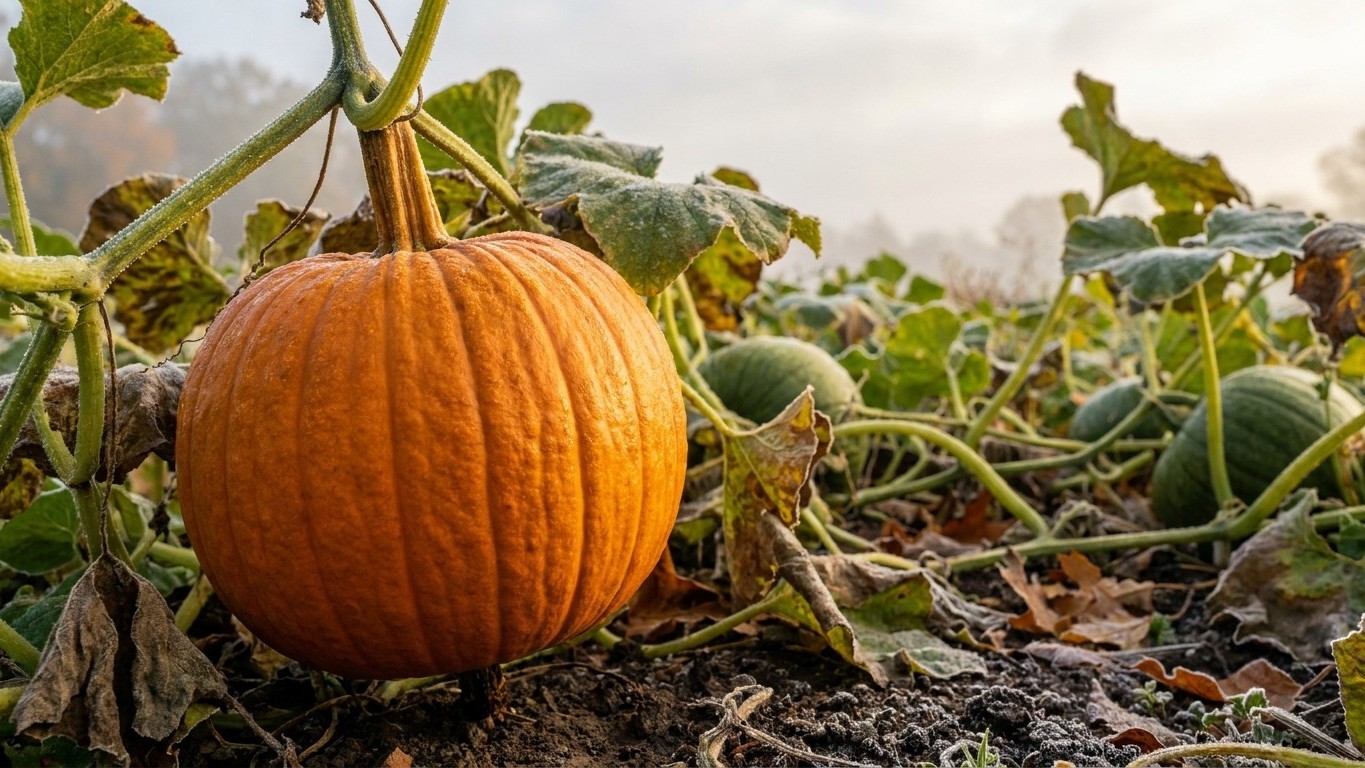

Will Pumpkins Ripen Before Frost in Wisconsin? Yes, most years, but the margin is thinner than you’d think. Wisconsin’s first fall frost lands anywhere from October 17 to October 29 depending on where you garden, and a pumpkin needs 45 to 55 days between the moment a female flower opens and the moment the fruit is ready to cut. Push that window backward from frost and you get a hard deadline for flowering, not for planting. Miss it, and you’re left with a green pumpkin on a dying vine.
The short answer
Start with the frost, then count backward. That’s the only order that matters for a fall crop like this one. NOAA’s 1991-2020 climate normals for one benchmark Wisconsin station put the first fall freeze at 32°F somewhere between October 17 and October 29, a full two weeks of spread depending on the year. That window comes from a station near Lake Michigan, though, and the lake pushes frost later along the shoreline. Move inland, and the picture shifts: southern Wisconsin away from the lake typically sees its first freeze in early October, well ahead of that lakeshore window, and northern counties freeze earlier still. So the October 17-29 range is a starting point, not a promise that applies everywhere in the state.
From there, work backward using the number that actually matters: a pumpkin needs 45 to 55 days from the day a female flower opens to the day the fruit is ready to come off the vine, not from the day you drop a seed in the ground (for guidance on that step, see When to Sow Pumpkins in Wisconsin). Count 45 to 55 days back from whichever frost date applies to your county, and you land on the true deadline, the latest a flower can open and still have time to finish. Using the lakeshore window as an example, that puts the last safe flowering somewhere between late August and mid-September. Inland and northern growers need to move that flowering deadline earlier still, since their frost arrives sooner than the lakeshore station’s data suggests.
| Milestone | Timing in Wisconsin |
|---|---|
| Last spring frost | April 16 to April 29 |
| Soil reaches 65°F for sowing | Weeks after last frost, not the same date |
| Latest safe flowering | Roughly late August through mid-September |
| First fall frost | October 17 to October 29 (later near Lake Michigan) |
This is why two gardens forty miles apart can turn out completely differently with the same seed packet planted the same week. A vine that sets its first female flower in early August has room to spare almost anywhere in the state. A vine that doesn’t flower until the third week of September is racing a clock that’s already running short, especially away from the lake’s moderating effect.
Variety matters here too, though the specifics aren’t something to guess at from a seed rack. Wisconsin gardeners commonly grow Connecticut Field, Howden, Jack Be Little, Cinderella, Big Max, Autumn Gold, Baby Bear, Wolf, and New England Pie pumpkins, and the local extension office can tell you which of these tends to flower earliest in your area, a detail that matters more than the optimistic number printed on the packet.
When to sow here
The last frost date isn’t the sowing date, and treating them as the same thing is the most common miscalculation Wisconsin gardeners make with pumpkins. Soil needs to reach 65°F before pumpkin seed will germinate reliably, and soil temperature lags well behind air temperature. Even after the last spring frost passes (April 16 to April 29), the ground stays cool for a stretch afterward before it catches up.
- Let the last spring frost window pass first. That’s April 16 to April 29 depending on the year, and it protects tender seedlings from a killing freeze, but it doesn’t mean the soil is ready.
- Check the soil itself, not the calendar. Push a soil thermometer four inches down; pumpkin seed wants a steady 65°F, and that mark typically arrives some weeks after the air has already warmed past frost risk.
- Warm the bed early if you’re impatient. Black plastic mulch or a floating row cover laid down ahead of planting can raise soil temperature enough to move sowing up by roughly two weeks compared to bare, uncovered ground.
- Sow once the soil holds 65°F for several consecutive days, not just on one warm afternoon after a cold snap. A single sunny day can fool a thermometer reading near the surface.
- Count forward from your sowing date to the point the vine is expected to set its first female flowers, then check that against the flowering deadline worked out above. If the math doesn’t leave room, an earlier-flowering variety is worth asking the extension office about.
Gardeners who wait for a warm-looking week in May and sow straight into unwarmed clay often lose a week or two to poor germination, seed that rots before it sprouts, or seedlings that sit stalled rather than growing. That lost time comes directly out of the flowering-to-frost window that decides whether the pumpkin colors up at all.
What goes wrong here
- A late flower that never colors. The vine flowers too close to the fall deadline worked out above, whether from a late sowing, a cool summer, or a variety that simply runs longer than expected. The fruit sets but stays green because it never gets its full 45 to 55 days before frost. The remedy is upstream: sow as soon as soil holds 65°F, choose a variety known to flower early, and track the calendar in Section 1 rather than guessing.
- A fruit caught by frost mid-ripening. Even a fruit that’s mostly turned can still be nipped if frost arrives on the earlier end of the October 17-29 window, or earlier still away from Lake Michigan. Utah State University Extension’s guidance is to harvest with the stem attached before frost hits and move the fruit somewhere it won’t freeze, since a frozen pumpkin softens and spoils fast. That same source doesn’t publish a storage temperature or a keeping time beyond that basic frost-avoidance rule, so don’t assume it keeps like winter squash.
- A vine that dies back before the skin hardens. Disease and pests can end a vine’s productive life weeks before the fruit is actually mature, even when the flowering timeline looked fine on paper. If squash bugs or cucumber beetles are shortening the season on your vines, this site’s dedicated Wisconsin squash bug page and Wisconsin cucumber beetle page cover identification and control in more depth than fits here.
Checking this against your own county
Everything above is built from statewide climate data, and Wisconsin is a long state. A grower near Superior in the north and a grower near Kenosha on the lakeshore are working with different frost calendars entirely, even though both fall inside the same statewide averages cited here. Before locking in a sowing date, it’s worth confirming your local frost pattern and variety recommendations with the University of Wisconsin-Madison Division of Extension, which maintains county-level offices across the state.
A quick call or visit to the county office can confirm whether your soil typically hits 65°F earlier or later than the statewide pattern suggests, and which of the commonly grown varieties tend to flower soonest in your specific corner of the state. That local detail is often the difference between a pumpkin patch that colors up on schedule and one that’s still green when the first hard freeze rolls in.
Common questions
Can I still plant pumpkins in July in Wisconsin?
It depends entirely on the variety’s expected time to flowering and your county’s frost timing. Count forward from a July sowing to expected flowering, then check that flowering date against the 45- to 55-day window before your local first frost. In many cases a July sowing leaves too little room, especially away from Lake Michigan where frost arrives earlier.
How do I know when a pumpkin flower is female?
A female flower carries a small swelling behind the petals, the beginning of the fruit, while male flowers sit on a plain thin stem. Only female flowers, once pollinated, start the 45- to 55-day countdown to harvest.
What happens if frost hits before the pumpkin turns orange?
A pumpkin caught green by frost generally won’t finish ripening off the vine. Utah State University Extension recommends cutting fruit with the stem attached before frost and storing it somewhere it won’t freeze, but an already-frozen fruit tends to soften and spoil rather than color up afterward.
Does the county I live in change my planting deadline?
Yes, meaningfully. The statewide frost windows cited here shift earlier the further you move from Lake Michigan’s moderating effect and the further north you go, which means the flowering deadline calculated from those windows shifts earlier too. County extension staff can confirm the local pattern than a statewide average can.