
Will Sweet Corn Ripen in California? Yes, but the answer depends enormously on where you’re standing. In the frost-free coastal and southern zones, there’s effectively no calendar limit at all: the growing season runs the full year, so a 60-to-90-day corn variety fits with room to spare. Head inland to the Central Valley or up into the Sierra foothills, and real winter frost changes the math entirely.
The short answer
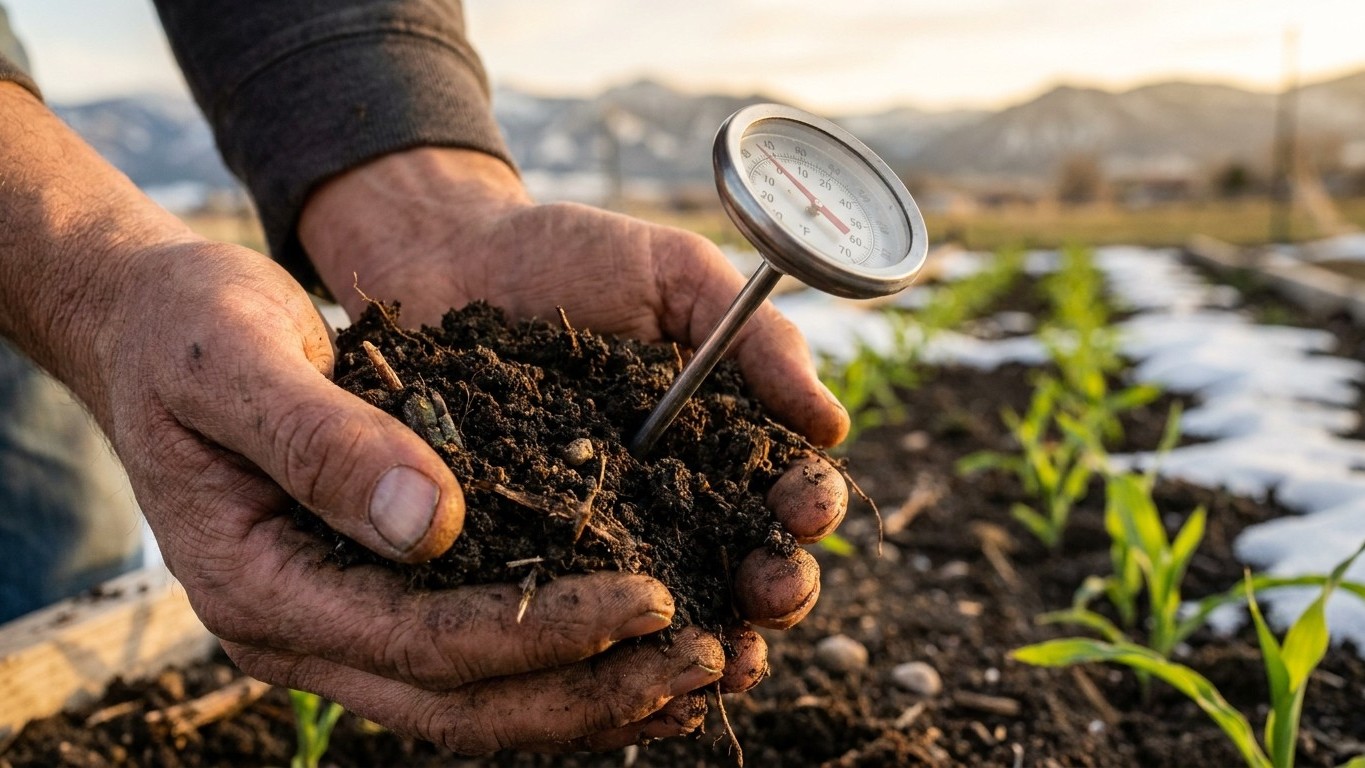
When to Sow Sweet Corn in California depends on soil warming to at least 60 F before it goes in the ground, and that threshold arrives well after the last frost date, not on the same day. That distinction matters more in California than almost anywhere else, because large parts of the state don’t have a computable last-frost date to begin with. NOAA’s 1991-2020 Climate Normals record zero days at or below 32 F in thirty years at the coastal and southern California reference station, giving a frost-free season of 365 days. There’s no frost calendar to consult there. The soil simply warms as spring proceeds, and once a thermometer pushed a few inches into the bed reads 60 F consistently, the clock for sweet corn starts.
With no autumn frost to cut the season short, fitting the 60-to-90-day maturity window is not the hard part in this zone. You could plant sweet corn in spring, harvest in summer, replant, and harvest again before the calendar year is out. The constraint here isn’t cold at all. It’s heat and water. The reference station’s Climate Normals show an average of just 2.4 days a year reaching 90 F or higher, which tells you the coastal and southern reference climate itself is relatively mild by California standards, not blazing hot. Sweet corn tolerates that kind of load without much drama. Drought and municipal water restrictions are a bigger practical hurdle for many home gardeners in this zone than the crop’s own heat tolerance.
Inland California tells a different story, and it’s a mistake to let the coastal figures stand in for the whole state. The Central Valley and the Sierra foothills do freeze in an average year, unlike the frost-free reference station used above. Growers there are working against a real last-spring-frost date and a real first-fall-frost date, neither of which is published in the data behind this article for those inland locations. Summers there also run far past 2.4 days above 90 F, often stacking weeks of triple-digit heat that can stress pollination if planting is timed poorly. Anyone gardening in Fresno, Bakersfield, Redding, or the foothill towns around them needs local frost and heat figures, not the coastal ones, before betting a summer’s worth of water on a corn patch.
Does a late variety fit here?
A 60-day variety
In the frost-free coastal and southern zone, a 60-day sweet corn variety fits without difficulty, and it fits more than once. There’s no autumn deadline forcing a single planting window, so a 60-day type can go in as soon as soil hits 60 F, come off in roughly two months, and be followed by a second sowing while there’s still plenty of season left. The main thing to watch isn’t the calendar here, it’s the summer heat load. With the reference station averaging only 2.4 days a year above 90 F, a fast variety rarely faces enough heat stress to hurt pollination, though inland gardeners working with hotter, longer summers should watch that more closely.
A 90-day variety
The 90-day variety also fits in the frost-free zone, and it fits plainly, because there’s no first-fall-frost date here to race against. A crop that needs three full months to mature simply gets those three months. That’s a genuine advantage of gardening where the season doesn’t end on the calendar. The picture changes once you move into the Central Valley or the Sierra foothills, where an actual autumn frost does arrive most years. Those figures aren’t published in the data this article draws on, which means a Valley or foothill gardener can’t assume the 90-day variety fits their own last frost-to-first frost window just because it fits the coastal reference station’s. That check has to happen locally, county by county, before committing to a longer-season type.
What Goes Wrong here
- Soil sown too cold. California’s mild winters tempt gardeners to plant early, but “mild” isn’t the same as “warm enough.” If the soil hasn’t reached 60 F, sweet corn seed germinates poorly or rots before it ever breaks the surface. This can happen even in the frost-free coastal zone during the coolest weeks of the year, and it’s a routine risk in the Central Valley and Sierra during late winter. The fix is simple: check the soil itself with a thermometer a few inches down, and wait for a steady 60 F reading rather than planting by the date on a calendar.
- A variety too late for the season. This isn’t a real risk in the frost-free coastal and southern zone, since there’s no first-fall-frost date to run out of. It’s a genuine risk inland, where a 90-day variety planted late in the Central Valley or Sierra foothills can get caught by an early autumn freeze before it finishes. The remedy is to check your county’s own fall frost timing through your local extension office and choose a shorter-season type if you’re planting later than the ideal window.
- Sweetness lost, and it has nothing to do with California’s climate at all. Sweet corn comes in different genetic types (su, se, and sh2), and if two different types tassel at the same time near each other, cross-pollination ruins the sweetness of both. No frost date and no heat wave causes this. The remedy is timing and layout: don’t let different corn types shed pollen in the same window, stagger plantings if you’re growing more than one type, and grow each planting in a block of three or more rows rather than a single thin line, since blocks pollinate themselves more reliably than rows do.
Checking this against your own county
Given how much California’s climate varies over a few hundred miles, and sometimes over a few thousand feet of elevation, the figures in this article can only tell you what’s true at the reference station they came from. Coastal Los Angeles and coastal Eureka don’t share a climate, and neither shares one with Sacramento, Fresno, or Truckee. Before you commit garden space and a summer’s water budget to sweet corn, check your own county’s soil warming dates, frost timing, and planting calendar through University of California Agriculture and Natural Resources, the state’s land-grant extension service. Their county offices track local conditions in a way no single statewide figure can, and that local read is what actually decides whether your corn ripens.
Common questions
Can you grow sweet corn year-round in Southern California?
In the frost-free coastal and southern reference zone, there’s no autumn frost cutting the season short, so successive plantings through much of the year are workable as long as soil stays at or above 60 F. Summer heat and water use are the practical limits, not the calendar.
Does the Central Valley actually freeze?
Yes. Unlike the coastal and southern reference station, which recorded zero days at or below 32 F over thirty years of data, the Central Valley and the Sierra foothills do experience frost in an average year. Local frost dates for those areas aren’t part of the figures behind this article, so check with your county extension office directly.
How do I know when to pick sweet corn?
Look for three signs together: dry, browned silks at the tip of the ear, husks that are still moist and green, and milky (not clear, not chalky) juice when you puncture a kernel with a fingernail. Any one sign alone isn’t reliable; you need all three before pulling ears.
Is the 60-to-90-day figure the same as the picking window?
No, and mixing them up leads to picking too early or too late. The 60-to-90-day span runs from planting and tells you whether the variety fits your season at all. A separate, much shorter window, roughly 17 to 24 days after the silks first appear, is what tells you which week to actually harvest.