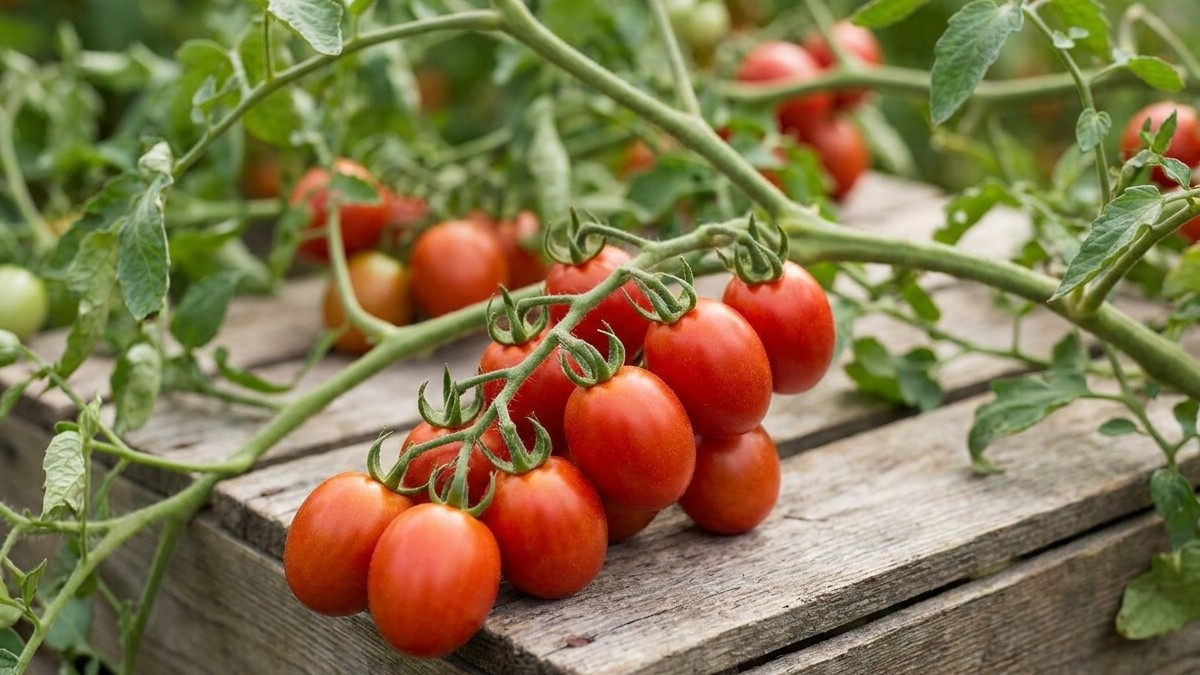

A red tomato still hanging on the vine in Minneapolis come late September is living on borrowed time. The plant doesn’t stop producing when the calendar says the season should end, but the weather does. Most tomato advice tells you to wait for full color before you pick. Here, waiting too long means the frost decides for you instead. The fix: once a hard freeze shows up in the forecast, strip the vines of everything past marble size, ripe or not, and sort the rest indoors.
When to Pick Tomatoes in Minnesota
The fall frost window
Ripe fruit should come off the vine as soon as it colors up. But the real deadline that shapes the whole Minnesota tomato season is the first fall freeze, and that’s a window, not a day. NOAA’s NCEI 1991-2020 climate normals put the first fall freeze at Minneapolis between October 11 and October 23, the range in which a 32°F freeze has a 30 to 70 percent chance of happening. That means some years bring frost before October 11 and some years hold off past October 23. Gardeners north of the Twin Cities should plan on the window landing two to three weeks earlier, and check University of Minnesota Extension for figures closer to their own county, since this page’s dates are measured at Minneapolis.
The USDA Plant Hardiness Zone Map places Minnesota across zones 3a to 5a, a figure built entirely on the average extreme minimum winter temperature, not on the length of the frost-free season. It’s still a useful shorthand: the colder the zone number, the shorter the practical picking season tends to run, since a 3a county in the north is also the one hitting frost earliest in fall.
How the numbers stack up by variety
If you followed the usual transplant timing for growing tomatoes in Minnesota, plants went in the ground somewhere between early May and mid May, working back from NOAA’s spring frost window of April 17 to April 30 at Minneapolis. From there, each cultivar’s published days-to-maturity figure (counted from transplant, and shifting a week or so with the season) tells you roughly when picking starts and how much runway you have before the fall window closes.
| Variety | Days to maturity | First ripe (calculated) | Margin before Minneapolis frost |
|---|---|---|---|
| Sakura | 55 | early July | 95 days |
| Sun Gold | 57 | early July | 93 days |
| Juliet | 60 | mid July | 90 days |
| Amalfi | 68 | late July | 82 days |
| Cherokee Purple | 72 | late July | 78 days |
| San Marzano II | 78 | late July | 72 days |
Even the longest-season variety in that table still clears frost with two full months to spare, on paper. In practice that margin gets eaten by a cool June, a cloudy August, or a freeze that lands at the early edge of the window instead of the late edge. That’s the gap this page exists to cover. For the full lineup with disease resistance and a longer discussion of which ones fit a short yard, see the tomato varieties page.
What to do with the green ones
Mature green vs. immature green
Not every green tomato is worth saving. A mature green fruit has already reached its full size for that variety, the skin has gone from matte to slightly glossy, and the blossom end has started to pale from dark green toward white or pink. Those will ripen off the vine, more or less on their own schedule. An immature green fruit is still small, the skin stays flat and hard, and the whole thing feels tight rather than yielding when you press it. Those rarely color up properly indoors. They’re better fried, pickled, or turned into green tomato relish than left in a box waiting for a red that isn’t coming.
Two ways to bring in the harvest
You have two practical options once frost is forecast. Pick individual fruit by hand, sorting as you go, keeping mature green and any blushing fruit separate from the immature stuff. Or pull the whole plant, roots and all, and hang it upside down somewhere dry and out of direct sun, a garage or an unheated porch works. The whole-plant method keeps fruit attached to a live vine a little longer and spreads out the ripening instead of dumping everything into one box at once.
If the plants already look rough from disease by the time frost is approaching, the decision gets made for you. A planting that’s lost most of its leaves to blight isn’t going to push much more sugar into the remaining fruit anyway, so pull it early rather than let disease pressure build. Our rundown of Tomato Pests in Minnesota: Which Ones Actually Show Up Here covers the diseases and insects most likely to force an early stripping of the vines in a given year.
Ripening indoors, and how long they keep
Setting up a ripening box
A shallow cardboard box lined with newspaper, one layer of fruit deep, works better than a deep pile. Tomatoes stacked on top of each other bruise the ones underneath and trap moisture, which is the fastest route to rot instead of ripening. A paper bag with the top folded over concentrates the ethylene the fruit gives off naturally and speeds things along, and dropping in a banana or an apple, both strong ethylene producers, pushes it further. Keep the box out of direct sun and away from a cold windowsill. Size at picking matters more than the calendar: a full-size mature green tomato ripens reliably; a small immature one usually just shrivels or rots before it colors.
Judging how long they’ll keep
Check the box every few days and pull out anything that’s turned rather than letting it sit next to the others, since one soft or moldy fruit speeds up decline in whatever’s touching it. Don’t wash the fruit before storing, only right before you use it. Skin that’s been through a heavy rain right before picking is more prone to splitting once it warms up indoors, so handle that batch gently and use it first. A cool basement slows ripening down if you want to spread the harvest out over more weeks rather than have everything come ripe at once, while a warm kitchen counter speeds it up if you’d rather get through the pile.
What goes wrong here
Common mistakes
- Waiting for the news to confirm frost instead of acting on the forecast, and losing a full box of fruit to one cold night
- Piling green tomatoes several layers deep in a box, where the bottom layer rots before the top layer ripens
- Refrigerating fruit that’s still ripening, which turns the flesh mealy and mutes the flavor even after it warms back up
- Assuming every green tomato on the vine is worth bringing in, when the small immature ones were never going to ripen anyway
- Watering erratically through a dry August, which shows up later as blossom end rot on fruit that looked fine a week earlier
Northern Minnesota runs tighter
Everything on this page is measured at Minneapolis. Farther north, both the spring and fall frost windows described by NOAA’s climate normals shift two to three weeks tighter at each end, which trims the whole season from both directions at once. A grower near the Iron Range working from these Minneapolis dates without adjusting will end up picking green a good deal earlier than the numbers here suggest, or losing fruit to a freeze the Twin Cities won’t see for another two weeks.
Common questions
Can frost-nipped tomatoes still be saved?
Fruit that’s actually been touched by frost usually breaks down within a day or two, the skin goes water-soaked and the flesh turns mushy underneath. If you catch it right after a light touch and the fruit still feels firm, use it immediately rather than storing it. Anything soft or translucent should go in the compost, not the ripening box.
Should I cover my plants instead of picking everything before frost?
A row cover or old sheet can buy a night or two on a marginal forecast, which is useful when the freeze risk is only borderline. It’s not a strategy for pushing the whole harvest weeks later, since Minneapolis’s fall frost window from NOAA’s normals reflects a real shift in average temperatures, not a single unlucky night.
Can I ripen tomatoes in the refrigerator to slow them down?
You can slow ripening that way, but the tradeoff is texture and flavor, refrigeration below room temperature is known to turn tomato flesh mealy in a way that doesn’t reverse once the fruit warms back up. A cool basement or an unheated room gets you the same slowdown without wrecking the eating quality.
Why did some of my green tomatoes rot instead of ripening indoors?
Most of the time it’s moisture and crowding, fruit stacked too deep traps humidity and spreads rot from one bad tomato to its neighbors. It also happens with fruit that was immature rather than mature green when picked, since those were never going to ripen properly and just break down instead. Check the box every few days and pull anything that’s turning before it takes the rest down with it.