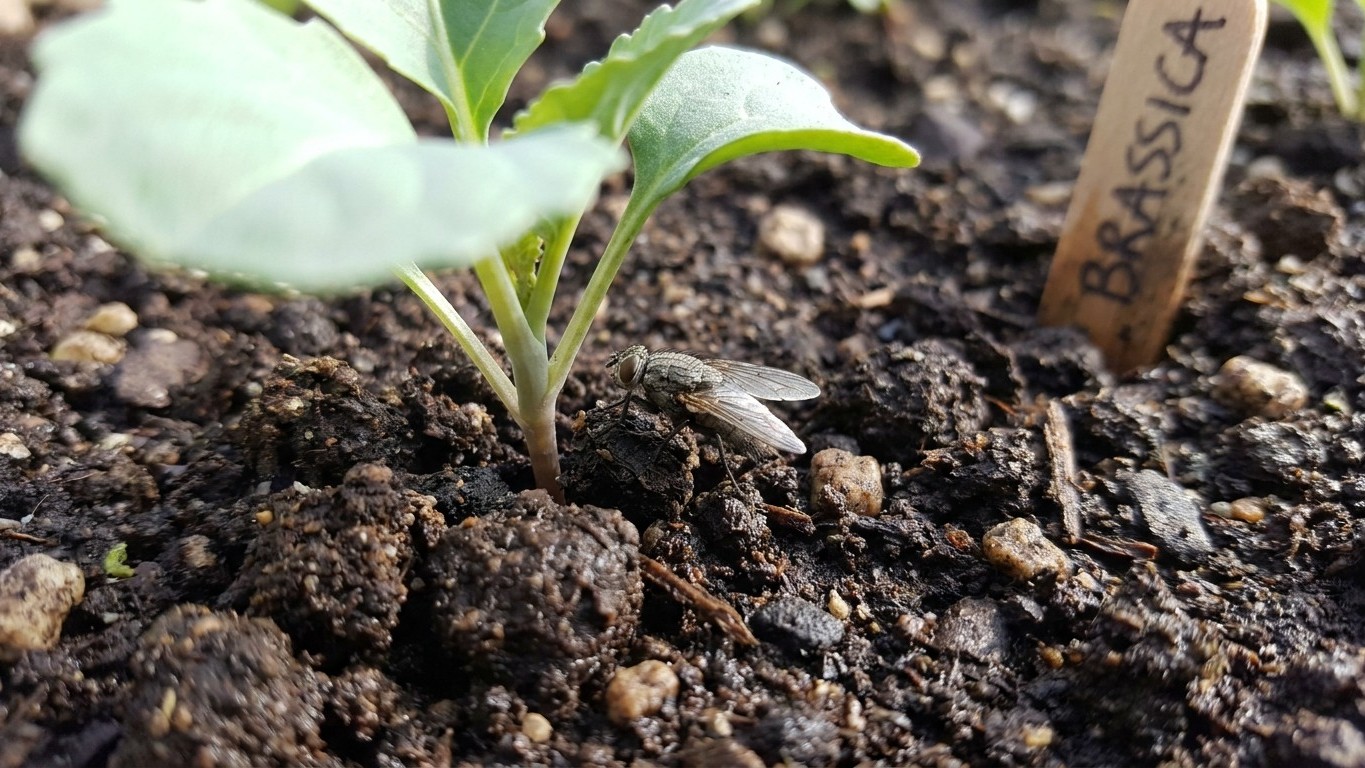

Cabbage maggot activity in Maine typically kicks off in early to mid-May, right around when soil temperatures climb past 50°F for a few consecutive days. That’s the first of two or three generations the pest pushes out before fall, and it’s the one that does the most damage to newly transplanted seedlings and direct-seeded brassicas. Stopping it comes down to timing your planting, physically blocking the flies from reaching soil, and breaking the life cycle through rotation and sanitation.
The weeks to watch

The cabbage maggot (Delia radicum) spends winter as a pupa buried a few inches deep in garden soil or old crop residue. Maine’s frozen ground protects them well through even a hard winter in Aroostook County or the western mountains. As soil warms in spring, adult flies, gray and about a quarter-inch long, closely resembling small houseflies, emerge and start looking for host plants within days.
Coastal and southern Maine gardens usually see the first flight in late April to early May. Inland and northern counties lag a couple of weeks behind, often into mid-May. Extension entomologists across the Northeast track this with degree-day accumulation (base 40°F, starting January 1) rather than the calendar, because a warm March can push emergence earlier and a cold, wet April can delay it. Once accumulated degree days land somewhere in the low hundreds, the first females start laying eggs at the base of brassica stems, right at the soil line.
Maine’s cool, damp spring weather actually favors this pest more than a hot, dry spring would. Cabbage maggot larvae thrive in moist soil, and the fungus and bacteria that often ride along with maggot tunneling spread faster when roots stay wet. A rainy May in Cumberland County is worse news for young cabbage transplants than a dry one.
Later Generations Matter Too
A second generation typically appears in July, and depending on how long the season runs, a partial third generation can show up by September. The second generation tends to be less destructive to transplants (plants are bigger and more established by then) but it still threatens root crops like turnips, radishes, and rutabaga that are maturing underground during that window. Fall plantings of radishes or Asian brassicas can take a hit from this later wave if growers aren’t watching for it.
What Damage Looks Like Before It’s Too Late
By the time leaves wilt in the heat of the day, the roots underneath are often already tunneled through. Young seedlings are the most vulnerable: a plant that looks stunted, has a bluish or purplish tint to its leaves, or simply keels over despite adequate watering is a strong candidate for maggot damage. Pulling it up usually confirms it, with small white to cream-colored larvae, roughly a quarter-inch when full grown, visible in tunnels through the root and lower stem.
Radishes and turnips show damage differently. The maggots tunnel directly into the swollen root itself, leaving winding brown scars and entry holes that ruin the crop for eating even if the plant survives. This is why root crops planted specifically for harvest, not just leafy brassicas, deserve just as much attention to timing and protection.
Cabbage, broccoli, cauliflower, Brussels sprouts, and kale transplants can often survive light feeding if the plant is established enough to grow new roots faster than the larvae destroy them. But a bad infestation in a young transplant, especially one already stressed by transplant shock or cold snaps common in a Maine May, can kill the plant outright within a couple of weeks.
What Stops Cabbage Maggot in a Maine Garden
No single tactic handles this pest completely. Growers who keep damage low usually stack two or three approaches together, starting before the flies even show up.
Row Covers Are the Most Reliable Physical Barrier
Floating row cover, the lightweight spun fabric sold under names like Reemay or Agribon, keeps adult flies from ever reaching the plant to lay eggs. The key is sealing every edge, either burying the fabric margins in soil or weighting them with boards or soil-filled bags, since the flies will find any gap. Cover the bed immediately after transplanting or seeding, before the first flight begins, and leave it on until the crop is well established or through the vulnerable window if it’s fast-growing (radishes can often be covered start to finish).
One tradeoff worth knowing: row cover traps heat, which can be an advantage in a cool Maine spring but a liability during a warm stretch, so check under the fabric on sunny afternoons.
Crop Rotation Breaks the Cycle
Because pupae overwinter in the soil where the previous crop grew, planting brassicas in a different spot each year, ideally on a three- to four-year rotation, dramatically cuts the local population a new crop encounters. In a small home garden this can be as simple as swapping the brassica bed with the tomato or bean bed each season. Community gardens and small farms in Maine that rotate consistently report noticeably less pressure than plots where cabbage family crops go in the same corner every spring.
Sanitation Removes the Next Generation’s Head Start
Old brassica roots left in the ground after harvest are basically a maggot nursery. Pulling and disposing of root stubs, rather than tilling them under, removes larvae and pupae before they can finish developing. This matters most in fall, since roots left through winter shelter the pupae that emerge as next spring’s first flight.
Timing Plantings Around Peak Flight
Delaying transplant dates by even a week or two, until after the first heavy flight has passed and started to decline, can reduce the number of eggs laid near a plant’s stem. This isn’t foolproof since a second flight follows, but combined with row covers it lowers overall pressure. Starting seedlings indoors and transplanting slightly larger, sturdier plants also helps, since bigger root systems tolerate some feeding without collapsing.
Natural Predators and Soil Treatments
Rove beetles and ground beetles feed on cabbage maggot eggs and larvae in undisturbed soil, which is one more reason to avoid excessive tilling right where brassicas are growing. Beneficial nematode applications to the soil around transplant time have shown mixed but generally positive results in university trials, targeting larvae before they tunnel deep into roots. Some gardeners use wood ash or diatomaceous earth as a collar around the base of transplants, though effectiveness varies with soil moisture and reapplication after rain.
Yellow Sticky Traps for Monitoring
Placing yellow sticky cards at soil level near brassica beds in early spring helps confirm when adult flies are actually active in a specific garden, rather than relying purely on regional averages. Catching flies on the cards a week or two before planting is a useful cue to get row covers ready.
Which Maine Crops Are Most at Risk
Radishes and turnips top the list because the maggots damage the harvestable part directly and both crops are often direct-seeded, skipping any head start a transplant gets in a protected seed tray. Cabbage and Chinese cabbage transplants come next, particularly early plantings that go in the ground while soil is still cold and slow to promote root growth. Broccoli, cauliflower, and Brussels sprouts tend to tolerate moderate feeding better once established, and kale and collards, especially larger transplants, are usually the most forgiving of the brassica family if some root damage occurs.
Home gardeners running small plots in southern Maine, where the growing season starts earliest, face the longest window of risk each year, from late April through the fall generation in September. Growers farther north in Aroostook or Piscataquis counties get a shorter, more compressed risk window, but the cool, often wetter conditions there can still favor larval survival once eggs are laid.