
Spotted cucumber beetles show up in Ontario gardens as soon as soil temperatures climb into the 55 to 60 degree Fahrenheit range, usually mid to late May in the southern part of the province, and they stick around feeding on cucurbits and dozens of other crops until the first hard frost in October. Stopping them means combining timing (row covers before emergence), sanitation (clearing plant debris each fall), and targeted treatments only when populations cross a damage threshold, since these beetles rarely warrant blanket spraying.
What the Spotted Cucumber Beetle Looks Like

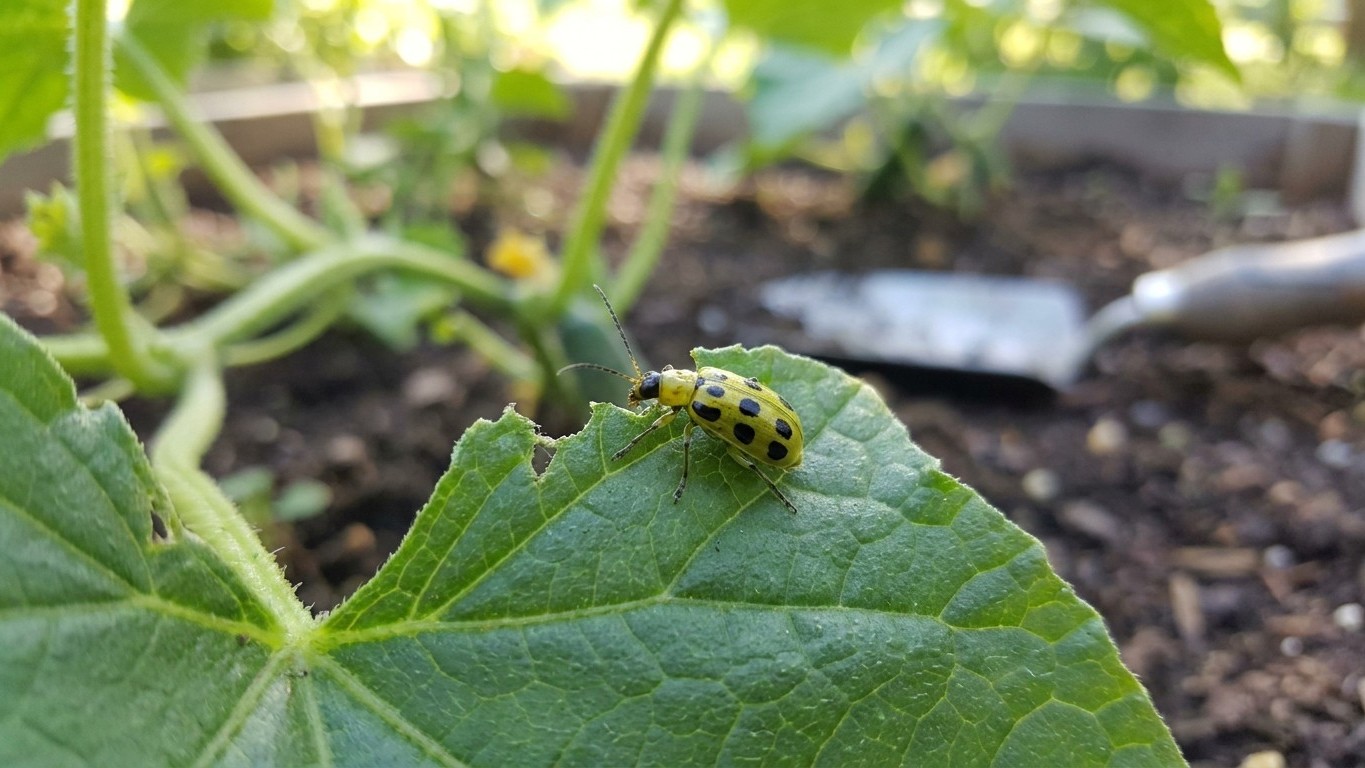
The insect responsible for the trouble is Diabrotica undecimpunctata howardi, a yellow-green beetle about a quarter inch long with twelve black spots arranged across its wing covers. Some gardeners confuse it with the striped cucumber beetle, but the spotted version has rounder, more oval-shaped spots instead of stripes, and its body tends to look slightly more olive than the brighter yellow of its striped cousin.
Adults have chewing mouthparts built for shredding tender leaf tissue, flower petals, and the skin of ripening fruit. The larvae, sometimes called southern corn rootworm, live underground and chew on roots and root hairs, which explains why a plant can look fine above ground while quietly struggling below the surface. In southern Ontario counties like Essex, Kent, and Norfolk, where sandy soils and warmer microclimates dominate, both life stages tend to arrive earlier and build larger numbers than in the cooler clay-heavy regions further north and east.
When It Shows Up in Ontario
Spotted cucumber beetles overwinter as adults, tucked into leaf litter, hedgerows, and the loose soil at field edges. They don’t survive Ontario winters by luck alone. Research on Diabrotica species shows adults seek insulated microhabitats where soil temperature stays above the lethal threshold, which is why cleaning up garden debris in November matters more than most people assume.
Once soil warms in spring, adults become active and start feeding on early-emerging plants, weeds, and tree pollen before cucurbit seedlings are even in the ground. That early feeding window, roughly the last two weeks of May through early June depending on the season, is when beetle pressure often peaks for the year because populations haven’t yet been thinned by predators or unfavorable weather.
A second wave typically follows in July and August as a new generation of adults emerges from larvae that fed on roots earlier in the summer. Ontario’s growing season generally supports one full generation with a partial second generation in warmer years, unlike the two to three generations seen in states further south. That single-generation pattern is actually good news for gardeners, since it means the pressure window, while intense, is shorter than what growers in Ohio or Kentucky deal with.
Regional Differences Across the Province
Southwestern Ontario, particularly the Niagara Peninsula and the counties bordering Lake Erie, sees the earliest and heaviest beetle activity thanks to warmer spring soil and a longer frost-free season. Central Ontario, including the Greater Toronto Area and the Kawarthas, usually lags by a week or two. Northern Ontario gardeners dealing with shorter seasons and cooler soil often see spotted cucumber beetles arrive later, if at all in significant numbers, since the insect’s range is limited by how quickly ground temperatures rise in spring.
What Damage It Actually Causes
The beetle’s diet is broader than its name suggests. While cucumbers, squash, melons, and pumpkins take the brunt of adult feeding, spotted cucumber beetles also attack sweet corn, beans, peas, asparagus, and a long list of ornamental flowers including dahlias and asters. Seedlings are especially vulnerable because a small population of beetles can strip enough leaf tissue to stunt or kill a young plant that a mature plant would shrug off.
The bigger concern for many Ontario vegetable growers isn’t the chewing damage itself but what the beetles carry. Feeding wounds create entry points for fungal and bacterial pathogens, and spotted cucumber beetles are known vectors of cucumber mosaic virus, which distorts foliage and reduces yield across an entire planting once introduced. They’re less efficient at spreading bacterial wilt than striped cucumber beetles, but they still contribute to disease spread in mixed infestations, which is common in home gardens where both species often show up together.
Larval feeding on corn and other grasses can weaken root systems enough that plants lodge, or fall over, during summer storms, a problem more relevant to larger plantings than typical backyard beds but worth knowing if you’re growing sweet corn on a rural lot.
What Stops the Spotted Cucumber Beetle
No single tactic eliminates spotted cucumber beetles for good, but layering a few practical steps cuts populations enough to protect a harvest. The most effective approach starts before the beetles even show up.
Timing and Physical Barriers
Floating row covers installed at planting time and left on until flowering keep adult beetles off seedlings during the most vulnerable weeks. Since cucurbits need pollinators once flowers open, covers have to come off at that point, which is exactly when beetle pressure often peaks. This creates a tight window where gardeners sometimes hand-pollinate covered plants for another week or two of protection, then remove covers only after plants have enough size and root mass to tolerate some feeding.
Delaying planting by a week or two past the earliest safe date can also help. Beetles emerging from overwintering sites need something to feed on immediately, and if cucurbit seedlings aren’t up yet, some of that early beetle population disperses or dies without reproducing on your plants specifically.
Trap Crops and Sanitation
Some Ontario growers plant a small block of an early, sacrificial cucurbit variety a week or two before the main planting. Beetles concentrate on that trap crop, making it easier to spot-treat or hand-remove them in one contained area instead of chasing beetles across an entire garden.
Fall cleanup matters as much as spring prevention. Removing plant debris, tilling under crop residue, and clearing weedy field edges reduces the overwintering habitat adults rely on. A garden that goes into winter clean has measurably fewer beetles emerging the following spring compared to one left with standing dead vines and fallen fruit.
Biological and Targeted Chemical Options
Beneficial nematodes applied to soil in spring can reduce larval populations before they mature into adults, an option worth considering for gardeners who’ve had repeat infestations year after year. For adult beetles, kaolin clay sprays make leaf surfaces less appealing for feeding without harming pollinators, and they’re a reasonable first line of defense once row covers come off.
When populations exceed what hand-removal or barriers can manage, targeted insecticides labeled for cucumber beetles remain an option, but timing and application matter. Spraying during early morning or evening, when bees are less active, protects pollinators that cucurbits depend on for fruit set. The Ontario Ministry of Agriculture, Food and Rural Affairs recommends scouting fields regularly rather than spraying on a fixed schedule, since beetle numbers fluctuate week to week and unnecessary applications just accelerate resistance and kill off natural predators like ground beetles and parasitic wasps that would otherwise help keep populations in check.
Crop rotation, while less immediately satisfying than a spray, disrupts the beetle’s life cycle over time. Moving cucurbits to a different part of the garden each year, ideally 100 feet or more from the previous location, makes it harder for emerging adults to find host plants quickly, buying seedlings extra time to establish before feeding pressure builds.
Home gardeners in southern Ontario who’ve dealt with heavy infestations two years running often find that a combination of trap cropping and diligent fall sanitation does more to break the cycle than any single treatment applied mid-season. The beetle’s dependence on nearby overwintering sites means a garden isolated from weedy fence rows and untended lots naturally sees lighter pressure than one surrounded by neglected ground, a detail worth factoring in if you’re choosing where on a rural property to put next year’s squash bed.