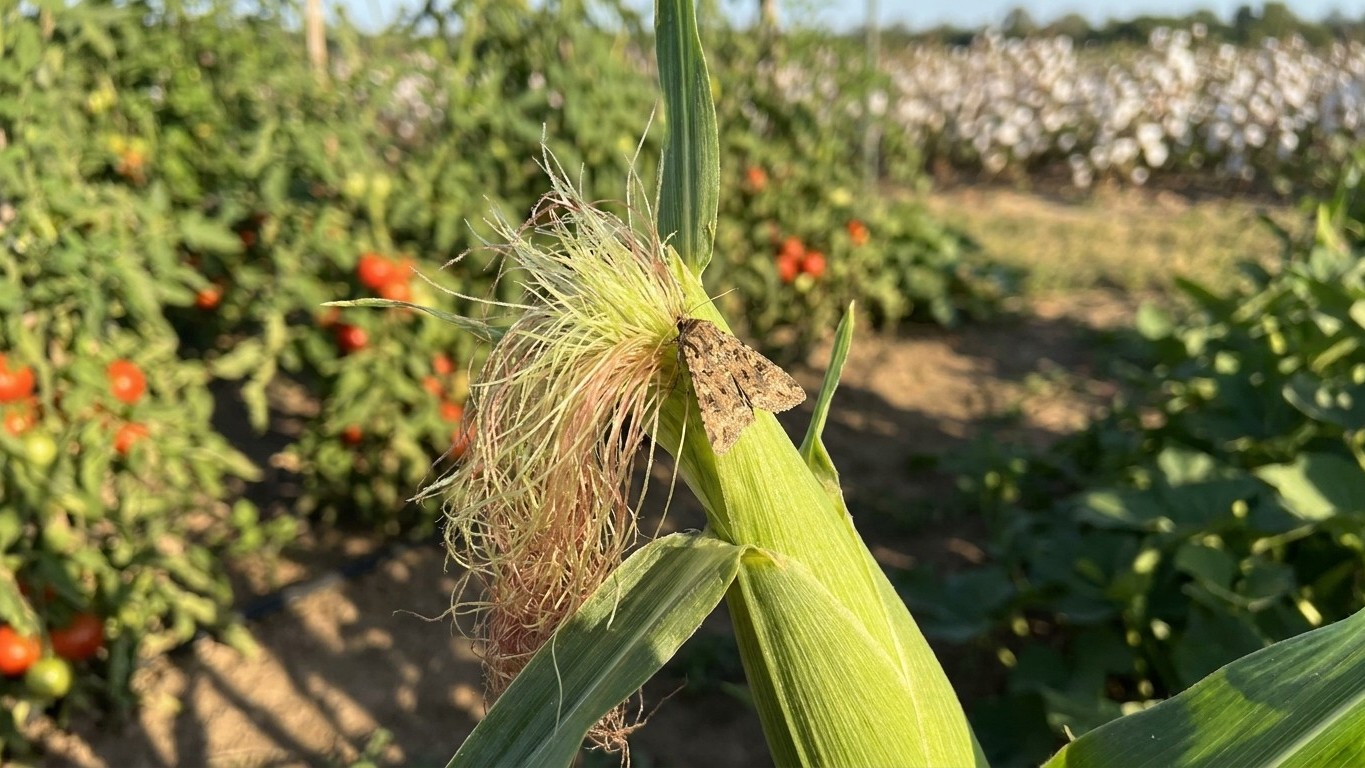

Corn earworm moths reach South Carolina fields as early as April in the Lowcountry and stay active through October or November, with the heaviest pressure hitting sweet corn, tomatoes, and cotton from mid-July through September. What stops them isn’t one product but a combination: timing insecticide or Bt applications to the silk stage, choosing resistant hybrids, and destroying overwintering pupae through fall tillage. Miss the timing window and you’re spraying a problem that’s already inside the ear.
Why South Carolina’s Climate Keeps Corn Earworm Active Nearly Year-Round

Corn earworm (Helicoverpa zea) behaves differently depending on latitude, and South Carolina sits in the zone where the insect doesn’t need to migrate back in every spring. In states like Minnesota or Wisconsin, corn earworm moths blow up from the Gulf Coast each year because winters kill off any pupae left in the soil. South Carolina’s mild winters, especially in the Coastal Plain and Lowcountry, let a portion of the pupal population survive underground and emerge as moths the following spring. That head start means growers here often deal with earworm pressure earlier and for a longer stretch than gardeners in the Midwest or Northeast.
The other factor is generation count. Corn earworm typically completes three to four generations per year across South Carolina, compared to one or two in colder states. Each generation takes roughly 30 to 45 days from egg to adult moth, depending on temperature, so a warm summer can squeeze in an extra cycle. That’s why a field or garden that looked clean in June can have a heavy infestation by August. The moths themselves are also strong, fast fliers capable of covering long distances overnight, which means even isolated home gardens aren’t safe just because they’re far from commercial cornfields.
Adult moths are tan to light brown with a wingspan around 1.5 inches and a dark spot near the tip of each forewing. They’re most active at dusk and after dark, which is when they lay eggs, usually one at a time, on fresh corn silk or on the leaves and stems of tomatoes and other host plants. A single female can lay several hundred eggs over her lifespan, and in South Carolina’s humid summer air those eggs hatch in as little as two to four days.
When Corn Earworm Moths Are Active in South Carolina
Timing shifts noticeably across the state’s three main regions. In the Upstate, where spring arrives later and temperatures run cooler, the first significant moth flights usually show up in May, with populations building through the summer and tapering off by early October. The Midlands, sitting in the middle both geographically and climatically, sees activity start a bit earlier, often late April, and it stays intense right through Labor Day.
The Lowcountry and coastal counties are where the pest overlaps most with its winter survival advantage. Moths can be caught in pheromone traps as early as March in warm years, and activity often stretches into November before a hard freeze finally knocks numbers down. Because these areas also grow more sweet corn for fresh market and more cotton acreage, corn earworm (known as cotton bollworm when it’s feeding on cotton bolls) gets extra attention from Clemson Cooperative Extension’s pest monitoring network throughout the growing season.
For anyone growing sweet corn, the critical window isn’t tied to the calendar so much as to the crop’s growth stage. Moths target corn right as silks emerge, since that’s the easiest entry point for newly hatched larvae to tunnel down into the ear. A planting that silks in early July faces different pressure than one silking in late August, even in the same field, because moth populations build as the season goes on. Staggered plantings, which many home gardeners use to spread out the harvest, can actually increase the odds that at least one planting hits peak silking during a moth flight.
Spring Corn Versus Late Summer Corn
Growers who plant corn early, aiming for a spring harvest, generally see lighter earworm pressure because the pest population hasn’t built up yet. Late-planted corn, especially anything silking in August, runs into the highest moth densities of the year and needs the most aggressive management. This is one reason Extension agents in South Carolina often recommend early planting dates for sweet corn where soil temperatures allow it.
Recognizing the Damage Before It Spreads
Larvae hatch as pale, almost translucent caterpillars and grow through six stages, changing color along the way to shades of green, brown, pink, or nearly black, always with faint stripes running down the body. By the time they’re doing real damage, they can reach 1.5 inches long. On corn, the larva tunnels down through the silk channel to the ear tip and feeds there, leaving behind chewed kernels, silk debris, and a trail of moist frass (insect droppings) that’s often the first visible sign something’s wrong.
On tomatoes, the same species is usually called the tomato fruitworm, and it behaves a bit differently, boring directly into green or ripening fruit rather than working through a silk channel. A single larva can move between multiple fruits over its feeding period, ruining more tomatoes than its size would suggest. In cotton, larvae feed on squares and bolls, and resistance to certain Bt cotton traits has become a documented concern in parts of the Southeast, which is part of why cotton growers rotate insecticide modes of action rather than relying on a single product season after season.
One larva per ear or per fruit is typical, since the caterpillars are cannibalistic and will attack each other in tight quarters. That’s a small mercy for home gardeners: even a heavy moth flight doesn’t necessarily mean every kernel row gets destroyed, but it does mean nearly every ear can end up with some damage at the tip if no control measures are used.
What Actually Stops Corn Earworm in South Carolina
Control strategies split fairly clearly between backyard growers and commercial operations, though the underlying principles overlap.
For home gardeners, the simplest and most reliable method for sweet corn is applying a few drops of mineral oil, or a labeled Bt (Bacillus thuringiensis) product, directly to the silk once it starts to wilt and turn brown, which usually happens three to seven days after silks first emerge. Applying too early, while silks are still fresh and green, can interfere with pollination, so timing matters as much as the product choice. Reapplying every few days during a heavy moth flight gives the best coverage, since new eggs can be laid throughout the silking period.
Tomato growers dealing with fruitworm damage generally rely on the same Bt products, applied to foliage and developing fruit clusters, along with regular scouting for small entry holes before they widen. Removing and destroying damaged fruit promptly keeps larvae from completing their life cycle inside the garden.
Commercial growers work with a broader toolkit:
- Resistant or partially resistant sweet corn hybrids with tighter husk coverage, which slows larval entry
- Pheromone trapping to track local moth flights and time insecticide applications precisely
- Rotating insecticide classes to slow the development of resistance, a growing issue in cotton bollworm populations across the Southeast
- Fall tillage to expose and destroy overwintering pupae before they survive to spring
Biological control also plays a role, particularly in systems that avoid broad-spectrum insecticides. Tiny parasitic wasps in the genus Trichogramma attack corn earworm eggs before they hatch, and some South Carolina growers release them commercially as part of an integrated approach. Naturally occurring predators, including lady beetles and lacewings, also feed on earworm eggs and young larvae, which is one more reason blanket insecticide use can backfire by wiping out the very insects doing free pest control.
Crop rotation offers a smaller but real benefit. Moving corn away from fields planted in corn or cotton the previous year reduces the odds that overwintering pupae emerge directly into a fresh host crop. It won’t eliminate the pest given how far adult moths can fly, but combined with tillage and resistant varieties, it chips away at the population building up in any one location year after year.
Timing remains the single biggest lever available to both backyard and commercial growers. A well-placed application during the silk stage, repeated on a short interval through the peak flight period, consistently outperforms a single late spray applied after larvae have already tunneled past the point where any topical product can reach them.
Related guides
- Corn earworm in North Carolina: When It Shows Up and What Stops It
- Corn earworm in Georgia: When It Shows Up and What Stops It
- Corn earworm in Tennessee: When It Shows Up and What Stops It
- Corn earworm in Texas: When It Shows Up and What Stops It