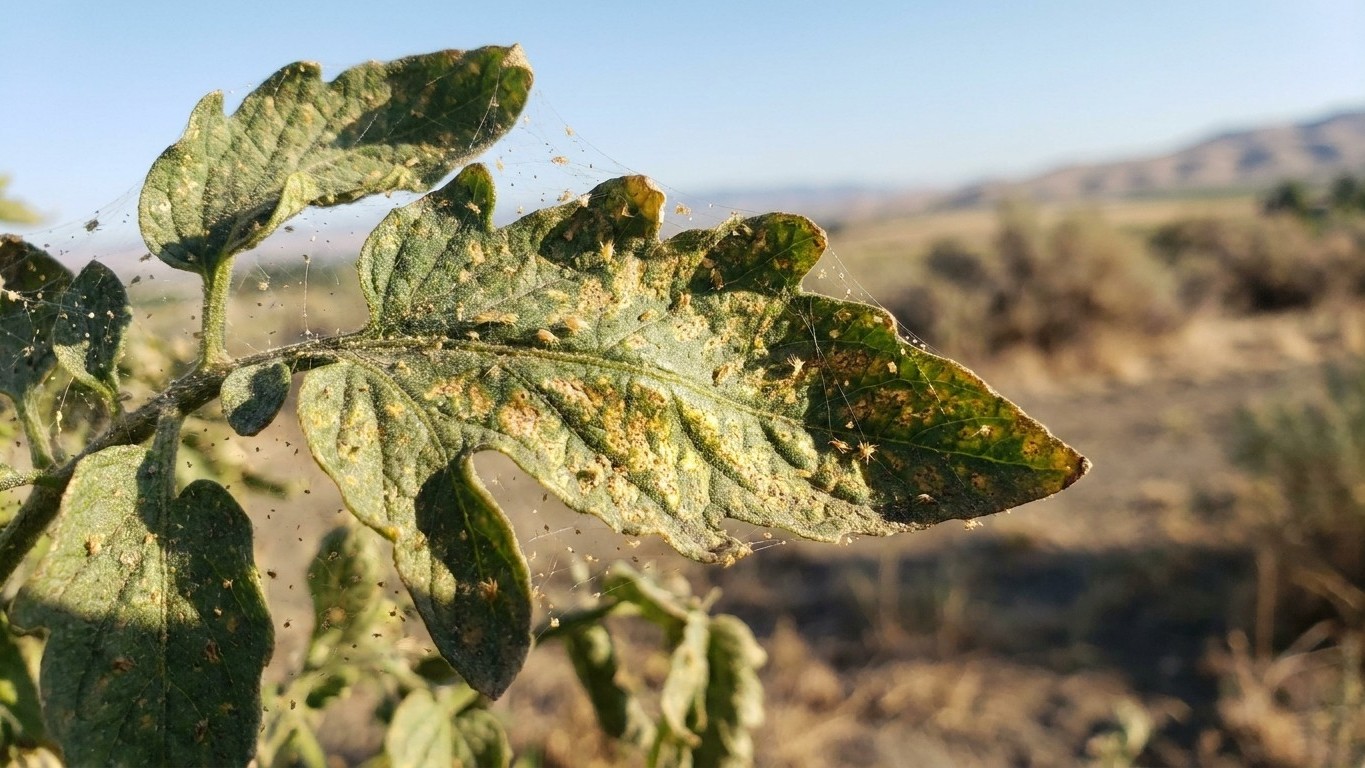

Spider mites turn up earlier than most Washington gardeners expect, and the timing depends entirely on which side of the Cascades you’re standing on. East of the mountains, in places like Yakima, Wenatchee, and the Tri-Cities, twospotted spider mites can start feeding by late April and hit full stride through July and August when temperatures climb past 85 degrees and humidity drops. West of the mountains, in the Puget Sound corridor, outdoor populations stay smaller because of the marine climate, but a different species, the spruce spider mite, actually prefers the cooler stretches of spring and fall and attacks conifers when other pests are dormant. Stopping them comes down to four moves: cutting plant drought stress, knocking dust off foliage, protecting predatory mites instead of spraying blindly, and reaching for miticides or horticultural oil only when populations cross a real threshold.
Washington’s Two Mite Climates

Eastern Washington is agricultural mite country. The Yakima Valley’s apple and hop industries have dealt with twospotted spider mite pressure for decades, and the reason is simple math: hot, dry air speeds up mite reproduction dramatically. A female twospotted spider mite can go from egg to egg-laying adult in five to seven days when temperatures sit in the 90s, which means an orchard or a backyard tomato patch in Kennewick can cycle through multiple generations before a homeowner even notices the first bronzed leaf. Add wind-blown dust from unpaved roads or dry field edges, and you get an environment mites practically thrive in, since dust coats leaves, interferes with natural predators, and gives mites extra grip points for their webbing.
West of the Cascades, the story flips. Seattle, Tacoma, and Olympia average far more rainfall and stay cooler through summer, so twospotted spider mite outbreaks outdoors are the exception rather than the rule. They still happen, usually on plants under stress from drought, heat against a south-facing wall, or containers that dried out during a rare August hot spell. Indoors, though, geography stops mattering. Houseplants in heated homes create a warm, dry microclimate that mites exploit year-round, which is why spider mite complaints on ficus, palms, and dracaena show up in Western Washington in January just as easily as August.
The spruce spider mite deserves its own mention because it breaks the usual “hot weather pest” assumption. This species targets junipers, arborvitae, and spruce trees and does its damage during cool, moist periods, meaning March through May and again in September and October are the danger windows. Summer heat actually slows this mite down, so a homeowner who only checks conifers in July might miss the infestation entirely.
Recognizing Spider Mite Damage Before It Spreads
The first visible sign is rarely the mite itself. Adult twospotted spider mites measure about 1/50 of an inch, invisible without a hand lens, so most people notice the damage first: a stippled, dusty-looking speckling on leaves that eventually turns bronze or yellow. On roses, tomatoes, and beans this shows up along the upper leaf surface while the underside carries the actual mites and their pale, silky webbing, often concentrated where a leaf meets the stem.
A simple field test works better than squinting at leaves. Hold a sheet of white paper under a suspect branch and tap it firmly. If tiny specks fall onto the paper and start crawling, or if you smear them and see a reddish streak, you’ve confirmed spider mites rather than a nutrient deficiency or fungal issue that produces similar stippling. This tap test takes thirty seconds and prevents unnecessary spraying for a problem that might not exist.
Host plants in Washington vary by region but overlap more than gardeners assume. In the Columbia Basin, hops, apples, pears, and cherries carry the heaviest commercial pressure. In home landscapes statewide, roses, tomatoes, beans, and marijuana (legal for home cultivation in Washington under state law) rank among the most frequently affected. Conifers, especially dwarf Alberta spruce and arborvitae hedges, are the spruce spider mite’s preferred targets and often show damage as a fine gray-green cast on interior needles before browning sets in.
What Actually Stops Spider Mites in Washington
Water and Dust Management
Drought-stressed plants attract and support far higher mite populations than well-watered ones, so consistent irrigation during Eastern Washington’s dry summer stretch does more preventive work than any spray. Deep, infrequent watering that reaches the root zone beats frequent shallow sprinkling, since it keeps foliage less dusty and reduces the leaf-surface conditions mites favor. Rinsing dusty foliage with a strong hose spray, particularly for plants near gravel driveways or dry field margins, physically knocks mites and eggs off the plant and disrupts their webbing before populations build.
Nitrogen fertilizer plays a less obvious role. Heavy nitrogen applications push out soft, sappy new growth that spider mites feed on more easily and reproduce on faster. Gardeners battling repeat outbreaks on roses or vegetables often see improvement simply by cutting fertilizer rates and switching to a slower-release formula.
Protecting Natural Predators
Washington’s spider mite populations rarely explode in gardens that still host a healthy predator community. Predatory mites, lady beetles, and minute pirate bugs all feed on spider mite eggs and adults, and a single generalist predator can consume dozens of mites a day. The problem is that broad-spectrum insecticides, including many products sold for aphids or caterpillars, kill these predators far more effectively than they kill mites, which have some natural resistance to common pyrethroids. This is the mechanism behind the classic “spider mite flare-up after spraying” complaint that orchard managers in the Yakima Valley have documented for years: a well-meaning insecticide application removes the predators keeping mites in check, and the mite population rebounds within a week, worse than before.
Commercial growers in the state’s fruit and hop regions now release purchased predatory mites, particularly Galendromus occidentalis, as a standard part of integrated pest management. Home gardeners can buy smaller quantities of predatory mites through garden suppliers, though success depends on releasing them before populations spiral out of control and avoiding pesticide use for several weeks afterward.
When to Reach for a Miticide
Insecticidal soap and horticultural oil remain the safest first-line treatments for home use because they work on contact, smothering mites and eggs without leaving lasting residue that harms predators. Coverage matters more than product choice here: mites hide on leaf undersides, so a thorough spray that reaches both surfaces beats a quick pass with any product. Repeat applications every five to seven days for two to three cycles usually break the reproductive cycle, since a single spray misses eggs that hatch days later.
For heavier infestations, particularly in commercial settings, registered miticides offer stronger knockdown, but resistance develops quickly when the same active ingredient gets used season after season. Washington State University’s tree fruit and hop research programs have tracked miticide resistance in twospotted spider mite populations across the Yakima Valley for years, which is why rotation between different chemical classes, rather than repeated use of one product, stays the standard recommendation for growers managing large plantings.
Timing Treatments to Washington’s Seasons
Eastern Washington’s peak mite pressure runs from late June through early September, tracking the region’s hottest, driest weeks. Preventive watering and predator releases work best if started in May, before populations build, rather than after stippling already covers a plant. Western Washington’s outdoor risk window is narrower and more weather-dependent, typically a two-to-four-week stretch during any unusually hot, dry period in July or August, while the spruce spider mite risk on conifers statewide concentrates in spring and fall regardless of region.
Indoor infestations follow the calendar of heated homes rather than the weather outside, which means a houseplant collection in Bellingham or Spokane faces the same winter risk. Running a humidifier near vulnerable plants, or grouping plants to raise local humidity, cuts indoor mite reproduction rates noticeably since these mites, like their outdoor relatives, slow down in moist air.
One detail surprises a lot of homeowners tracking down repeat outbreaks: a single twospotted spider mite female can lay well over 100 eggs in her short life, and in the hottest stretches of an Eastern Washington summer, a population can move through as many as fifteen to twenty generations before the season ends. That compounding math is why a light infestation ignored for two weeks in July can look like an entirely different, much worse problem by August, and why catching the first stippled leaf early beats any treatment applied later.
Related guides
- Spider mites in Alabama: When It Shows Up and What Stops It
- Spider mites in Arizona: When It Shows Up and What Stops It
- Earwigs in Washington
- Onion thrips in Washington
- Onion maggot in Washington
- Spider mites in British Columbia: When It Shows Up and What Stops It
- Spider mites in Colorado: When It Shows Up and What Stops It