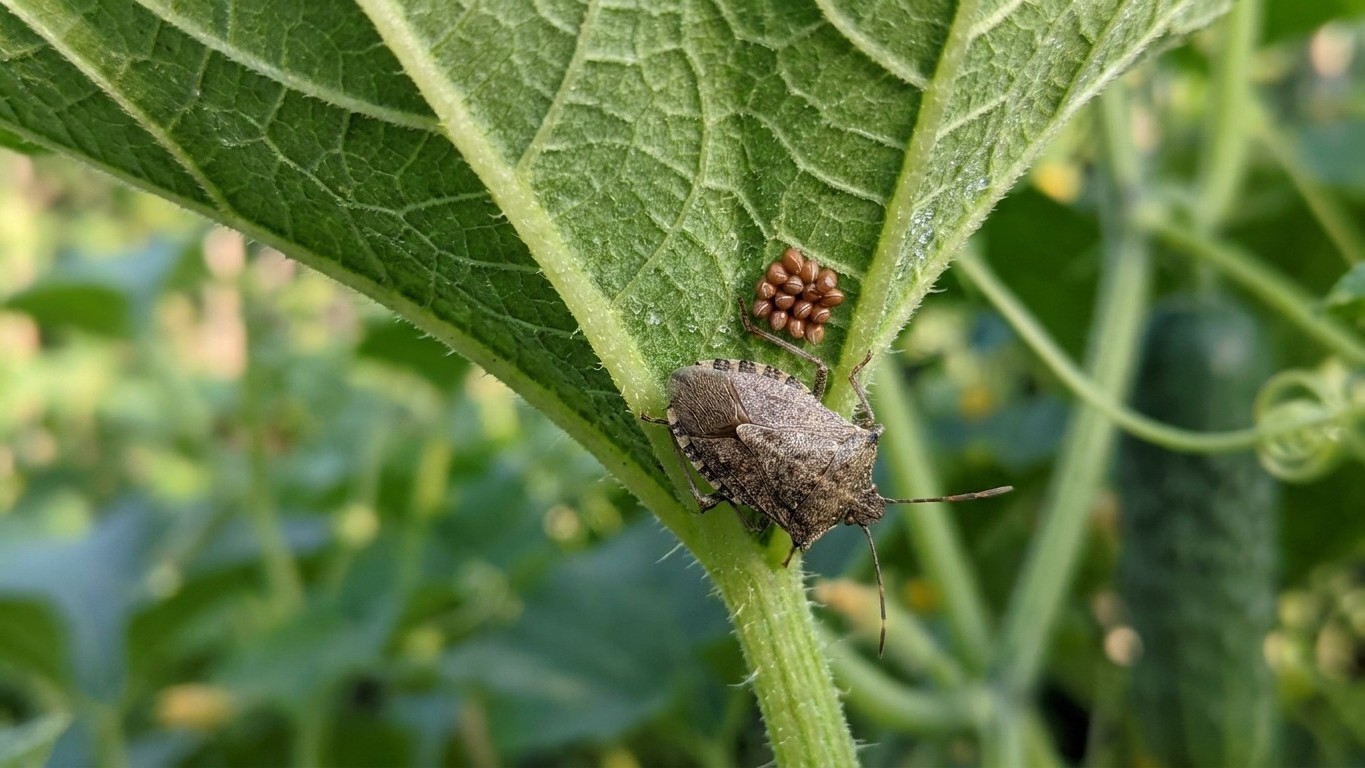

Squash bugs start showing up in Kentucky gardens as soon as soil temperatures climb into the 60s, usually mid-to-late May in the central part of the state, a bit earlier in western Kentucky and later in the mountains of the east. What actually stops them isn’t a single spray. It’s a combination of early detection, physical barriers, fall cleanup, and hand removal timed to hit the insect before it lays eggs. Chemical control works best on young nymphs and does almost nothing to the tough, shield-shaped adults.
When Squash Bugs Show Up in Kentucky

The squash bug, Anasa tristis, overwinters as an adult in Kentucky, tucked under leaf litter, mulch, dead vines, or the wood pile against the garage. It doesn’t survive winter as an egg or nymph here. That single fact drives everything about timing.
Once daytime temperatures hold steady above 70 degrees, those overwintered adults crawl out and start hunting for cucurbits: squash, pumpkins, cucumbers, and melons. In most of Kentucky that means late May into early June. Gardeners in Louisville and Lexington tend to see the first adults a week or two before those in the hill country of eastern Kentucky, where cooler nights push emergence closer to mid-June.
Egg-laying follows fast, usually within one to two weeks of emergence, once vines are running and leaves are broad enough to hide clusters of eggs on the underside. In central Kentucky that puts the first egg masses on the calendar around the second week of June. Nymphs hatch in seven to ten days and take four to six weeks to reach adulthood, feeding the entire time.
Kentucky’s growing season is long enough to support two generations in a typical year, especially in the western part of the state where the frost-free window stretches longer. That second wave usually builds through late July and peaks in August, which is exactly when a lot of home gardeners start noticing their squash plants collapsing seemingly overnight. New adults from that second generation are the ones that go looking for winter shelter in September and October, restarting the cycle the following spring.
Spotting Squash Bugs Before They Wreck the Patch
Eggs are the easiest life stage to catch early and the one most gardeners walk right past. They’re small, oval, and bronze to copper colored, laid in tight clusters on the underside of leaves, often right along the veins. A single female can lay well over a hundred eggs across a season, spread out in batches of a dozen or two.
Nymphs hatch gray with black legs and cluster together in groups that can look like a moving smudge on the leaf underside. They’re soft-bodied at this stage, which is the window where insecticidal soap or pyrethrin sprays actually have a shot at working. As they molt through five instars over several weeks, they gradually turn a duller gray-green and get harder to kill with anything short of hand removal.
Adults are flat, shield-shaped, and brownish-gray, roughly five-eighths of an inch long. Squeeze one and it releases a strong, unpleasant odor, a defense that also makes them easy to identify by smell alone if you’ve handled one before. They’re fast on their feet when disturbed, which is part of why they’re harder to control than slower pests like Japanese beetles.
Damage shows up first as small yellow speckles on leaves where bugs have been feeding, followed by localized wilting that spreads outward from the feeding site rather than collapsing the whole leaf at once. That distinction matters because bacterial wilt, spread by cucumber beetles, tends to wilt an entire leaf or vine quickly with no speckling beforehand. Squash bug damage is more gradual and patchy until populations get heavy enough to take down the whole plant.
What Actually Stops Squash Bugs in Kentucky
Get ahead of the calendar
Planting squash and pumpkins as transplants rather than direct-seeding gives the crop a two-to-three-week head start on the insect’s arrival, letting vines get established and more resilient before egg-laying begins in June. Floating row covers work well on young plants, but they have to come off once flowers open so bees can pollinate. That trade-off means row covers protect the seedling stage best, not the whole season.
Clean up in the fall, not just the spring
Because adults overwinter in garden debris, the single most effective long-term move is removing spent vines, dropped fruit, and mulch from the cucurbit bed after harvest rather than leaving it to sit through winter. Tilling the bed in fall exposes overwintering sites to cold and predators. Skipping this step is why some gardens see worse squash bug pressure every single year, they’re essentially running a bed and breakfast for the pest without knowing it.
Check leaves weekly starting in early June
A weekly walk-through checking the undersides of three or four leaves per plant, starting the first week of June, catches egg clusters before they hatch. Scraping eggs off with a fingernail or piece of tape and dropping them in soapy water takes a few minutes and prevents an entire generation. This single habit, more than any spray, is what separates gardens with manageable squash bug numbers from ones overrun by August.
Trap them at night
Squash bugs are more active at dusk and overnight and tend to hide under any flat object during the day. Laying a shingle or a small board flat on the soil near the base of plants gives them a hiding spot; checking under it each morning and dropping the bugs into soapy water is an old trick that still works, particularly on adults that have gotten too tough for sprays to bother.
Use trap crops strategically
Blue Hubbard squash is more attractive to squash bugs than most zucchini and summer squash varieties, so planting a border row of it around the main crop draws egg-laying females away from the plants you actually want to harvest. Concentrating control efforts, hand-picking or targeted spraying, on that border row protects the rest of the patch with less overall insecticide use.
Know the limits of spraying
Insecticidal soap and pyrethrin-based products can knock back young nymphs when applied directly to the underside of leaves where they cluster, but coverage has to be thorough and timing has to hit the early instars. Once populations are dominated by adults, spraying delivers disappointing results because the hardened cuticle sheds contact insecticides fairly well and the bugs simply relocate. That’s the practical reason cultural controls and hand removal carry more weight in any real squash bug plan than a bottle on the shelf.
Regional Differences Across Kentucky
Western Kentucky, including areas around Paducah and Bowling Green, has a longer frost-free season and warmer early-summer soil, which tends to produce earlier emergence and a more reliable second generation by late July. Central Kentucky, the Lexington and Louisville corridor, sits roughly two weeks behind that timeline. Gardeners in the Appalachian counties of eastern Kentucky, where elevation cools things down and the frost-free window is shorter, often see only a partial second generation, with pressure easing off earlier in fall as temperatures drop at higher elevations.
These differences matter for timing the weekly egg checks. A gardener in Hopkinsville watching for eggs the last week of May is being proactive; a gardener at similar latitude but higher elevation in Harlan County starting that same week is probably fine waiting closer to mid-June.
Natural Predators Worth Leaving Alone
A parasitic fly in the genus Trichopoda lays eggs on adult squash bugs, and the resulting larva eventually kills its host. Gardeners occasionally spot a small white egg stuck to the back or side of an adult squash bug and mistake it for something to worry about; it’s actually a sign of natural population control already at work. Broad-spectrum insecticides applied without regard to timing kill these parasitoids along with the pest, which is one more argument for targeted hand removal over blanket spraying whenever populations are still manageable.