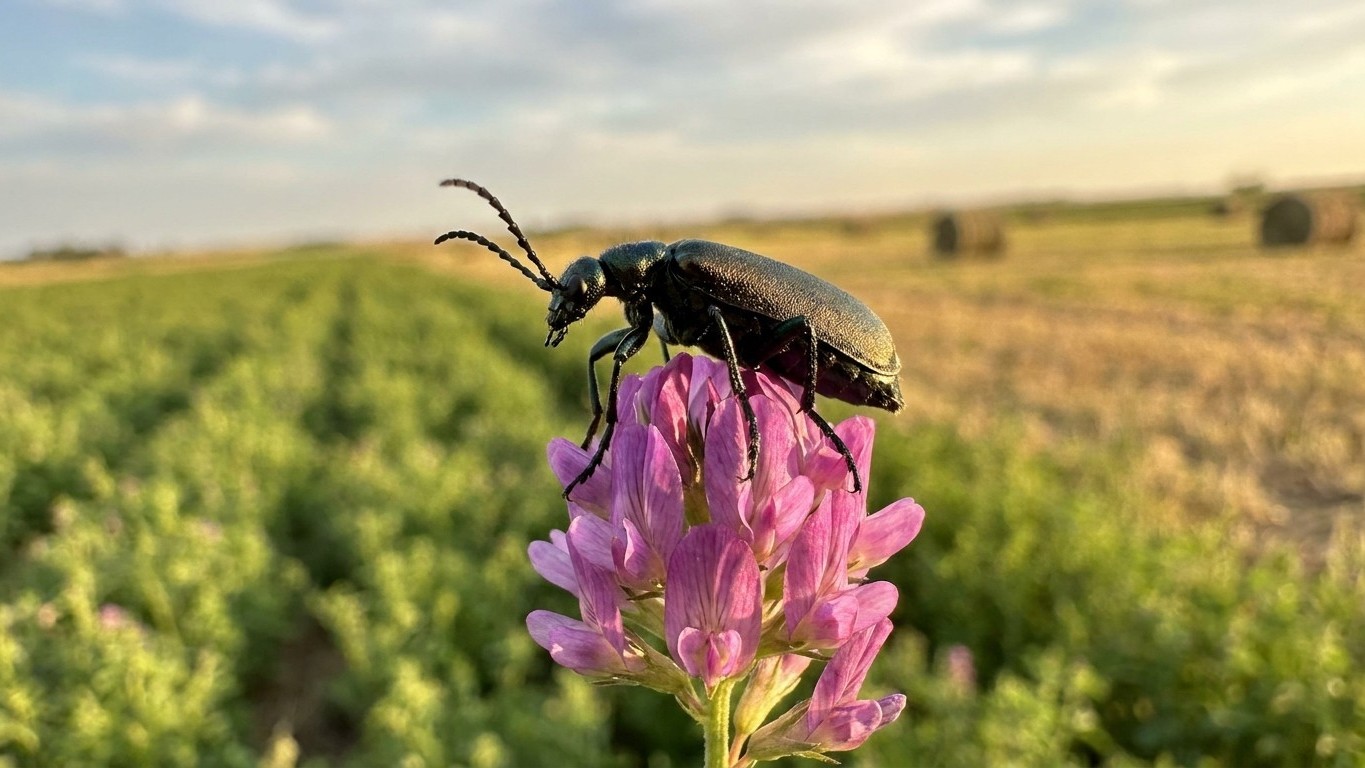

Blister beetles turn up in South Dakota alfalfa fields most reliably from mid-July through September, tracking the second and third cuttings rather than the first. That timing isn’t random. It follows a grasshopper connection few people expect, and it’s the reason horse owners in this state watch hay harvests more closely than almost anywhere else in the country.
The short version: these beetles are a genuine threat to livestock, especially horses, because of a chemical called cantharidin that stays toxic even in dead, crushed insects baled into hay. Stopping them isn’t about spraying every field. It’s about timing your cutting, choosing the right equipment, and knowing which fields are at higher risk.
When Blister Beetles Show Up in South Dakota

Adult blister beetles emerge from the soil in early to mid-summer, usually late June into July depending on how warm the spring ran. They feed for several weeks on flowering plants, alfalfa among their favorites, before laying eggs in the soil near existing grasshopper egg pods. That detail matters more than most people realize.
Blister beetle larvae are predators. They hunt down grasshopper eggs underground and feed on them through the fall and following spring. A big grasshopper year in South Dakota often sets up a bigger blister beetle year one season later, because more grasshopper eggs in the ground means more food for beetle larvae to survive on. Farmers and ranchers who track grasshopper outbreaks have a rough early warning system for what’s coming with blister beetles, even if the connection isn’t obvious at first glance.
This life cycle explains the seasonal pattern that catches so many hay buyers off guard. First cutting alfalfa, harvested in late May or June, tends to carry low risk because adult beetles haven’t emerged yet or are still scattered and immature. Second and third cuttings, taken in July, August, and into September, coincide directly with peak adult activity and peak swarming behavior. That’s when fields bloom again, and blooming alfalfa is exactly what pulls beetles in from surrounding grasslands and roadside vegetation.
The Species Behind Most South Dakota Reports
Several blister beetle species show up across the state, but two get the most attention from extension entomologists and hay producers. The striped blister beetle carries high cantharidin concentrations and tends to swarm in dense, visible groups, sometimes hundreds packed into a few square yards of a field. The black blister beetle is smaller, less toxic pound for pound, but still dangerous in volume. Both are found in eastern South Dakota’s alfalfa-growing counties, though isolated infestations pop up further west wherever irrigation or river-bottom soil supports alfalfa production.
Swarming is the behavioral quirk that makes these insects both easier to spot and harder to manage. Rather than spreading evenly across a field, they cluster along edges, near weedy patches, or wherever blooming plants are thickest. A field can look completely clean from the road and still have a dense pocket of beetles thirty yards in.
Where the Risk Concentrates in the State
Eastern South Dakota, the region east of the Missouri River with the state’s heaviest alfalfa acreage, carries the bulk of documented blister beetle activity. Counties with intensive hay production, particularly those feeding the region’s dairy and horse industries, report the most frequent beetle sightings and the most hay-testing inquiries during late summer.
West River alfalfa fields aren’t immune, but lower overall alfalfa acreage and drier conditions in parts of that region mean fewer documented outbreaks. Irrigated fields anywhere in the state, east or west, tend to bloom longer and more vigorously, which extends the window during which beetles find them attractive. Weedy field margins, roadside ditches next to hay ground, and any spot where flowering broadleaf plants grow alongside alfalfa all function as staging areas beetles move from before invading the crop itself.
Why Blister Beetles Are More Than a Nuisance
Cantharidin is the compound that turns a minor insect problem into a livestock emergency. It’s an irritant so potent that a horse ingesting even a small number of crushed beetles in a single flake of hay can develop severe colic, gastrointestinal ulceration, and kidney damage. Cases have proven fatal within hours in documented veterinary reports, and the toxin doesn’t break down with drying or storage. A beetle killed and baled into hay months earlier is just as dangerous as one crushed the day it’s eaten.
This is why hay conditioning equipment matters so much in South Dakota’s alfalfa regions. Mower-conditioners with rollers or crimpers crush stems for faster drying, but they also crush any beetles caught in the swath, driving cantharidin directly into the hay rather than giving live beetles a chance to flee ahead of the cutter bar. Sickle-bar mowers without conditioning rollers leave beetles more room to escape, which is one reason some producers switch equipment specifically during high-risk cutting windows.
Cattle and sheep tolerate cantharidin exposure far better than horses do, which sometimes leads to a false sense of security among mixed-livestock operations. A field that produces hay safely fed to cattle for years can still pose a real danger the moment that same hay goes to a horse barn.
What Actually Stops Blister Beetle Damage
Cutting alfalfa before bloom is the single most effective prevention step available to South Dakota producers. Beetles are drawn to flowers, and pre-bloom cutting removes the attraction before it fully develops. First cutting timed early already benefits from this natural advantage; the challenge comes with later cuttings, when growers have to balance yield against the risk of letting fields bloom into peak beetle season.
Field scouting during July and August catches problems before they end up in a hay bale. Walking field edges and weedy patches, particularly on warm afternoons when beetles are most active, gives a realistic picture of whether a swarm has moved in. Because blister beetles cluster rather than spread evenly, a five-minute drive-by inspection from the truck window misses far more than it catches.
Weed control around field margins removes the flowering plants that draw beetles in from surrounding areas before they ever reach the alfalfa itself. Ditches, fence lines, and unmanaged corners next to hay ground are worth treating as part of the same pest-management plan as the crop, not as separate, lower-priority acreage.
Choosing cutting and conditioning equipment carefully during confirmed outbreak periods reduces the number of beetles crushed into the swath. Some producers switch to sickle-bar mowing without crimping rollers specifically during the weeks when scouting shows active beetle presence, accepting slightly slower drying time in exchange for lower contamination risk.
Insecticide treatment exists as an option but comes with real limitations. Timing has to hit adult beetles directly, application has to happen before harvest with attention to label restrictions, and treated fields still require a waiting period before cutting. Because blister beetle swarms can move into a field within days of a spray application, insecticide alone rarely substitutes for cutting-timing and scouting practices.
What Horse Owners Buying Hay Should Check
Buyers who aren’t growing their own hay have fewer prevention tools but still have real questions worth asking a supplier. Knowing whether the hay came from first cutting or a later cutting matters, since later cuttings carry higher risk. Asking whether the field was scouted for beetle activity before harvest, and whether the producer uses a conditioner or a sickle-bar mower, gives a clearer picture than simply inspecting a few flakes by eye. Visual inspection alone catches obvious clusters of dead beetles but easily misses smaller numbers scattered through a bale, and cantharidin toxicity doesn’t require large quantities to cause serious harm.
South Dakota’s alfalfa industry has dealt with blister beetles for decades without it becoming a reason to avoid locally grown hay altogether. Producers who scout consistently and time their cuttings around bloom stages manage the risk successfully year after year. The pattern worth remembering is simple: risk climbs with each cutting after the first, peaks alongside grasshopper population swings from the prior season, and drops sharply in fields where flowering weeds along the edges get managed as carefully as the alfalfa itself.