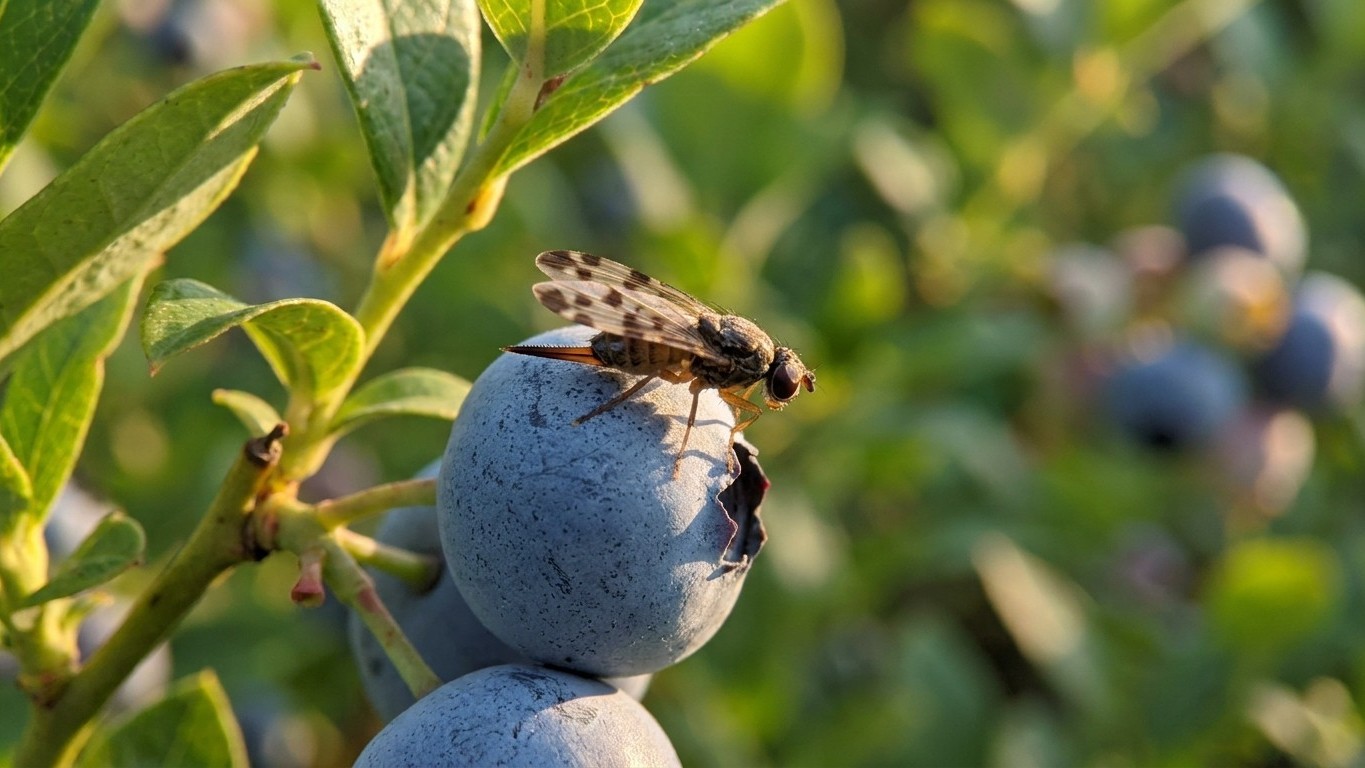

Spotted wing drosophila doesn’t wait for a calendar. In New Brunswick, this invasive fruit fly typically shows up in traps by early June and builds to damaging numbers between mid-July and late September, right when wild blueberries, raspberries, and fall raspberries are ripening on the vine. Stopping it comes down to three things: catching it early with vinegar traps, harvesting fruit before it overripens, and keeping temperatures cold enough to halt larval growth. None of that requires exotic equipment, but timing matters more than almost any other factor.
This isn’t a fly you can shrug off as a nuisance. Unlike the common vinegar flies that only bother rotting fruit on your counter, spotted wing drosophila (Drosophila suzukii) targets fruit while it’s still healthy and ripening on the plant. Females carry a serrated, saw-like egg-laying organ that cuts into intact skin, something native fruit flies simply can’t do. For a province where wild lowbush blueberries are a genuine economic backbone, that biological quirk turns a small insect into a real threat to the harvest.
The weeks to watch

The fly isn’t native to Atlantic Canada. It originated in Asia, turned up in California around 2008, and spread east fast enough that it was confirmed in New Brunswick monitoring traps in the early 2010s. It’s been a fixture in the province’s fruit-growing regions ever since, particularly around the wild blueberry barrens of Kent, Northumberland, and Charlotte counties.
Overwintering adults survive in leaf litter and wooded edges near fields, then emerge once spring temperatures climb consistently above roughly 50°F. Early-season populations stay low and easy to miss. The real spike happens later, because each female can lay several hundred eggs over her lifetime, and a full generation from egg to adult can complete in as little as one to two weeks under warm, humid conditions. That compounding math means a trap that shows two or three flies in June can represent thousands of descendants by August.
New Brunswick’s growing season plays right into the fly’s preferences. Warm, humid stretches in July and August, paired with the ripening window for raspberries, day-neutral strawberries, and highbush blueberries, create ideal breeding conditions. Fall raspberries and late blueberry varieties extend the risk window into September and sometimes early October, right up until the first hard frosts knock populations back.
What Fruit Is Actually at Risk
Not every crop in a backyard garden is a target. Spotted wing drosophila needs thin, soft skin to lay eggs, which is why it goes after certain fruits almost exclusively while leaving others alone. In New Brunswick, the highest-risk crops are:
- Wild and cultivated blueberries
- Raspberries, both summer and fall-bearing
- Strawberries, especially day-neutral varieties fruiting into late summer
- Sweet cherries and some tart cherry varieties
- Grapes with thin skins, once they begin to soften
Apples, pears, and thick-skinned squash are generally safe unless the skin is already broken by hail, birds, or another pest. That’s a useful distinction for home gardeners deciding where to focus limited time and netting.
How to Spot It Before Damage Shows
Visual identification of the adult fly is genuinely tricky without a hand lens. Males carry a single dark spot near the tip of each wing, which is where the common name comes from, but females have no spot at all and are identified instead by that serrated ovipositor, visible only under magnification. For most home growers, waiting to see the insect itself means waiting too long.
A better early-warning method is the same one used by commercial growers across Atlantic Canada: a simple apple cider vinegar trap. A cup with a few small holes punched near the rim, filled with a couple inches of apple cider vinegar and a drop of unscented dish soap to break surface tension, hung in shade near susceptible plants, will catch adults migrating in from wooded edges. Checking it weekly starting in early June gives a realistic read on when local populations are building, well before fruit shows any sign of infestation.
Fruit damage itself tends to look deceptively minor at first: a small soft spot, slight collapse of the flesh, sometimes a faint pinprick where the egg was laid. A quick check some growers use is a saltwater float test, mixing a tablespoon of salt into a cup of warm water, crushing a few suspect berries into it, and watching for tiny white larvae rising to the surface within about fifteen minutes. It’s not glamorous, but it’s the most reliable way to confirm an infestation without a microscope.
What Actually Stops Spotted Wing Drosophila
Control isn’t about a single silver-bullet product. It’s a combination of timing, sanitation, and temperature management, and the order matters.
Harvest Frequency and Sanitation
Because the fly’s entire life cycle can run under two weeks in warm weather, letting fruit sit on the plant even a few extra days gives it room to multiply. Picking ripe fruit every two to three days during peak season, rather than waiting for a weekly harvest, cuts off the fly’s window dramatically. Any overripe, damaged, or fallen fruit left on the ground or on the plant acts as a breeding reservoir, so cleaning that debris up promptly is just as important as the harvest itself. Commercial New Brunswick blueberry operations that skip this step routinely see infestation rates climb even when they’re using registered insecticides on schedule.
Cold Storage as a Practical Weapon
Temperature is one of the few tools that works after the fact. Larvae and eggs already inside picked fruit stop developing once the fruit is refrigerated below about 39°F, and while cold storage won’t remove larvae that are already present, it prevents the population inside your fruit bowl from growing further before you use it. For home growers freezing a berry harvest, a fast freeze at 0°F or below also halts development completely, which is why frozen fruit destined for baking or jam poses far less practical risk than fruit sitting at room temperature for several days.
Exclusion Netting for Backyard Plantings
For raised beds, small raspberry patches, or a handful of blueberry bushes, fine mesh insect netting installed before fruit begins to ripen is one of the most effective physical barriers available to home growers. The netting needs a mesh size fine enough to block an insect roughly the size of a fruit fly, generally under 1 millimeter, which is finer than standard bird netting. It has to go up before the fruit colors, since sealing flies inside the netting with the crop does more harm than leaving it off entirely.
When Insecticides Make Sense
For larger plantings where netting and harvest timing aren’t enough, rotating insecticide classes registered for spotted wing drosophila on the specific crop is standard practice among commercial growers in the region, always following label pre-harvest intervals closely given how fast fruit moves from field to table in peak season. Home gardeners with just a few bushes rarely need to go this route if sanitation and harvest frequency are kept tight, but anyone managing a larger patch should check current provincial extension recommendations before selecting a product, since registered options and rates shift from year to year.
A Detail Growers Often Miss
One thing that surprises a lot of backyard growers in New Brunswick: spotted wing drosophila doesn’t need your garden to survive the winter. It overwinters in wooded margins, hedgerows, and even ornamental shrubs nowhere near a fruit patch, then flies in once temperatures warm and fruit starts to soften. That means a perfectly clean, well-managed berry patch can still get hit hard if it sits near an untended wild blackberry thicket or an abandoned orchard down the road. Talking to neighbors about coordinated cleanup of wild host plants along property lines does more for long-term control than any single spray or trap ever will on its own.
Related guides
- Spotted wing drosophila in Quebec: When It Shows Up and What Stops It
- Spotted wing drosophila in Nova Scotia: When It Shows Up and What Stops It
- Spotted wing drosophila in Newfoundland and Labrador: When It Shows Up and What Stops It
- Spotted wing drosophila in Ontario: When It Shows Up and What Stops It
- Spotted wing drosophila in Prince Edward Island: When It Shows Up and What Stops It