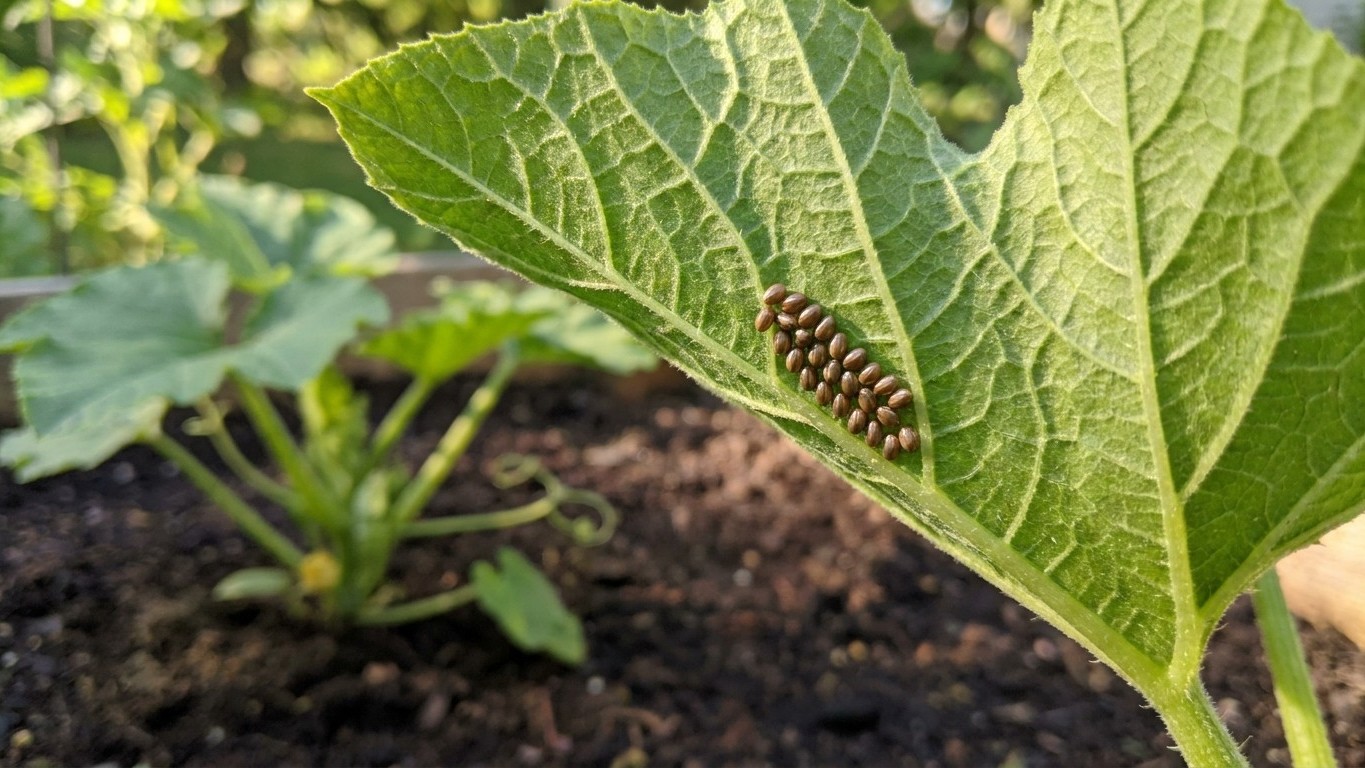

Squash bugs typically appear in Connecticut gardens between late May and mid-June, right after overwintering adults wake up and go hunting for young squash and pumpkin plants. The fastest way to stop them is a mix of early detection, physical removal of eggs and nymphs, and row covers during the first three to four weeks after planting, before the bugs mate and lay their bronze egg clusters on the undersides of leaves.
When Squash Bugs Arrive in Connecticut Gardens

Connecticut sits mostly in USDA hardiness zones 5b to 7a, with shoreline towns along Long Island Sound warming up a week or two earlier than the hills of Litchfield County. That temperature gap matters because squash bugs (Anasa tristis) don’t emerge on a calendar date. They wait for soil and air temperatures to climb consistently above 60°F, which usually happens in coastal Fairfield and New Haven counties by mid-May and in northern Litchfield or Windham counties closer to the first week of June.
Adults spend winter tucked under leaf litter, mulch, old fence posts, or stacked firewood near the garden edge. When they crawl out, they head straight for cucurbits: summer squash, winter squash, pumpkins, and to a lesser extent cucumbers and melons. Females start feeding for a couple weeks to build up energy, then lay eggs in tidy rows or clusters on the underside of leaves, often right along the veins. Each cluster can hold 20 to 30 eggs, and a single female can produce several clusters over her lifespan.
Connecticut’s growing season, roughly 160 to 180 days depending on location, gives squash bugs enough time to complete one full generation and sometimes push a partial second generation by late August or September. That second wave is why gardeners who thought they’d won the battle in July sometimes find new nymphs crawling over their pumpkins right before harvest.
Why Timing Beats Almost Everything Else
Squash bug control in New England comes down to intercepting the insect before it reproduces. Eggs hatch in seven to ten days, and nymphs take another four to six weeks to mature into breeding adults. That’s a narrow window where a gardener who checks leaves twice a week can crush an entire future generation with a fingernail. Miss that window and the population compounds fast, since one female’s eggs from May can become dozens of feeding adults by July.
How to Tell a Squash Bug From Other Pests
Misidentification wastes treatment effort, and squash bugs get confused with a few other insects that show up in the same beds. Adults are roughly five-eighths of an inch long, flat-backed, and dull grayish brown with orange or brown-striped edges along the abdomen. They smell faintly unpleasant when crushed, similar to a stink bug, and that’s not a coincidence since both belong to the order Hemiptera.
The eggs are the clearest tell. Squash bug eggs are shiny, copper or bronze-colored, and laid in neat, angular clusters on leaf undersides, almost always in the V-shaped angle between veins. Stink bug eggs, by contrast, tend to be barrel-shaped and laid in looser, less geometric groups. Nymphs go through five stages before reaching adulthood, starting out pale green with black legs and gradually turning grayish as they age, which throws off gardeners expecting a static appearance.
- Squash bug adults: flat, brownish gray, striped abdomen edges, found at plant base or under leaves
- Stink bugs: shield-shaped, often more colorful (green, brown mottled), feed on a wider range of crops
- Squash vine borer: a moth larva that tunnels inside stems rather than feeding externally, causing sudden wilting
Confusing squash bugs with squash vine borers is common because both cause vines to collapse late in the season. But borers leave a telltale hole and frass (sawdust-like debris) at the base of the stem, while squash bug damage shows up as yellow speckling on leaves that spreads into brown, wilted patches.
What Actually Stops Squash Bugs
No single tactic wipes out squash bugs. What works in Connecticut gardens is layering a few methods, starting before the bugs even show up and continuing through harvest.
Row covers installed at planting time and left on until flowering block adults from reaching young plants during the critical early weeks. Once flowers open, covers need to come off so pollinators can do their job, which means the timing has to line up with each variety’s typical bloom date. For most summer squash in Connecticut, that’s four to six weeks after seeding.
Handpicking remains one of the most effective, low-cost tools available. Checking leaf undersides every few days from late May through June, scraping off egg clusters with a plastic card or piece of tape, and dropping adults into soapy water keeps populations from ever reaching damaging levels. Nymphs cluster near the plant base or under leaves during the hottest part of the day, so early morning checks catch more of them before they scatter.
Sanitation matters more than most gardeners expect. Since adults overwinter in plant debris, clearing squash and pumpkin vines from the garden at the end of the season, and avoiding thick mulch right against the stems, removes the winter shelter that lets the population carry over year to year. Piled straw mulch, while useful for moisture retention, also happens to be a favorite hiding spot, so some Connecticut growers switch to a thinner layer or pull mulch back from the base once fruit sets.
Trap Crops and Biological Allies
Blue Hubbard squash draws squash bugs more strongly than most other cucurbits, which makes it useful as a trap crop planted along the garden perimeter a week or two before the main crop. Bugs congregate on the Hubbard plants, where they’re easier to spot and remove in bulk, sparing the main harvest.
Natural predators help too, though they rarely eliminate an infestation on their own. Tachinid flies parasitize adult squash bugs, and spined soldier bugs prey on nymphs. Gardens with diverse flowering plants nearby tend to attract more of these beneficial insects, giving a modest but real assist to manual control.
Chemical options exist for severe infestations, typically insecticidal soap or pyrethrin-based products applied directly to nymphs, since adults have a tougher exoskeleton that resists most sprays. Any spray application works best in early morning or evening to avoid harming bees, and should target the underside of leaves where nymphs cluster rather than a general overhead spray.
Protecting Your Harvest Through the Season
Crop rotation cuts down on the carryover population from one year to the next. Moving squash and pumpkin beds at least 50 feet from the previous year’s location makes it harder for emerging adults to find host plants right away, buying time for gardeners to spot and remove the first arrivals.
Some squash varieties show more resistance than others. Butternut squash tends to hold up better against squash bug feeding compared to zucchini or yellow summer squash, which have softer stems and leaves that squash bugs seem to prefer. Gardeners dealing with repeat infestations sometimes shift a portion of their planting toward butternut or other harder-stemmed varieties as a partial hedge.
Late-season vigilance matters as much as early control. Connecticut’s second generation, when it occurs, tends to show up in August and can catch gardeners off guard right as pumpkins are sizing up for fall harvest. A quick leaf check once a week through September, even after the main threat seems past, catches this second wave before it damages the last of the season’s fruit.
Community gardens and shared plots face an extra wrinkle: if a neighboring bed harbors an untreated infestation, adults will migrate over regardless of how carefully one gardener manages their own rows. Coordinating cleanup and monitoring schedules across a shared space, something a few Connecticut community garden groups have started doing informally, cuts down on that spillover effect more than any single grower working alone ever could.