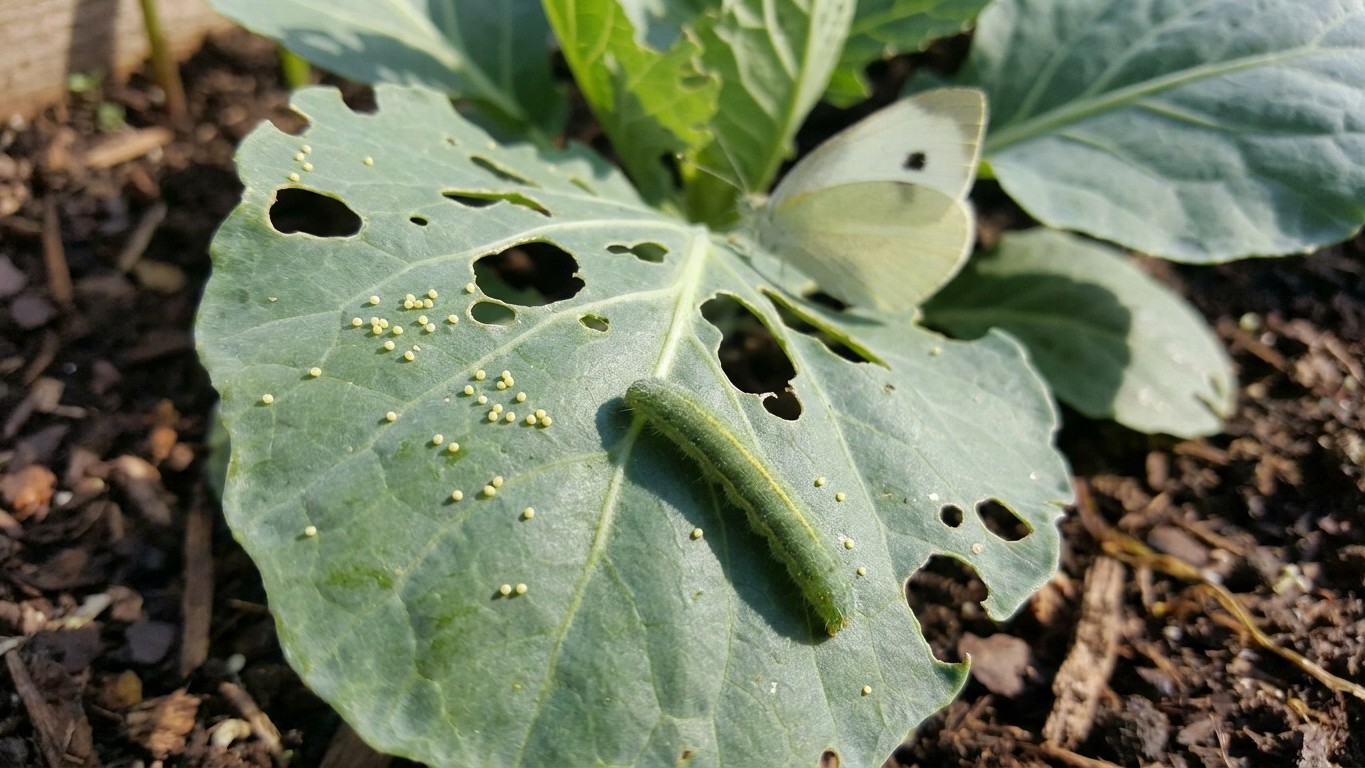

The imported cabbageworm shows up in Nebraska gardens as soon as brassica transplants hit the soil in spring, typically by early to mid-May in the eastern part of the state, and it keeps cycling through new generations until the first hard frost in October. The green, velvety larvae chew ragged holes in cabbage, broccoli, kale, and related crops, and by midsummer a single planting can host three overlapping generations at once. Bacillus thuringiensis (Bt) sprays, row covers installed before the white butterflies arrive, and regular scouting for the pest’s tiny yellow eggs remain the most reliable ways to keep populations from wrecking a harvest.
What the Imported Cabbageworm Actually Looks Like

Confusion with other garden pests is common, so identification matters before you reach for any treatment. The adult is a white butterfly with one or two black spots on each forewing and dark smudges near the wingtips, often mistaken for a common cabbage moth even though it’s active during the day, not at dusk. Gardeners across Nebraska sometimes call it the “cabbage white,” and it’s one of the most widespread butterflies in North America, found from coastal gardens to high plains vegetable patches alike.
The larval stage does the damage. These caterpillars grow to about an inch long, sport a velvety green body with a faint yellow stripe running down the back, and move slowly compared to the frantic wiggling of loopers, another common brassica pest. Eggs are the easiest life stage to spot if you know where to look: tiny, ribbed, bullet-shaped, and pale yellow, laid singly on the undersides of outer leaves rather than in clusters. Finding eggs before they hatch gives you a full week or more of lead time to act.
How to Tell It Apart From Cabbage Loopers and Diamondback Moths
Nebraska brassica growers often deal with three lookalike pests at once. Cabbage loopers arch their backs into a distinctive loop when they crawl, a trait imported cabbageworm larvae never show. Diamondback moth larvae are smaller, more slender, and tend to feed by tunneling into the interior of the head rather than chewing exposed leaf tissue first. Knowing which pest you’re facing changes the timing of Bt applications, since diamondback larvae hide inside developing heads where sprays reach them less effectively.
Timing: When Imported Cabbageworm Shows Up in Nebraska
Nebraska’s growing season runs roughly from late April through early October, and the imported cabbageworm’s life cycle tracks closely with that window. Adults overwinter as pupae attached to plant debris, fence posts, or the sheltered sides of outbuildings, and they emerge once daytime temperatures consistently climb into the 60s, usually the first two weeks of May in the Lincoln and Omaha areas, a bit later in the Panhandle where spring arrives slower.
From that first emergence, the pest cycles through two to four generations before winter shuts things down, depending on how warm the summer runs. Each generation takes roughly three to four weeks from egg to adult butterfly under Nebraska’s summer heat, which means a garden planted with spring broccoli can see its first wave of larvae by early June and a second, often heavier, wave by mid-July. The third generation, arriving in late August or September, frequently does the most damage to fall cabbage and kale because populations have had all summer to build.
Eastern Nebraska’s longer, more humid season tends to support a full fourth generation some years, while the drier, cooler western counties usually top out at three. Gardeners who track this rhythm can time row covers and Bt applications ahead of each wave rather than reacting after leaves are already skeletonized.
Which Nebraska Crops Are Most at Risk
Anything in the brassica family is fair game, but some crops take a harder hit than others. Cabbage and broccoli are favorites because their dense heads offer both food and shelter for developing larvae. Kale and collards get chewed steadily through the season since gardeners keep harvesting leaves and new growth keeps attracting fresh egg-laying females. Brussels sprouts, cauliflower, and mustard greens round out the list of common targets in home gardens across the state.
Ornamental relatives matter too. Nasturtiums, often planted as companion flowers or even as trap crops, get readily colonized, and some gardeners intentionally let a patch of nasturtiums take the brunt of egg-laying to reduce pressure on the vegetable rows nearby. Wild mustard and shepherd’s purse growing along field edges and ditches in rural Nebraska also serve as reservoir hosts, letting populations persist even in years when a garden itself is rotated away from brassicas.
What Actually Stops Imported Cabbageworm
Control works best when it starts before larvae are visible, since a caterpillar that’s already chewed through half a cabbage head has already done irreversible damage. The most effective home garden strategies combine physical exclusion with targeted biological treatment rather than relying on either alone.
Floating row covers, installed at transplanting and sealed at the edges with soil or landscape staples, block adult butterflies from laying eggs in the first place. This works particularly well for spring plantings, since covers can stay on until flowering crops like broccoli need pollinator access, or come off entirely for crops like cabbage that don’t require insect pollination. The tradeoff is heat buildup during hot Nebraska summers, so covers need monitoring on the crops that stay covered into July.
Once eggs or small larvae are spotted, Bt (Bacillus thuringiensis subspecies kurstaki) remains the standard organic-approved treatment. It’s a bacterial insecticide that only affects caterpillars, leaving pollinators and beneficial insects unharmed, which matters in a garden that’s also growing squash or cucumbers nearby that depend on bees. Bt works best applied while larvae are small, since older caterpillars need to ingest more of the toxin and recover more easily. Reapplication every seven to ten days during active feeding periods, and after rain, keeps protection consistent through a generation’s feeding window.
Handpicking remains a viable option for smaller garden plots, especially since the caterpillars move slowly and hide on leaf undersides in predictable spots. Checking plants every few days during peak generation windows, late May, mid-July, and late August in most of Nebraska, catches problems before they compound.
Biological Controls Already Working in Nebraska
Parasitic wasps do a lot of unpaid pest control work in Nebraska gardens already. Species in the genus Cotesia lay eggs inside cabbageworm larvae, and Trichogramma wasps parasitize the pest’s eggs before they even hatch. Gardeners who avoid broad-spectrum insecticides tend to see these natural enemies build up over a season, which is one reason a garden that gets hit hard with cabbageworm in June sometimes shows noticeably less damage by August without any additional intervention. Planting flowering herbs like dill, fennel, or yarrow nearby gives these wasps nectar sources and tends to keep them established season over season.
Birds also take a toll on both larvae and pupae, particularly in gardens near hedgerows or windbreaks that offer perching spots. This is one argument against clearing every bit of brush from around a vegetable garden in rural Nebraska settings, since that habitat supports predators that work for free.
Monitoring and Thresholds That Make Sense for Nebraska Gardens
Not every larva found on a plant justifies a spray. University extension guidance across the Midwest generally points to treating when an average of one or more larvae per plant is found before head formation on cabbage and broccoli, since damage to wrapper leaves matters less than damage to the marketable head itself. Once heads start forming, the threshold tightens because larvae that bore into a developing head cause damage that spraying can’t undo.
A simple weekly check, five minutes walking the rows and flipping a sample of outer leaves, catches the egg and early larval stages before populations explode. This matters more in Nebraska’s second and third generations than the first, since summer heat compresses the time between egg-laying and noticeable feeding damage. A garden checked only once a month will consistently be surprised by cabbageworm; one checked weekly rarely is.
Crop rotation offers modest but real benefits too. Moving brassicas to a different bed each year, even just twenty or thirty feet away, disrupts the pattern of pupae overwintering right next to next year’s planting site. It won’t eliminate the pest since adults fly readily across a typical suburban lot, but it does reduce the head start that overwintering populations get in early spring.