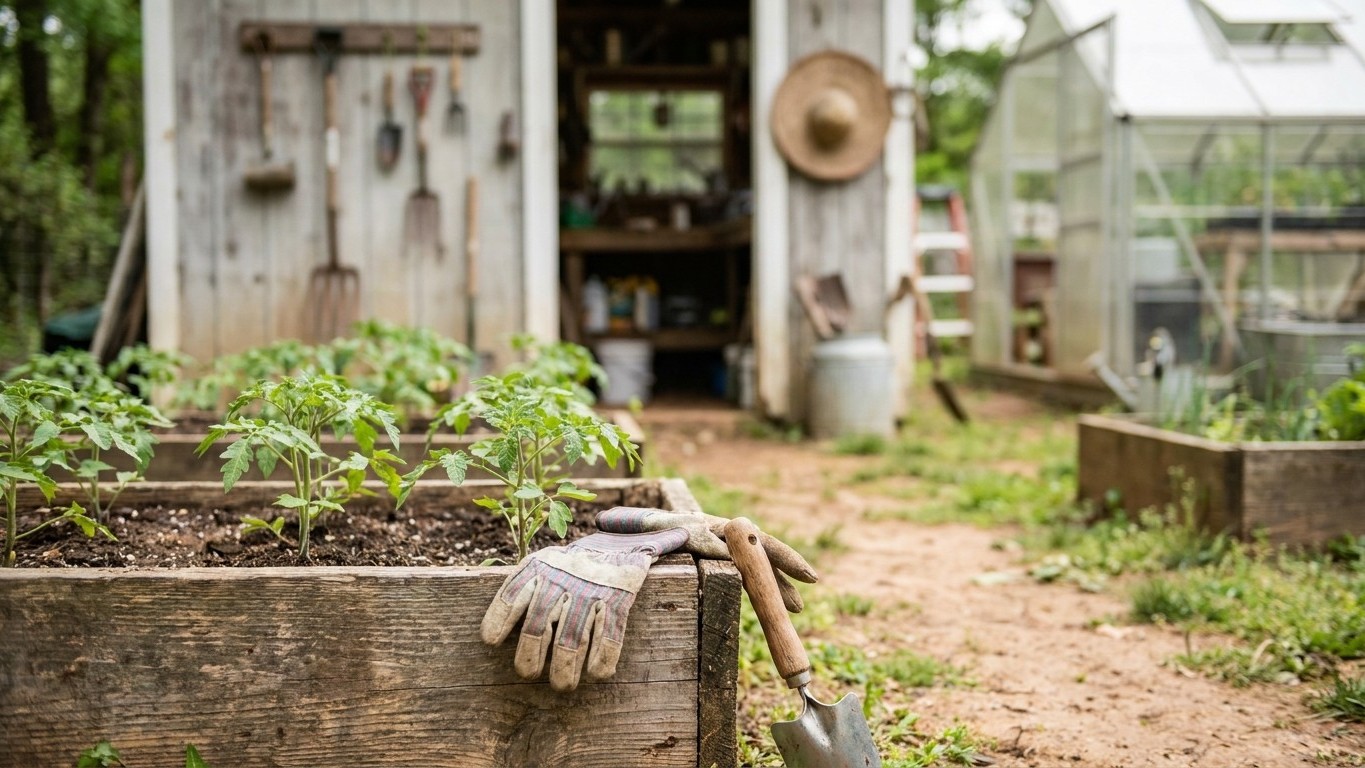

Your last spring frost decides this, and in most of Alabama it lands somewhere between mid-March and early April, later the higher up you are, earlier the closer you sit to the coast. So the tomatoes go in a few days after that window opens, not on the date itself, since frost risk is still real right at the edge. Check your own county’s frost date before you set a transplant day, then count backward from there for starting seed indoors, and forward for when the first fruit shows up.
What this comes down to in Alabama

In Alabama, Tomato Planting Dates hinge on two numbers: how late spring frost lingers and how early fall frost arrives, both of which set the outer edges of the season a tomato has to work with. At Huntsville, NOAA’s 1991-2020 climate normals put the last spring frost between March 19 and April 3, and the first fall frost between November 2 and November 16. That gives a Huntsville-area garden something in the neighborhood of seven months between the two, though the actual planting date still depends on what you’re growing and how you start it.
The spring figure is the one that matters for deciding when transplants go into the ground. NOAA frames it as a 30 to 70 percent freeze probability band, meaning frost has already dropped below a 30 percent chance by the start of the window and climbs past 70 percent risk before the end of it. Frost outside that window isn’t ruled out, it’s just less likely on either side. Treat the window as a probability curve, not a switch that flips on April 3. A gardener who transplants at the early edge of that range is accepting real frost risk in exchange for an earlier harvest.
The fall figure matters less for setting a transplant date and more for deciding whether a cultivar has time to finish. Once transplants go in during the early-to-mid April window this reference year generally allows, the season runs long enough that even a longer-maturing tomato clears the fall frost date with weeks to spare, a detail the next section works through with real days-to-maturity numbers. The bigger risk in Alabama is spring cold, not running out of season in fall. For a rundown of which cultivars fit this window and which don’t, see Tomato Varieties That Ripen in Time in Alabama.
USDA’s Plant Hardiness Zone Map places Alabama across zones 7a to 9a, a range wide enough that a gardener in the Tennessee Valley works with a noticeably shorter frost-free season than one near Mobile Bay. Huntsville sits toward the cooler end of that range, which is exactly why its frost window is the one used for the calculations below. If you garden further south, expect your own last frost to arrive earlier than Huntsville’s, and adjust the arithmetic that follows to your own dates once you’ve confirmed them with your county office.
Working it out for your own garden
The method that survives a move to a new county, or a colder-than-normal year, is counting backward and forward from the frost window rather than memorizing a date. Start with the last spring frost window: March 19 to April 3 at Huntsville, per NOAA’s 1991-2020 normals. Most gardeners in that area wait a few days into or past that window before setting transplants outside, since the early edge still carries real frost risk, which puts an actual transplant date for many Huntsville-area gardens somewhere in the early-to-mid April range.
Starting seed indoors
If you’re starting tomato seed indoors rather than buying transplants, count back six to eight weeks from your intended transplant date, not from the frost date itself. Applied to a Huntsville transplant window of early to mid April, that puts seed-starting somewhere in the mid-February to mid-March range, a range rather than a single day because both the transplant window and the six-to-eight-week guideline are themselves ranges. Narrowing that down to one calendar day invents a precision the numbers don’t support. Adjust the low end of that range earlier if your county’s frost typically lingers past Huntsville’s, and the high end later if it clears sooner.
Counting forward to harvest
Once transplants are in the ground, days to maturity on the seed packet tell you roughly when the first fruit ripens, counted from transplant, not from seed. Catalog figures vary a week or two with the season’s heat and rainfall, but they’re a reliable starting point. Sun Gold, at 57 days from transplant, set out in the early-to-mid April window would ripen its first fruit around mid June. San Marzano II, a paste tomato at 78 days from transplant, would put first ripe fruit closer to early July from that same transplant window.
| Variety | Days to maturity (from transplant) | First ripe fruit | Margin before Huntsville’s fall frost window |
|---|---|---|---|
| Sun Gold | 57 days | mid June | about 142 days |
| Celebrity Plus | 78 days | early July | about 121 days |
| Amish Paste | 85 days | mid July | about 114 days |
What the table shows is worth taking seriously: in a normal Huntsville-area season, days to maturity almost never bumps against the fall frost date, since even an 85-day paste tomato clears it with over three months to spare. Spring frost, not fall frost, is what actually costs a harvest here. Where the fall date starts to matter is a second, late-summer planting for a fall crop, which uses up far more of that margin than a normal spring-set plant ever does.
What changes across the state
Huntsville’s frost window is a reference point, not a state law. Alabama runs from the Tennessee Valley in the north, where USDA’s hardiness zones start around 7a, down through the Black Belt and Wiregrass regions to zone 9a near the Gulf Coast, according to USDA’s Plant Hardiness Zone Map. A garden near Mobile Bay generally sees frost end earlier in spring and start later in fall than one in the Tennessee Valley, simply because it sits closer to open water and further south.
Elevation moves the numbers too. Gardens on higher ground, in the foothills that run through the northeastern part of the state, tend to hold onto frost later into spring and pick it back up earlier in fall than valley floors nearby. Low-lying spots that collect cold air overnight, frost pockets at the bottom of a slope or next to a creek, behave the same way even within a single county, regardless of the region’s average.
There’s also a gap between the airport station NOAA measures from and the garden you actually plant in. NOAA’s Huntsville figures come from an airport weather station, and suburban or rural gardens nearby typically see the last spring frost later and the first fall frost earlier than that station records, often by one to two weeks, and more at elevation. That gap runs in the direction of a shorter season than the official number suggests, so treat the Huntsville window as an optimistic edge rather than a guarantee for your own yard. None of this changes the method from the section above, only the numbers you feed into it once you’ve confirmed your own county’s dates.
The mistakes this state punishes

A few mistakes show up every year in Alabama gardens, and they cost a harvest more often than any pest does.
- Transplanting after a warm stretch fools the calendar into feeling later than it is.
- Choosing a variety whose days to maturity leaves no real cushion, usually in a late succession planting.
- Ignoring soil temperature in favor of air temperature alone.
- Missing the early-season window for a pest that arrives on a predictable schedule.
The first one is the costliest. A run of warm days in mid-March, before Huntsville’s frost window even opens on March 19 per NOAA’s normals, convinces a lot of gardeners the danger has passed. It hasn’t. A single freeze after transplant can wipe out a flat of seedlings in one night, and the frost window given here is a 30-to-70-percent probability band, not a guarantee that ends on its final day.
The second mistake matters less in Huntsville’s specific case, since the fall frost window sits comfortably late, but it still bites gardeners who start transplants weeks behind schedule, whether from a late seed order or a cold, wet spring that delays hardening off. A cultivar that needs 85 days, like Amish Paste, still clears the season easily from an early-to-mid April transplant, but a second, late-summer planting of the same cultivar can run right up against the first fall frost in a way a spring planting never does.
The third and fourth need less explaining. Soil that’s still cold a few inches down slows root growth even if the air feels warm, so a thermometer beats a hunch. And missing a pest’s early window, before populations build, is a mistake covered in more detail on Tomato Pests in Alabama: Which Ones Actually Show Up Here, but the short version is that timing your transplant well also means watching for that pest’s arrival rather than reacting after the damage is already visible.
Checking this against your county
Every figure above comes from one station near Huntsville, and a state-wide number is a starting point, not an instruction for your particular yard. Before you commit to a transplant date, call your county extension office, part of the Alabama Cooperative Extension System, and ask for the frost dates and tomato planting guidance specific to your county. Its site, aces.edu, is a reasonable place to start looking for that office.
Once your own dates are confirmed, the variety guide covers cultivars that fit whatever window your county turns up, and the overview on growing tomatoes in Alabama covers what comes after transplanting.
Some gardeners also time this by the Moon: when to plant tomatoes by the moon, as almanac tradition rather than fact.
Common questions
What happens if I plant tomatoes before the frost window ends?
You’re accepting real frost risk in exchange for an earlier harvest, since NOAA’s window is a probability band, not a hard cutoff. A late-season freeze after transplant can kill or badly set back seedlings, and a floating row cover or similar protection buys some margin but won’t carry plants through a hard freeze.
Is it too late to plant tomatoes in June in Alabama?
Not necessarily, since Huntsville’s first fall frost doesn’t arrive until between November 2 and November 16 per NOAA’s normals, leaving enough season for a shorter cultivar transplanted in June to still ripen fruit before frost. A long-season paste tomato started that late is cutting it closer, so check its days to maturity against your remaining weeks before you commit a whole bed to it.
Do I need to worry about soil temperature separately from air temperature?
Yes. Tomato roots grow slowly in cold soil even once the air feels warm enough for a t-shirt, and a warm early-spring stretch can make the calendar feel later than the frost window actually allows. A soil thermometer a few inches down is a cheap way to confirm the ground has actually caught up.
Why does my neighbor a few miles away plant earlier than the Huntsville date I keep seeing online?
NOAA’s Huntsville figures come from the airport weather station, and gardens elsewhere, especially at higher elevation or in low frost pockets, often see a later last frost and an earlier first fall frost than that station records. Your neighbor may simply be in a warmer microclimate, or may be taking on more frost risk than the reference figure would suggest.