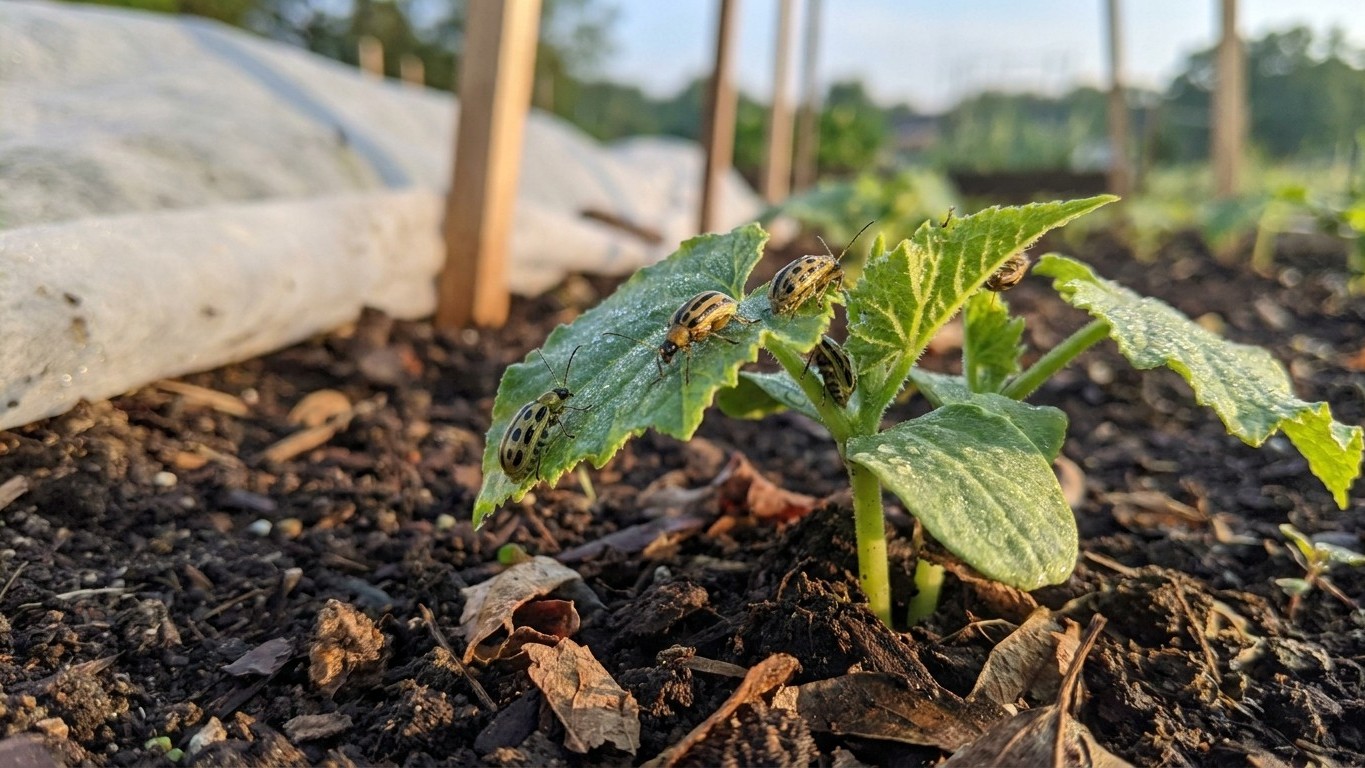

Cucumber beetles typically show up in South Dakota gardens between late May and mid-June, right around the time cucurbit seedlings put out their first true leaves. Striped and spotted cucumber beetles both survive the state’s brutal winters as adults tucked into leaf litter, fence rows, and soil clumps, then wake up hungry once soil temperatures climb past 55 degrees. The fastest way to stop them is a combination of timing (row covers before emergence) and physical barriers, since chemical sprays alone rarely solve the underlying problem of bacterial wilt they carry.
South Dakota’s split climate zones matter here more than in most states. Gardeners in Sioux Falls or Brookings, sitting in that milder east-river corridor, often see beetles a week or two earlier than growers out in Rapid City or the Black Hills foothills, where cooler spring soil delays both planting and pest activity. If you’ve gardened in both halves of the state, you already know the frustration: a recipe that works in Yankton might do nothing for a plot in Sturgis.
Life Cycle and When They Actually Show Up

Adult cucumber beetles overwinter in plant debris, grassy field edges, and even mulch piles left over from fall cleanup. They emerge as soon as spring warmth breaks their dormancy, usually a few weeks after the last hard frost. In eastern South Dakota, that’s often early-to-mid May. Farther west and north, where frost risk lingers into late May or even early June, beetle emergence trails behind by a similar margin.
Once active, females lay eggs at the base of cucurbit plants (cucumbers, squash, melons, pumpkins). Larvae feed on roots for two to three weeks before pupating, and the new generation of adults appears in July or August. In a warm year, South Dakota can see a partial second generation before the season ends, which is why late-summer damage sometimes looks worse than what showed up in June. Cold snaps and the state’s typically dry August air do slow reproduction somewhat compared to more humid Midwestern states, but they don’t eliminate it.
Beetle activity winds down with the first hard frost. That date varies a lot across the state: western counties near the Black Hills often see frost by mid-September, while southeastern counties along the Missouri and Big Sioux rivers can stay frost-free into early October. That three-to-four-week difference gives eastern gardeners a longer window of vulnerability, but also more time to harvest before beetle pressure becomes a real problem.
Why Timing Your Planting Matters
Delaying cucurbit planting by even ten days can mean the difference between seedlings emerging into a beetle-free window versus getting hit right at the cotyledon stage, when a handful of beetles can wipe out a young plant overnight. Extension agronomists across the northern Plains have long recommended waiting until soil temperatures are reliably above 65 degrees before direct-seeding squash and cucumbers, partly for germination reasons and partly because it shortens the overlap with peak beetle emergence.
Striped or Spotted? Telling Them Apart
South Dakota gardeners deal with two distinct species, and knowing which one you’ve got changes how you respond. The striped cucumber beetle (Acalymma vittatum) is about a quarter-inch long, yellow-green with three bold black stripes running down its back. It’s the more aggressive feeder on young cucurbit seedlings and the primary carrier of bacterial wilt in this region.
The spotted cucumber beetle (Diabrotica undecimpunctata howardi) looks similar in size and base color but wears twelve black spots instead of stripes. This is the same insect that, in its larval stage, causes damage as the southern corn rootworm, so gardeners near corn fields sometimes see heavier spotted-beetle pressure than those farther from row crops. Spotted beetles feed on a wider range of plants beyond cucurbits, including beans and corn silk, which makes them a bit less predictable in mixed vegetable gardens.
Both species are sometimes confused with ladybugs at a glance, but the elongated body shape and the distinct stripe or spot pattern give them away on closer look. A cheap hand lens or even a phone camera zoomed in works fine for a quick ID in the garden.
The Real Damage: It’s Not Just Chewed Leaves
Cosmetic leaf damage from cucumber beetles looks alarming but rarely kills an established plant on its own. The bigger threat is what they carry. Striped cucumber beetles transmit the bacterium Erwinia tracheiphila, which causes bacterial wilt, a disease that clogs a plant’s water-conducting tissue and can collapse a healthy-looking cucumber vine within days. Once a plant shows wilting from bacterial infection, there’s no cure. Removal is the only option to keep it from spreading to neighboring plants.
Cucumber mosaic virus is the second concern, spread by beetle feeding and causing mottled, stunted leaves and misshapen fruit. Unlike bacterial wilt, mosaic virus symptoms develop more slowly and don’t always kill the plant outright, but they do reduce yield significantly.
Melons and cucumbers are the most susceptible crops to bacterial wilt. Squash and pumpkins, especially many modern hybrid varieties, show more natural resistance. That’s a useful distinction for South Dakota growers planning next year’s garden: if bacterial wilt hit hard this season, shifting more garden space toward resistant squash varieties and less toward wilt-prone cucumbers is a reasonable adjustment.
Control Strategies That Actually Work in a Cold-Winter State
Because South Dakota’s growing season is compressed compared to states farther south, timing control measures correctly matters more than in milder climates. There’s less room for a slow start.
Physical Barriers and Timing Tricks
Floating row covers placed over seedlings right after planting remain the single most reliable defense. They block adult beetles from reaching young plants during the vulnerable seedling stage, when a small number of beetles can do outsized damage. The catch: row covers need to come off once flowers appear, since cucurbits depend on bee pollination and covers exclude pollinators along with pests. That timing window (cover during emergence, remove at first bloom) lines up well with South Dakota’s compressed spring, giving growers roughly three to four weeks of protection when beetle pressure is highest.
Trap cropping is another option some South Dakota market gardeners have adopted with decent results. Planting a small border of Blue Hubbard squash, which cucumber beetles find far more attractive than cucumbers or zucchini, draws beetles away from the main crop. Concentrating pest pressure on a sacrificial border row makes targeted treatment (or simple hand removal) far more manageable than trying to protect an entire cucurbit patch.
Yellow sticky traps placed at plant height help with monitoring more than control, but they’re useful for figuring out when beetle numbers are climbing so you can time other interventions. A general threshold used by extension programs across the northern Plains is one beetle per seedling as a signal to act, since seedlings have far less tolerance for feeding damage than mature plants.
When Insecticides Make Sense
For heavier infestations, especially in years following a mild winter that let more adults survive, targeted insecticide applications can be justified. Products containing spinosad or pyrethrin are commonly recommended for home gardens because they break down relatively quickly and have a shorter residual impact on pollinators compared to broader-spectrum options. Applying in the early evening, after bees have finished foraging for the day, cuts down on unintended harm to pollinators that are essential for fruit set on the same plants you’re protecting.
Carbaryl and other broader insecticides work too, but they carry more risk to beneficial insects and should be reserved for situations where beetle populations are clearly overwhelming a planting despite other measures. Rotating planting locations year to year (not putting cucurbits in the same bed two seasons running) also reduces the odds of a beetle population building up in one spot, since overwintering adults tend to emerge close to where they fed the previous year.
Kaolin clay, a fine mineral powder sprayed on foliage, has picked up some use among South Dakota growers as a lower-impact alternative. It coats leaves in a film that beetles find irritating to feed on, without the ecological tradeoffs of a synthetic insecticide. It washes off in rain and needs reapplication, which makes it more labor-intensive but appealing for gardeners trying to limit chemical use around food crops.
Sanitation at the end of the season plays a bigger role than most gardeners assume. Clearing out old cucurbit vines, fallen fruit, and leaf debris before the ground freezes removes the overwintering sites beetles depend on. In a state where winter already does a fair amount of population control through sheer cold, cleaning up garden debris in October gives that natural die-off an extra push heading into next spring.