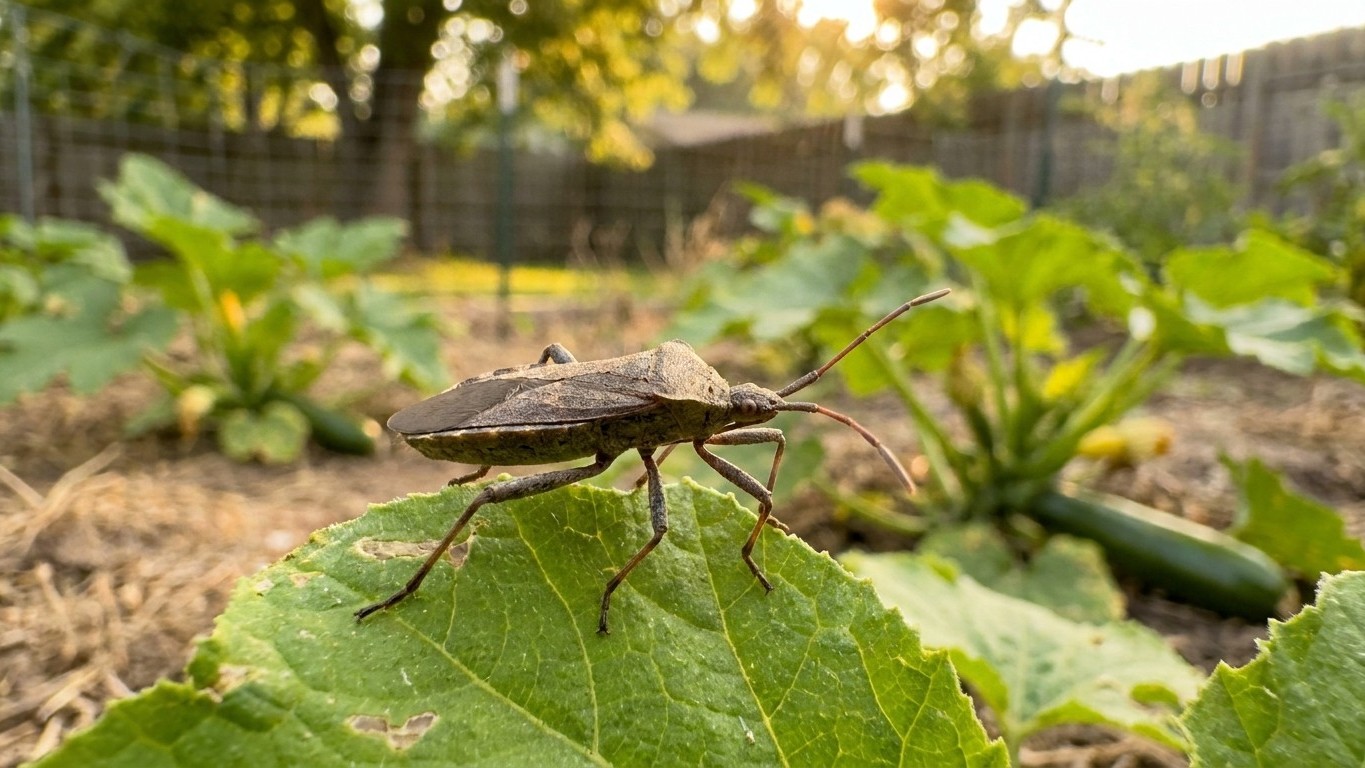

Squash bugs show up in Iowa gardens right around the time zucchini plants start putting out their first true leaves, usually mid-to-late May in the southern two-thirds of the state and closer to early June up near the Minnesota border. Overwintering adults crawl out from leaf litter, mulch piles, and old fence rows once soil temperatures climb past the mid-60s, and they head straight for the nearest cucurbit patch. That timing matters because it’s your window to catch them before egg-laying starts.
Iowa’s growing season runs from roughly late April to early October depending on the county, and squash bugs (Anasa tristis) fit their entire life cycle into that stretch with room to spare for two generations in a warm year. Southern counties near Missouri often see a second wave of nymphs by late July. Northern counties, closer to Mason City or Decorah, typically only get one full generation before frost shuts things down.
Where Squash Bugs Hide Over Winter in Iowa

Adult squash bugs don’t migrate south for the cold months. They tuck themselves under dead vines, wood piles, straw mulch, and the siding of sheds and garages, sometimes just a few feet from where they fed the previous summer. This is why the same raised bed or garden corner tends to get hit year after year, especially if last season’s squash and pumpkin debris got left in place instead of pulled and composted or bagged.
A cold Iowa winter doesn’t wipe them out the way it does with some tropical pests. These bugs are cold-hardy enough to survive under a blanket of snow, and a mild winter (like several Iowa has seen in recent years) can mean higher survival rates and a bigger spring population. Gardeners in the Des Moines and Cedar Rapids metro areas, where winter temperatures moderate slightly compared to open farmland, sometimes notice earlier and heavier infestations for exactly that reason.
The Life Cycle, Stage by Stage
Once adults emerge in spring, mating starts almost immediately. Females lay clusters of bronze-colored eggs on the undersides of leaves, often wedged into the V formed by leaf veins, which makes them easy to miss on a quick walk-through. A single female can lay well over 100 eggs across a season, spread out in batches of a dozen or two at a time.
Eggs hatch in about seven to ten days under typical Iowa summer conditions. The nymphs that emerge are gray-green and soft-bodied, clustering tightly on stems and leaf undersides where they’re partially shielded from view. Over the next four to six weeks, they molt through five nymphal stages, gradually darkening and hardening into the flat, brownish-gray, shield-shaped adults most gardeners recognize. Both nymphs and adults feed by piercing plant tissue and sucking out sap, which causes the wilting and yellowing that often gets mistaken for disease or drought stress.
Signs of Damage on Iowa-Grown Cucurbits
Zucchini, yellow summer squash, acorn squash, butternut squash, pumpkins, and cucumbers are all fair game, though squash bugs generally prefer squash and pumpkins over cucumbers and melons. Watch for leaves that turn yellow, then brown and crispy, starting at the point where vines meet the main stem. Heavy feeding can collapse an entire vine within a few days, a condition sometimes called “squash bug wilt,” which looks a lot like bacterial wilt but spreads much faster once populations build up.
Iowa State University Extension and Outreach notes that seedlings and young transplants are the most vulnerable, since a small population of nymphs can overwhelm a plant that hasn’t developed much leaf mass yet. Established, vigorous vines can tolerate moderate feeding without much yield loss, which is one reason timing your control efforts to the early season matters more than trying to catch up in August.
What Actually Stops Squash Bugs in Iowa Gardens
No single method eliminates squash bugs completely once they’ve established themselves in a yard. Effective control in Iowa’s climate usually means stacking several tactics rather than relying on one spray or trick.
Cultural Practices That Cut Down Populations
Fall cleanup is the single most effective long-term move. Pulling and disposing of squash and pumpkin vines right after harvest, rather than leaving them to break down over winter, removes the overwintering habitat adults rely on. Composting is fine if the pile heats up enough to kill overwintering insects, but a cold, slow compost pile can actually shelter them through winter just as well as a brush pile would.
Crop rotation helps too, though it’s less effective in small suburban lots where there’s only one realistic spot for a squash bed. Moving cucurbits to a different section of the yard each year, even a modest 10 to 15 feet, can reduce the odds that overwintering adults find the new planting right away. Row covers put down at planting time and left on until flowering starts (when pollinators need access) physically block adults from reaching young plants during the most vulnerable stage.
Some squash varieties tolerate squash bug feeding better than others. Butternut squash, for instance, tends to show more resistance than zucchini or yellow crookneck varieties, which are considered highly susceptible. Gardeners dealing with chronic infestations sometimes shift more of their planting toward butternut and away from the more attractive types, accepting a tradeoff in variety for lower pest pressure.
Mechanical Removal Still Works
Handpicking remains one of the most reliable methods for a home garden, tedious as it sounds. Checking the undersides of leaves every few days during May and June, then crushing or dropping egg clusters and nymphs into soapy water, can keep populations from ever reaching damaging levels. Adults are quick to drop and hide when disturbed, so early morning checks, when temperatures are cooler and bugs move slower, tend to be more productive.
Trap boards offer a low-effort assist. A flat board or shingle laid on the ground near the base of plants overnight gives adults a place to hide from morning sun. Flip it in the morning and you’ll often find several bugs clustered underneath, ready to be scooped and disposed of before they can lay more eggs.
When Insecticides Make Sense
Chemical control works best against young nymphs, since adults have a tougher exoskeleton that resists many contact insecticides. Products labeled for squash bugs and safe for use on cucurbits, applied directly to the undersides of leaves where nymphs cluster, tend to give the best results. Timing sprays for early morning or evening protects bees and other pollinators that are active during the day when squash flowers are open.
Waiting until adults dominate the population usually means disappointing results from any spray, chemical or organic. This is part of why scouting in late May and early June, right as the first generation of eggs starts hatching, matters more than reacting once damage is already visible in July or August.
Regional Timing Differences Across Iowa
Southern Iowa counties along the Missouri border, including areas around Ottumwa and Fairfield, typically see squash bug activity begin one to two weeks earlier than counties in the northern third of the state. This gap follows the same pattern as Iowa’s frost dates: the last spring frost hits southern counties in late April, while northern counties often wait until mid-May, and that same lag shows up in insect activity tied to soil warming.
A second generation is more likely in southern and central Iowa, where a longer stretch of warm weather after the first generation matures gives females time to lay another round of eggs before fall. Northern Iowa gardeners, particularly those in the shorter growing season near the Minnesota line, are more likely to deal with just one generation, which can make late-season control efforts less urgent than they’d be further south.
Home gardeners tracking squash bug activity year to year often notice that a mild, dry spring accelerates the whole cycle by a week or more compared to a cool, wet one, since both egg development and nymph molting speed up with warmer temperatures. That variability is one reason relying on a fixed calendar date for control measures works less well than actually walking the garden and checking leaf undersides starting in mid-May.
Related guides
- Squash bug in Minnesota: When It Shows Up and What Stops It
- Squash bug in Wisconsin: When It Shows Up and What Stops It
- Squash bug in Kansas: When It Shows Up and What Stops It
- Squash bug in Kentucky: When It Shows Up and What Stops It
- Squash bug in Nebraska: When It Shows Up and What Stops It
- Squash bug in Ontario: When It Shows Up and What Stops It