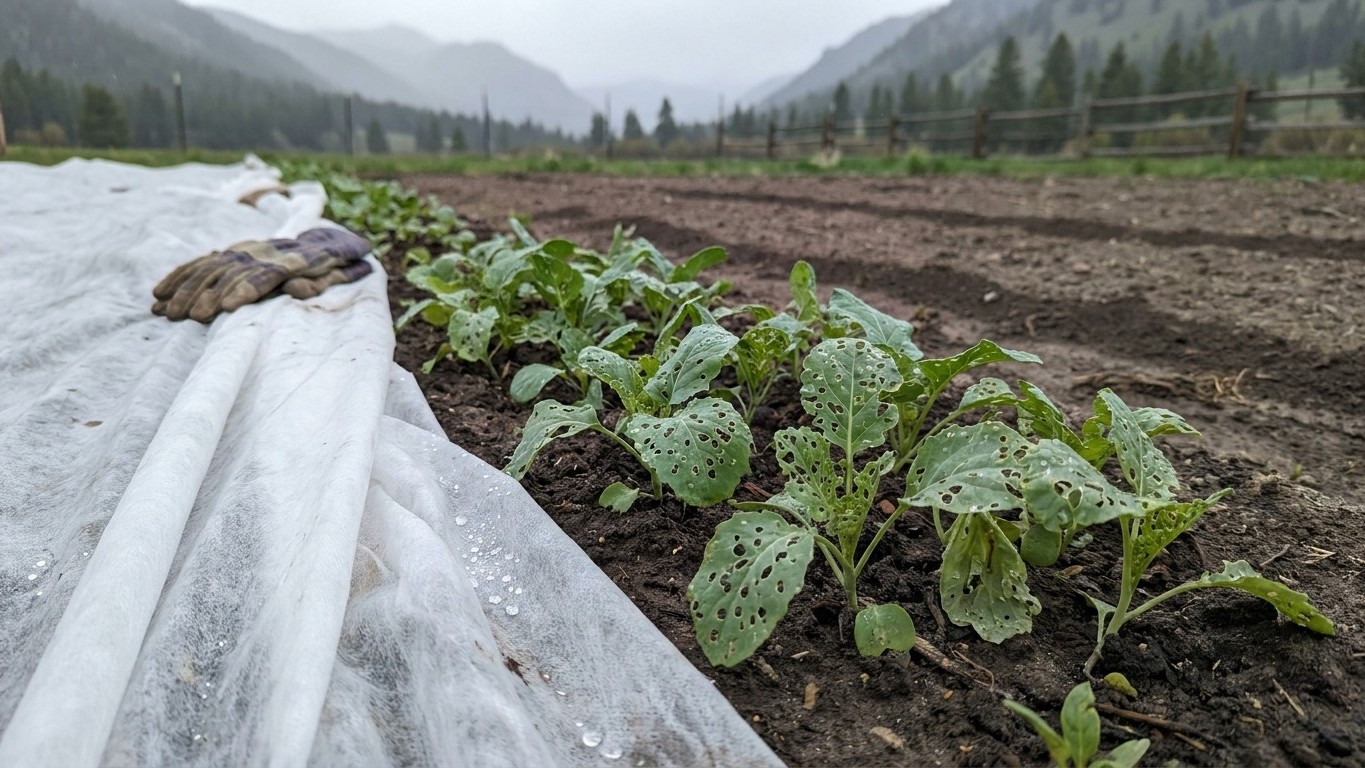

Flea beetles start chewing through Wyoming gardens as soon as soil temperatures climb into the mid-50s, which typically lands somewhere between mid-May and mid-June depending on elevation. Row covers installed before that window, combined with delayed planting and quick removal of garden debris, are the most reliable ways to keep populations from establishing. Once you see the telltale shotgun-blast holes in young leaves, the beetles are already active, and control shifts from prevention to damage limitation.
When Flea Beetles Show Up Across Wyoming

Timing here isn’t uniform. Wyoming’s elevation swings from around 3,125 feet in Cheyenne to well over 6,000 feet in places like Jackson or Pinedale, and that difference matters more than most gardeners assume. Adult flea beetles overwinter in soil, leaf litter, and fence rows, then wake up once ground temperatures hold steady in the 50s Fahrenheit. In the lower-elevation eastern counties, that can happen as early as the first or second week of May. In mountain valleys, gardeners might not see activity until mid-June, sometimes later after a cold, wet spring.
Short growing seasons compress the whole cycle. Most of Wyoming gets somewhere between 90 and 130 frost-free days, depending on the county, and that limits flea beetles to a single generation in cooler regions instead of the two or three cycles you’d see in warmer states. That’s actually good news for gardeners: one wave of adults, one window of vulnerability, and one chance to knock the population down before it does real damage.
Adults are tiny, usually between 1/16 and 1/8 inch, dark or metallic in color, and they jump like their namesake when disturbed. That jumping habit makes them hard to squash by hand and easy to miss until you notice the damage they leave behind: small round or irregular holes peppered across leaves, especially on seedlings and transplants still establishing their root systems.
Why Wyoming’s Climate Changes the Equation
Cold nights, even in July, slow flea beetle metabolism and feeding rates compared to what you’d see in Nebraska or Kansas. That doesn’t mean less damage overall, though. It means the damage concentrates into a shorter, more intense period right after transplanting, when seedlings are smallest and least able to recover from leaf loss.
Dry, windy conditions across much of the state also play a role. Flea beetles prefer calm, sunny afternoons for feeding, and Wyoming’s near-constant wind can actually suppress activity somewhat, pushing beetles to feed low on the plant or in sheltered spots. Gardeners in more protected valleys, or those using windbreaks and raised beds, sometimes see slightly heavier pressure simply because conditions are more favorable for the insects to move and feed.
Soil type matters too. Sandy, well-drained soils common in parts of the Bighorn Basin and southeastern plains warm up faster in spring, which means earlier flea beetle emergence in those areas compared to the heavier clay soils found in some mountain-adjacent counties.
Crops Most at Risk
Brassicas take the worst hit statewide. Cabbage, broccoli, kale, radishes, turnips, and mustard greens are all favorites, and young transplants of these crops can be riddled with holes within days of going into the ground. Potatoes and eggplant are common secondary targets, and corn flea beetles specifically go after corn seedlings, sometimes introducing Stewart’s wilt bacteria in the process, though that disease is more of a concern in warmer corn-growing regions than in most Wyoming counties.
Spinach and other leafy greens can also show damage, particularly in home gardens where crops are planted close together without rotation. Established, larger plants tolerate flea beetle feeding far better than seedlings. A mature cabbage plant with a few dozen small holes is cosmetically damaged but still productive. A two-week-old seedling with the same damage level may not survive.
What Actually Stops Flea Beetles
Prevention beats reaction here, mostly because flea beetle damage happens fast and adult beetles are genuinely difficult to kill once they’re established on a plant.
Physical Barriers and Timing
Floating row covers remain the single most effective tool for home gardeners. Installed immediately after seeding or transplanting, before adults emerge from overwintering sites, they create a physical barrier the beetles can’t get through. The trick is sealing the edges completely with soil or garden staples, since flea beetles will find any gap.
Delaying transplant dates by even one to two weeks can help gardeners in lower-elevation counties dodge the earliest emergence wave, since a slightly older, larger transplant handles feeding damage better than a fresh one. In cooler mountain valleys where the season is already tight, this trade-off is less practical, and row covers become the more important tool.
Removing garden debris, old brassica stalks, and weedy borders in fall reduces overwintering habitat right where next year’s beetles would otherwise wait out winter. This single step, done consistently every autumn, has a cumulative effect on population size over a few seasons.
Traps, Repellents, and Targeted Treatments
Yellow sticky traps placed at plant height give a decent early-warning system, letting gardeners know beetles have arrived before damage becomes visible. Some gardeners also plant a border of radishes as a trap crop, since flea beetles strongly prefer radish foliage over most other brassicas; the trap crop draws beetles away from the main planting and can be removed or treated separately.
Diatomaceous earth dusted on leaves works mechanically, damaging the beetles’ exoskeleton on contact, and needs reapplication after rain or irrigation. Kaolin clay sprays create a similar physical deterrent by making leaves less recognizable and less palatable as a food source.
For heavier infestations, insecticidal soap or neem oil applied directly to affected foliage can reduce numbers without the broader ecological impact of synthetic pesticides. Spinosad-based products, applied according to label directions, offer a stronger option for severe outbreaks, though they should be used as a last resort since they can affect beneficial insects like pollinators if applied carelessly.
Encouraging natural predators helps over the long run. Ground beetles, parasitic wasps, and certain nematodes all prey on flea beetle larvae in the soil, and maintaining some undisturbed ground cover or mulched borders gives these predators habitat to establish.
Crop Rotation and Long-Term Management
Rotating brassica plantings to a different bed each year, ideally with a two- to three-year gap before returning brassicas to the same soil, interrupts the beetle’s life cycle at the larval stage, when they’re feeding on roots in the soil around the base of host plants. In small home gardens where rotation space is limited, container gardening for the most vulnerable crops, like radishes or arugula, offers a workaround.
Interplanting brassicas with strongly scented companions such as onions, garlic, or catnip is sometimes recommended as a mild deterrent, though the evidence for this is more anecdotal than proven in controlled studies. It’s a low-cost experiment worth trying alongside more established methods rather than relying on it alone.
Wyoming gardeners dealing with recurring flea beetle pressure year after year in the same bed often find that a combination approach, row covers at planting plus fall debris removal plus rotation, cuts damage more effectively than any single method used in isolation. The beetles adapt to single-tactic defenses over a season or two; layered defenses are harder to outmaneuver.
One detail worth flagging for gardeners at higher elevations: a late, wet spring can actually delay flea beetle emergence enough that early-planted, cold-hardy crops like spinach or peas get established and toughen up before the beetles ever show up, sidestepping the worst of the damage entirely without any intervention at all.
Related guides
- Flea beetles in South Dakota: When It Shows Up and What Stops It
- Flea beetles in Colorado: When It Shows Up and What Stops It
- Flea beetles in British Columbia: When It Shows Up and What Stops It
- Flea beetles in Maryland: When It Shows Up and What Stops It
- Flea beetles in Utah: When It Shows Up and What Stops It
- Flea beetles in Pennsylvania: When It Shows Up and What Stops It