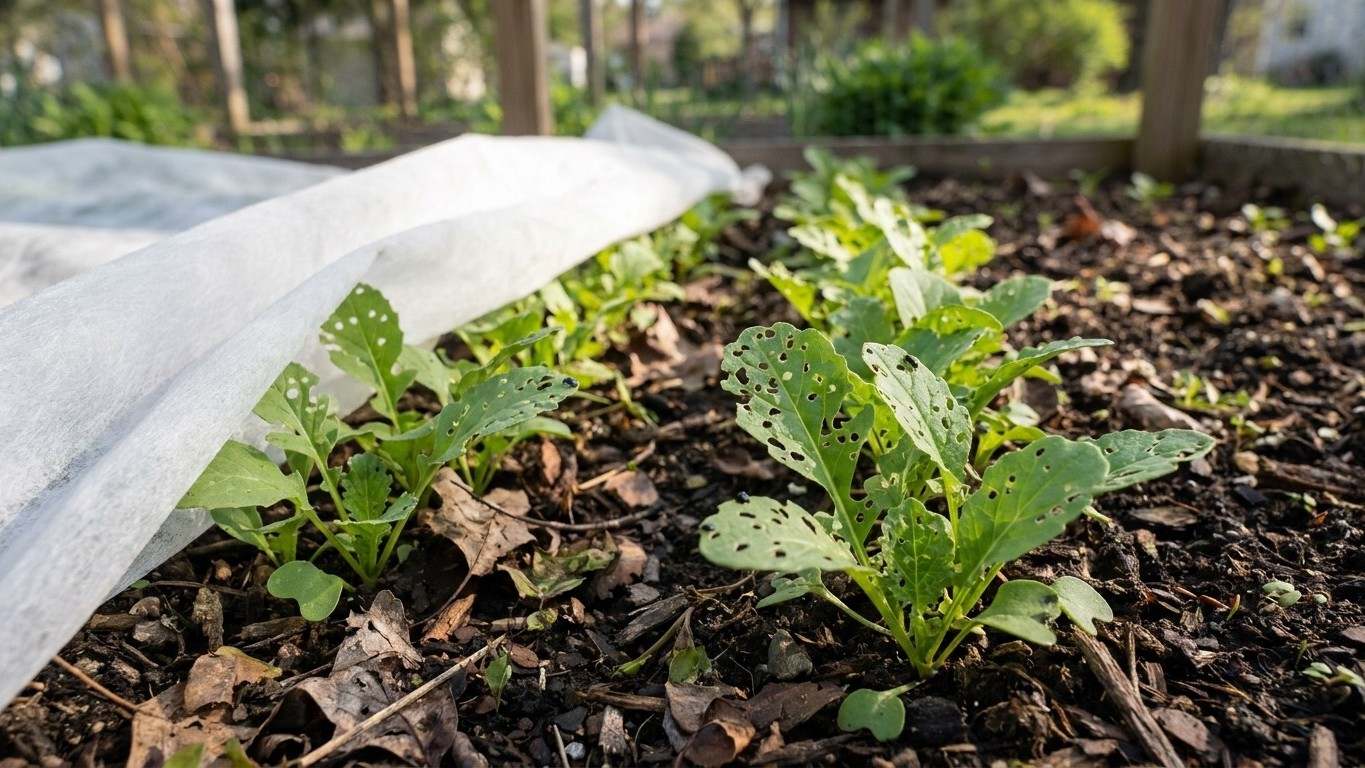

Flea beetles start chewing on Pennsylvania gardens as early as mid-April in the Philadelphia suburbs and Lancaster County, and as late as mid-May up in the Erie and Allegheny highlands. They show up the moment soil temperatures hit roughly 50°F, and they stay active through early summer before tapering off in the heat. Floating row covers put down before that window, combined with crop rotation and a couple of well-timed sprays, knock down most infestations without much fuss.
That’s the short version. The longer story involves knowing which of several flea beetle species you’re actually dealing with, because a gardener in Erie County is fighting a different calendar than someone in Chester County, and the plants at risk aren’t the same either.
When Flea Beetles Arrive Across Pennsylvania

Pennsylvania spans USDA Hardiness Zones 5b through 7b, and that range matters more than most gardeners assume. Southeastern counties like Philadelphia, Delaware, and Lancaster warm up fast in spring, often hitting flea beetle activation temperatures by the first half of April. Head northwest toward Erie, or up into the Allegheny Plateau around Potter and McKean counties, and that same soil-warming milestone can lag three to four weeks behind.
Flea beetles overwinter as adults, tucked into leaf litter, garden debris, and the top few inches of soil at field edges. They don’t migrate in from somewhere else each year, they’re already on your property, waiting. Once soil temperatures climb into the 50s, adults emerge and head straight for the nearest host plant, often within days of transplants or seedlings going into the ground.
This creates a brutal timing collision for gardeners. Cool-season crops like broccoli, cabbage, and kale get planted right when overwintered flea beetles are hungriest and most concentrated, because the pests haven’t yet dispersed across a full season’s worth of plantings. A second, smaller population surge tends to follow in July and August as a new generation of adults emerges from eggs laid earlier in the season, though this wave usually causes less damage since plants have matured and toughened up.
Species Common in Pennsylvania Gardens
At least four flea beetle species cause the bulk of Pennsylvania damage, and each has slightly different preferences. The crucifer flea beetle targets cabbage-family crops almost exclusively. The potato flea beetle, despite its name, attacks tomatoes, eggplant, and peppers just as readily as potatoes. A separate eggplant flea beetle species specializes in nightshades. Striped flea beetles, recognizable by two pale stripes running down their backs, feed on a broader range of vegetables and are among the most common species reported to Penn State Extension offices statewide.
All of them share the same telltale sign: dozens of tiny, round shot-holes peppered across leaf surfaces, as if someone took a hole punch to the foliage. Adults are tiny, usually under 1/8 inch, dark and shiny, and they jump like actual fleas when disturbed, which is exactly where the name comes from.
Which Plants Take the Worst Hit
Seedlings and young transplants suffer the most damage, and that’s not a coincidence. A flea beetle chewing through a mature collard leaf barely registers. That same insect feeding on a two-week-old seedling with four true leaves can stunt or kill the plant outright, since there’s so little leaf surface to spare.
Brassicas top the list of vulnerable crops in Pennsylvania gardens: arugula, bok choy, broccoli, Brussels sprouts, cabbage, cauliflower, kale, radish, and turnip all draw heavy flea beetle pressure. Eggplant runs a close second and often shows the most visible damage of any crop, with leaves sometimes reduced to lace by midsummer. Tomatoes and potatoes get hit too, though usually with less severity unless populations are unusually high.
Radishes deserve a special mention here, not because they’re especially valuable to most gardeners, but because their fast germination and tender leaves make them an effective decoy. More on that in the next section.
What Actually Stops Flea Beetles
No single tactic handles flea beetles on its own. Effective control in Pennsylvania relies on stacking several approaches, starting before planting and continuing through the vulnerable seedling stage.
Timing and Row Covers
Delaying transplant dates by even two weeks can mean the difference between a wrecked seedling bed and a minor nuisance, since flea beetle populations peak early and then gradually decline as natural predators and disease catch up with them. Where the growing season allows it, pushing brassica transplants back until early May in southeastern Pennsylvania, or late May farther north, lets plants dodge the worst of the spring emergence.
Floating row covers remain the single most reliable physical barrier. Laid over beds immediately after planting or transplanting, and sealed at the edges with soil or landscape staples, they keep adult beetles from ever reaching the foliage. The covers need to go on before beetles arrive, not after damage appears, since covering an already-infested bed traps the pests inside with the plants. Covers should come off once crops flower, if pollination is needed, or can stay on longer for crops like cabbage and broccoli that don’t require insect pollination.
Trap Crops and Crop Rotation
Planting a border of radishes, mustard greens, or nasturtiums a week or two before the main crop draws flea beetles away from the plants gardeners actually care about. These trap crops germinate fast and prove far more attractive to hungry beetles than slower-growing transplants nearby. Some Pennsylvania growers plant a perimeter row of mustard around eggplant beds specifically for this purpose, then treat or remove the trap crop once it’s covered in feeding damage.
Rotating brassicas and nightshades to a different part of the garden each year interrupts the overwintering cycle. Since adult flea beetles emerge from soil and debris right where they fed the previous season, moving susceptible crops even twenty or thirty feet away can reduce the initial hit substantially.
Biological and Chemical Options
Beneficial nematodes applied to soil in early spring target flea beetle larvae before they mature into leaf-chewing adults, though this works best as a preventive measure rather than a rescue treatment for an active infestation. Diatomaceous earth, dusted lightly over dry foliage, damages the beetles’ exoskeletons on contact and needs reapplication after rain.
Spinosad-based products, derived from a naturally occurring soil bacterium, offer effective control and are approved for organic production, making them a common recommendation from Pennsylvania extension offices for home gardens. Pyrethrin sprays work faster but break down quickly in sunlight and may need repeat applications every few days during heavy pressure. Neither should be sprayed on open flowers during active pollinator visits, given the risk to bees and other beneficial insects.
For persistent commercial-scale problems, some Pennsylvania growers turn to soil-applied systemic insecticides at planting time, though this route requires more careful timing and isn’t typically necessary for a home vegetable patch.
Reading the Damage Before It Gets Serious
Checking seedlings every two to three days during the first three weeks after transplanting catches flea beetle activity before it becomes a real threat. Early damage looks like scattered pinholes, small and manageable. Left unchecked for a week or two, those same holes can merge into ragged patches that cover most of a leaf’s surface, and at that point the plant’s ability to photosynthesize starts taking a real hit.
Yellow sticky traps, placed at seedling height around the perimeter of a bed, give an early warning sign without requiring daily leaf inspection. A sudden jump in trapped beetles over a few days usually signals a fresh emergence wave, which is the moment to get row covers on or start a spray rotation, whichever fits the situation.
Established plants with four or more true leaves tolerate flea beetle feeding far better than seedlings do, and by the time crops reach that stage, most gardeners in Pennsylvania can back off active intervention unless damage keeps accelerating. The beetles don’t disappear entirely, they just stop being the emergency they were during those first critical weeks.
Related guides
- Flea beetles in Maryland: When It Shows Up and What Stops It
- Flea beetles in West Virginia: When It Shows Up and What Stops It
- Flea beetles in Quebec: When It Shows Up and What Stops It
- Flea beetles in South Dakota: When It Shows Up and What Stops It
- Flea beetles in Colorado: When It Shows Up and What Stops It
- Flea beetles in Wisconsin: When It Shows Up and What Stops It