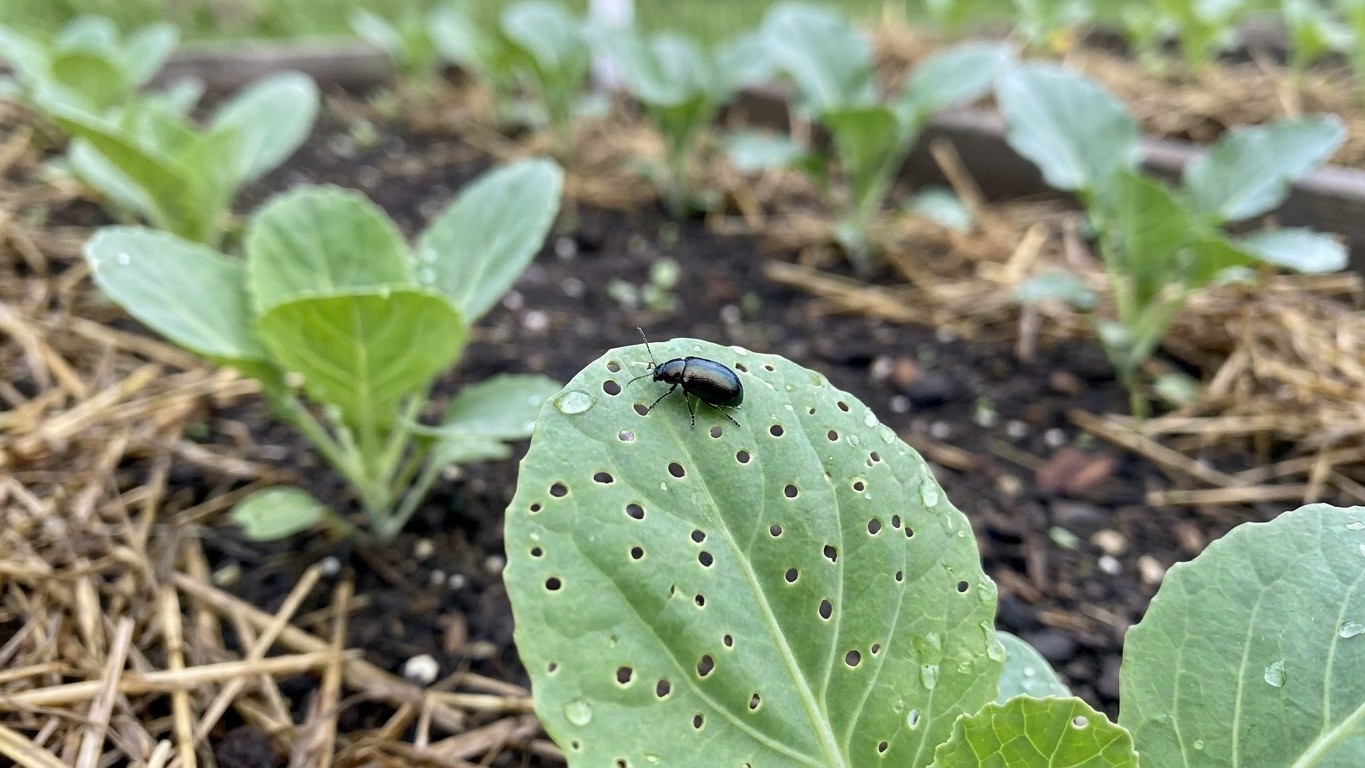

Flea beetles show up in Quebec gardens as soon as the soil hits about 50°F, which usually means late April in Montérégie and the Montreal area, and closer to mid-May in the Saguenay–Lac-Saint-Jean or Abitibi regions. The tiny black or bronze beetles jump when disturbed (hence the name) and chew hundreds of small round holes in leaves, a pattern gardeners call “shotgun damage.” Row covers installed before the beetles arrive, combined with crop rotation and prompt removal of plant debris, remain the most reliable way to keep populations down.
That’s the short version. The longer story involves knowing which species you’re dealing with, why timing matters more than any spray, and which controls actually hold up once the beetles settle into your brassicas or nightshades for the season.
Which Flea Beetles Live in Quebec

Two groups cause almost all the reported damage in the province. Phyllotreta cruciferae and Phyllotreta striolata, often called crucifer flea beetles, target cabbage, broccoli, kale, radishes, and other brassicas. They’re small, shiny, and either solid black or black with two yellow stripes down the back. The second group, Epitrix species, prefers potatoes, eggplant, and tomatoes, and tends to show up a bit later in the season as those crops fill out.
Both groups overwinter as adults, tucked into leaf litter, hedgerows, or the loose soil at field edges. That’s a detail worth remembering, because it means the beetles you see in May didn’t fly in from somewhere else. They spent the winter within a few hundred feet of your garden bed, waiting for warm soil to signal it’s time to move.
How to Tell Flea Beetle Damage From Other Pests
The holes are small, round, and numerous, rarely bigger than a pencil tip, scattered across the leaf surface rather than concentrated along the edges the way caterpillar damage tends to be. Seedlings hit hard can look like they’ve been sprayed with buckshot, and severely affected plants sometimes die outright if the beetles arrive before the leaves toughen up. Older, established plants usually shrug off moderate feeding, though yield can still drop if the damage coincides with flowering or fruit set.
If you spot beetles jumping away when you brush a leaf, that’s your confirmation. Aphids and other soft-bodied pests don’t move that fast, and nothing else in a typical Quebec vegetable patch reacts to a shadow by leaping several inches.
When Flea Beetles Show Up, Region by Region
Timing tracks soil temperature more than the calendar. In the warmer pockets of southern Quebec, the Eastern Townships and parts of Montérégie, adults can emerge by the last week of April in a mild spring. Central regions around Quebec City and Mauricie typically see the first wave in early to mid-May. Further north and in cooler microclimates, emergence can slide into late May or even early June.
A second generation often follows in July or August, particularly on late-planted brassicas or on potatoes and eggplant that are just hitting their stride. This second wave tends to be smaller than the spring emergence but can still stress plants that are trying to set fruit or bulk up roots.
Why Early Spring Is the Riskiest Window
Young seedlings with just one or two true leaves have the least tissue to spare. A flea beetle population that would barely dent a mature cabbage plant can shred a newly transplanted seedling in a couple of days. That’s the reason so much of the practical advice below focuses on protecting plants during their first two to three weeks in the ground, rather than treating the whole season the same way.
What Actually Stops Flea Beetles
Floating row covers are the single most effective tool available to home gardeners, and the reason is simple physics rather than chemistry. A lightweight fabric barrier, sold at most garden centers and hardware stores across Quebec, keeps the beetles from ever landing on the plant. The key is timing: covers need to go on at planting or transplanting, before the first beetles emerge, and stay sealed at the edges with soil, boards, or garden staples. Once beetles get underneath, the cover traps them with their food source, which makes things worse, not better.
For crops that need pollinators, like squash or cucumbers, covers have to come off once flowers appear. That’s not usually an issue with brassicas, since cabbage and broccoli don’t rely on insect pollination for the parts you eat.
Timing and Crop Rotation
Delaying transplant dates by even a week or two, once soil has warmed past the point where the first wave typically hits its peak, can mean the difference between seedlings that shrug off feeding and ones that don’t survive. Rotating brassicas and nightshades to a different part of the yard each year also matters, since it forces newly emerged adults to travel farther to find their preferred host, and some simply won’t make the trip.
Sanitation plays a supporting role here too. Clearing old plant debris in fall, rather than leaving spent brassica stalks in place over winter, removes some of the sheltered overwintering sites right where beetles would otherwise emerge next spring.
Trap Crops and Physical Controls
Planting a border of a highly attractive crop, such as mustard greens or radishes, around the perimeter of a brassica bed can pull beetles away from the main crop. Flea beetles show a strong preference for mustard family plants with a sharper flavor, and a sacrificial border sown a week or two before the main planting often absorbs the bulk of early feeding.
Yellow sticky traps placed just above the soil line help with monitoring, letting you know when the first adults have arrived so you can act before damage builds. They won’t eliminate a population on their own, but they’re a useful early warning system, especially for gardeners managing several beds and trying to prioritize which ones need row cover first.
Organic and Chemical Options, and Their Limits
Diatomaceous earth, dusted lightly on dry leaves, works by damaging the beetles’ exoskeleton on contact. It needs reapplication after rain and tends to work best as a supplement to row covers rather than a standalone fix. Neem oil and insecticidal soaps can reduce feeding pressure when sprayed directly on beetles, though coverage has to be thorough since flea beetles move fast and often escape a light misting.
Spinosad, a biological insecticide derived from soil bacteria, shows up in several products approved for home garden use in Canada and has a reasonable track record against flea beetles when applied early in an infestation. As with any pesticide, following label directions on timing and pre-harvest intervals matters, particularly on crops you’ll be eating within days of application.
None of these sprays match the reliability of a properly sealed row cover installed before beetles emerge. That’s worth repeating, because it’s tempting to reach for a spray after the fact rather than planning ahead with physical exclusion. Quebec’s Ministry of Agriculture, Fisheries and Food (MAPAQ) has published integrated pest management guidance for market growers that consistently ranks cultural controls, rotation, timing, and exclusion, ahead of chemical intervention for flea beetle management in cole crops.
What to Do If Damage Has Already Started
Established plants with moderate shotgun damage usually recover fine once they outgrow the seedling stage, and cosmetic holes in outer leaves rarely affect the harvestable part of the plant, especially with cabbage or broccoli where you’re eating the head or florets rather than the perforated outer foliage. Removing the most heavily damaged leaves can reduce the food source for the current generation and slow further feeding.
If seedlings are dying outright, replacing them under a properly sealed row cover, planted a bit later once the first wave has passed its peak, often works better than trying to save the original transplants. A second planting timed for early June, after the spring emergence has tapered off, frequently escapes the worst pressure entirely in most Quebec regions.
One detail that surprises a lot of home gardeners: flea beetle populations tend to be worse in years following a mild winter, since fewer overwintering adults die off from cold exposure. A hard freeze that lasts several weeks, the kind more common in Quebec’s interior regions than along the milder St. Lawrence corridor, can meaningfully reduce the following spring’s population before a single row cover goes down.