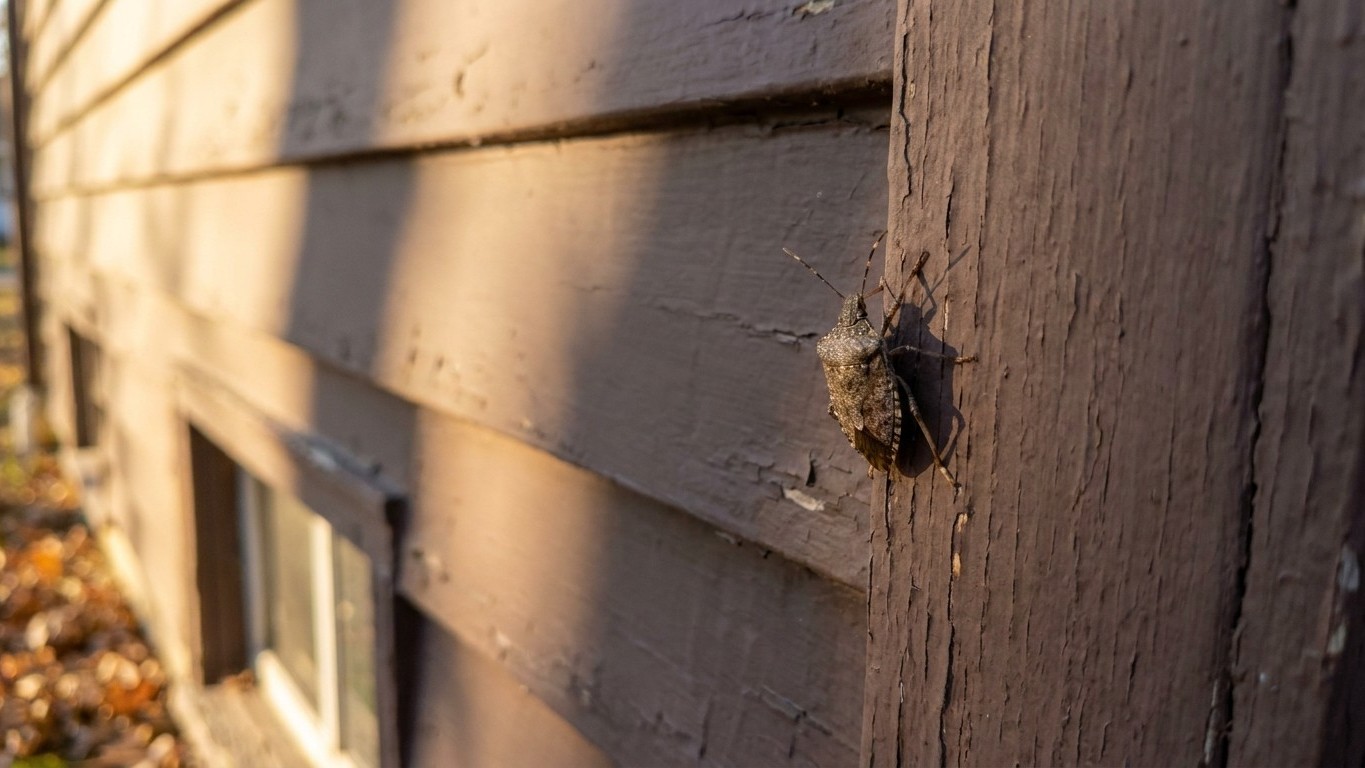

Brown marmorated stink bugs have been confirmed in Montana, but the state is nowhere near the infestation levels seen in Pennsylvania, Virginia, or Ohio. What Montana homeowners actually deal with is a fall invasion pattern: small, scattered populations riding into the state on vehicles, moving boxes, and nursery shipments, then showing up on sunny exterior walls looking for a way inside before winter. The fix isn’t spraying your yard. It’s sealing your house.
Montana’s Climate and the Hitchhiker Pattern Behind Its Spread

Montana’s winters are the main reason this insect hasn’t taken hold the way it has in the Mid-Atlantic. Brown marmorated stink bugs (Halyomorpha halys) need a decent stretch of warm months to complete a full breeding cycle outdoors, and much of Montana simply doesn’t offer that on a consistent basis. What entomologists have documented instead is a hitchhiker pattern: individual bugs and small clusters turn up in Billings, Missoula, Bozeman, and other spots along interstate corridors and rail lines, places where goods, vehicles, and people move in from states where the insect is already established.
That distinction matters for how you respond. A homeowner in Yellowstone County finding a handful of stink bugs on a south-facing wall in October isn’t necessarily looking at an established breeding population. It’s more likely a few insects that caught a ride and are now doing exactly what this species does everywhere: hunting for a warm crack to spend the winter in. Statewide agricultural agencies continue to monitor the situation because that could change. A few mild winters in a row, combined with continued shipping traffic, is exactly the scenario that let this insect expand from a single Pennsylvania detection in the late 1990s into a pest present in over 40 states.
The Seasonal Timeline: When It Shows Up at Your Door
Late September through October is peak activity in Montana, mirroring the pattern seen nationally. As daytime temperatures start dropping into the 50s, adult stink bugs go into what entomologists call aggregation behavior. They cluster on the warm, sun-exposed sides of buildings, usually south- or west-facing walls, then work their way toward any gap they can find: loose siding, unsealed utility penetrations, gaps around window air conditioners, torn window screens.
Once inside a wall void or attic space, they go dormant and mostly stay put through the cold months. The second wave of activity comes in spring, typically March into April, when warming temperatures wake the insects up and they start moving toward light, often ending up on interior window sills or wandering across ceilings looking for a way back outside. Homeowners who assume the problem is solved after the fall cluster disappears are frequently surprised by a spring reappearance from bugs that were inside the whole time.
Between those two windows, in the depths of a Montana winter, you generally won’t see much activity at all. The bugs are dormant, not dead, and not reproducing indoors, since indoor environments almost never provide what they need to lay viable eggs.
How to Identify It (and Not Confuse It With Look-Alikes)
The name describes the insect fairly well. Adults run about five-eighths of an inch long, shield-shaped, with a mottled brown (“marmorated”) pattern across the back. The two features that separate it from native Montana insects are the alternating light and dark bands on the antennae and the same banded pattern along the exposed edges of the abdomen, visible from above as small triangular marks poking out past the wings.
Montana has several native and long-established insects that get mistaken for it, and misidentification leads to wasted effort:
- Western conifer seed bug — longer, narrower body, flattened and leaf-like widening on the hind legs, no banded antennae pattern
- Rough stink bug — similar shield shape but with a spinier, more textured thorax and no clean antennae banding
- Boxelder bug — black body with distinct red-orange markings, a completely different color scheme and body shape
If you’re not sure which one you’re looking at, the antennae are the fastest tell. Brown marmorated stink bugs are the only common Montana invader with those clean alternating bands.
What Actually Stops It: Exclusion Over Extermination
Pest control professionals who deal with this species consistently point to the same conclusion: sealing your home works far better than trying to kill your way out of an infestation. Once stink bugs are inside a wall cavity, insecticides applied to interior surfaces do little good, since the bugs aren’t wandering across treated areas in large numbers, they’re tucked into voids you can’t reach.
Sealing Before the Fall Rush
The most effective window for prevention is late summer, before the September aggregation begins. That means checking and repairing torn window and door screens, caulking gaps around pipes, cables, and dryer vents where they penetrate exterior walls, adding door sweeps to exterior doors, and repairing or replacing worn weatherstripping. Chimney caps and vent covers close off two more entry points that homeowners routinely overlook.
If They’re Already Inside
A shop vacuum or a vacuum with a disposable bag beats crushing the insects, which release the strong, unpleasant odor that gives this bug its common name. Empty the vacuum bag or canister outdoors right away rather than letting bugs work their way back out inside the house. Some homeowners set up simple pheromone-based traps near known entry points during peak fall activity to intercept insects before they get inside, a method borrowed directly from monitoring programs used in states with established populations.
Perimeter insecticide treatments applied by a licensed applicator in early fall, before the bugs start clustering on exterior walls, can reduce the number that make it inside. Applied after the fact, once insects are already indoors, the same treatments do far less. Anyone dealing with a heavy cluster on a south-facing wall should time a call to a pest control company for September, not November.
Why Montana Agriculture Is Paying Attention
The reason this insect gets tracked so closely isn’t the mild annoyance of finding a few on a windowsill. In states where populations became fully established, brown marmorated stink bugs turned into a serious agricultural pest, feeding on apples, peaches, sweet corn, soybeans, and a long list of other crops, causing scarring and deformities that can knock produce out of the market entirely. Montana’s fruit-growing regions, including cherry orchards around Flathead Lake, and its row-crop agriculture represent exactly the kind of host material that would let a fully established population do real economic damage.
Part of what’s kept that scenario from playing out is a natural check that arrived without human help. The samurai wasp (Trissolcus japonicus), a tiny parasitic wasp that lays its eggs inside stink bug eggs, has spread through several states as a biological control agent and has been detected expanding its own range westward. Whether it establishes in Montana in numbers sufficient to keep stink bug populations low remains an open question, one that state agricultural extension offices continue to monitor alongside the stink bug’s own spread.
For now, the practical situation for most Montana residents is manageable: an occasional cluster of insects looking for a warm crack before winter, not a crop-threatening infestation. Keeping that ratio in Montana’s favor comes down to the same unglamorous work every year, checking screens, sealing gaps, and not giving this hitchhiking insect an easy way indoors.