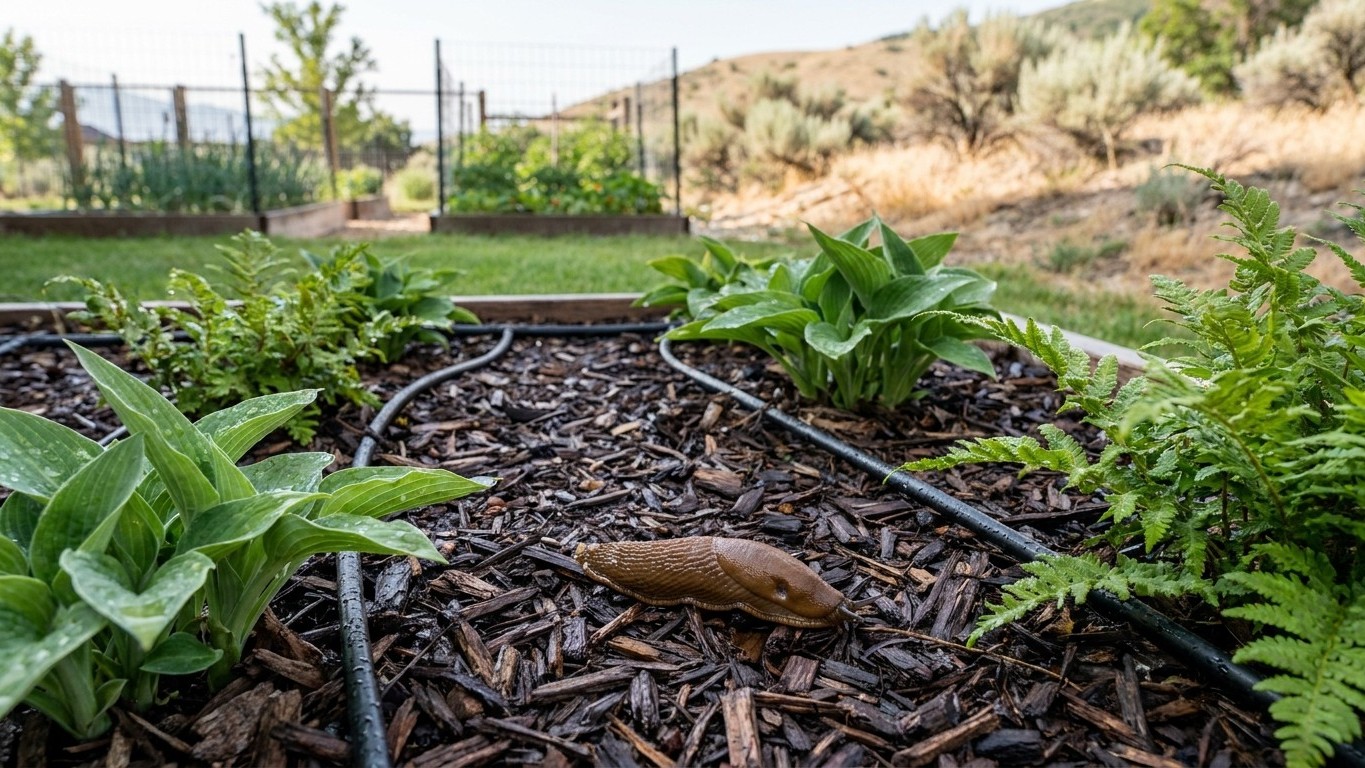

Slugs turn up in Utah mainly where humans create the moisture the state’s climate refuses to provide naturally: irrigated lawns, mulched garden beds, greenhouses, and shaded yards along the Wasatch Front. They’re active from April through October, with peak damage in late spring and again during the state’s brief monsoon bursts in August. Cut back on evening watering, remove dense mulch and plant debris, and set out shallow traps or iron phosphate bait, and most infestations in Utah clear up within a couple of weeks.
Why Utah’s Climate Keeps Slug Populations in Check

Utah is one of the driest states in the country, and that single fact does more to limit slugs than any product on a garden store shelf. Slugs breathe through skin that has to stay moist, and they lose water fast in low humidity. Large stretches of the Great Basin and southern Utah’s red rock country simply don’t hold enough ambient moisture for slugs to survive outside of irrigated pockets.
That’s why slug problems in Utah cluster so heavily around the Wasatch Front, the Cache Valley, and other areas where lawns get sprinkled daily and gardens sit under drip lines. A backyard in Salt Lake City with a shaded, well-watered flower bed can host a thriving slug population a quarter mile from a hillside that’s too dry for a single one to survive a week. The soil moisture, not the region on a map, decides the outcome.
Elevation plays a role too. Higher mountain valleys around Park City or Logan cool down earlier in fall and stay damp longer into spring from snowmelt, which stretches the slug-active window slightly compared to hotter valley floors like St. George, where summer heat dries everything out fast enough to shut slugs down almost entirely by June.
When Slugs Show Up During the Utah Year
Slug activity in Utah tracks temperature and moisture together, not one or the other. Below about 40°F they go dormant, tucked into soil cracks, under rocks, or beneath compost piles. Above roughly 85°F with low humidity, they retreat just as fast, seeking shade and damp soil to avoid drying out. That leaves two real windows.
Spring Emergence
Late March through May is the first surge. Snowmelt saturates garden beds, nighttime temperatures climb into the 50s and 60s, and new seedlings offer soft, easy tissue. This is when Utah gardeners typically spot the telltale silvery slime trails across patios and the ragged holes in lettuce, hostas, and young bean plants.
Monsoon and Fall Rebound
Utah’s summer monsoon, usually arriving in July and August, brings short but intense humidity spikes that can trigger a second wave of activity even in areas that were too dry earlier in the season. Then, as daytime heat fades in September and October, cooler nights combined with irrigation still running keep slugs feeding right up until the first hard frost, which in the Salt Lake Valley typically lands sometime in late October or early November.
What Draws Slugs Into Utah Yards and Gardens
Slugs don’t wander randomly. They’re following moisture and food, and Utah landscapes often hand them both without meaning to.
Overwatered lawns are the biggest offender. A sprinkler system set to run every evening keeps soil saturated overnight, exactly the window slugs use to feed and travel. Thick wood mulch, while great for retaining soil moisture around perennials, also creates a cool, damp hiding layer slugs use during the heat of the day. Dense ground cover plantings, stacked flower pots, and leaf litter left against foundations do the same thing.
Certain plants act like a dinner bell. Hostas, lettuce, strawberries, marigolds, and young bean or pepper seedlings are soft-tissued and low to the ground, making them easy targets compared to woodier, drought-adapted natives that dominate much of Utah’s natural landscape. A homeowner who’s swapped a water-hungry lawn for xeriscaping with gravel and drought-tolerant shrubs will notice far fewer slugs than a neighbor running a lush cottage garden a block away.
Signs You’re Actually Dealing With Slugs
Slug damage gets confused with other pests, so confirming the culprit matters before spending money on the wrong fix. Look for these markers:
- Irregular holes in leaves, concentrated near the center rather than the edges (unlike caterpillar feeding, which often starts at leaf margins)
- Silvery, dried slime trails on soil, concrete, or plant stems, most visible in early morning light
- Damage that appears overnight, since slugs feed almost exclusively after dark or on overcast, humid days
- Slugs themselves hiding under pots, boards, or mulch when you check during daylight hours
If the holes appear during the day and no slime trail shows up, the damage is more likely earwigs, grasshoppers, or another pest common to Utah’s drier landscapes.
What Actually Stops Slugs in Utah Conditions
Because Utah’s dryness already works in a homeowner’s favor, control here often takes less effort than in genuinely wet climates like the Pacific Northwest. The goal is removing the artificial moisture that lets slugs survive in the first place, then backing that up with targeted removal.
Adjust Irrigation Timing
Switching sprinkler or drip schedules from evening to early morning is one of the single most effective changes a Utah gardener can make. Watering at dawn lets soil surfaces dry out by nightfall, cutting off the moist conditions slugs need to move and feed. This one change alone often reduces slug sightings by half within a couple of weeks, based on general pest management guidance from state extension services.
Reduce Hiding Spots
Thin out mulch layers to no more than two inches, clear leaf litter and dense ground cover away from foundations, and lift stacked pots or boards that sit directly on damp soil. Slugs need daytime shelter to avoid the sun even in shaded Utah yards, and removing that shelter forces them into the open where predators and drying conditions do the rest.
Use Iron Phosphate Bait Instead of Older Chemical Options
Iron phosphate slug baits break down into soil nutrients and are considered safe around pets, children, and vegetable gardens when used as labeled, unlike older metaldehyde-based products that carry higher toxicity risks. Scatter bait pellets in the evening around affected beds, particularly near irrigation lines and under mulch where slugs cluster during the day.
Set Physical Traps
A shallow container of beer sunk level with the soil surface still works as a reliable trap, drawing slugs in overnight where they drown. Copper tape wrapped around raised bed edges or pot rims delivers a mild electric charge that slugs avoid crossing, useful for protecting a specific bed of hostas or strawberries without treating an entire yard.
Encourage Natural Predators
Ground beetles, birds, and even garter snakes eat slugs regularly, and Utah yards that avoid broad-spectrum pesticides tend to keep these predator populations intact. A birdhouse or brush pile at the yard’s edge does more long-term slug control than most people expect.
Where the Problem Tends to Persist
Greenhouses and hoop houses, increasingly common among Utah gardeners trying to extend the short high-desert growing season, create year-round humidity that lets slugs breed continuously if left unmanaged. Anyone running a greenhouse along the Wasatch Front should check under trays and along the base of walls weekly, since these structures sidestep the seasonal dry-down that keeps outdoor populations in check.
Basements and crawl spaces with persistent moisture, often tied to a leaking foundation or poor drainage grading, can also host slugs that wander in from adjacent garden beds. Fixing the moisture source, whether that’s redirecting a downspout or sealing a foundation crack, solves the problem more permanently than repeated indoor treatments ever will.
Related guides
- Slugs in Colorado: When It Shows Up and What Stops It
- Slugs in Washington: When It Shows Up and What Stops It
- Slugs in West Virginia: When It Shows Up and What Stops It
- Flea beetles in Utah
- Imported cabbageworm in Utah
- Leafminers in Utah
- Slugs in Ohio: When It Shows Up and What Stops It
- Slugs in British Columbia: When It Shows Up and What Stops It