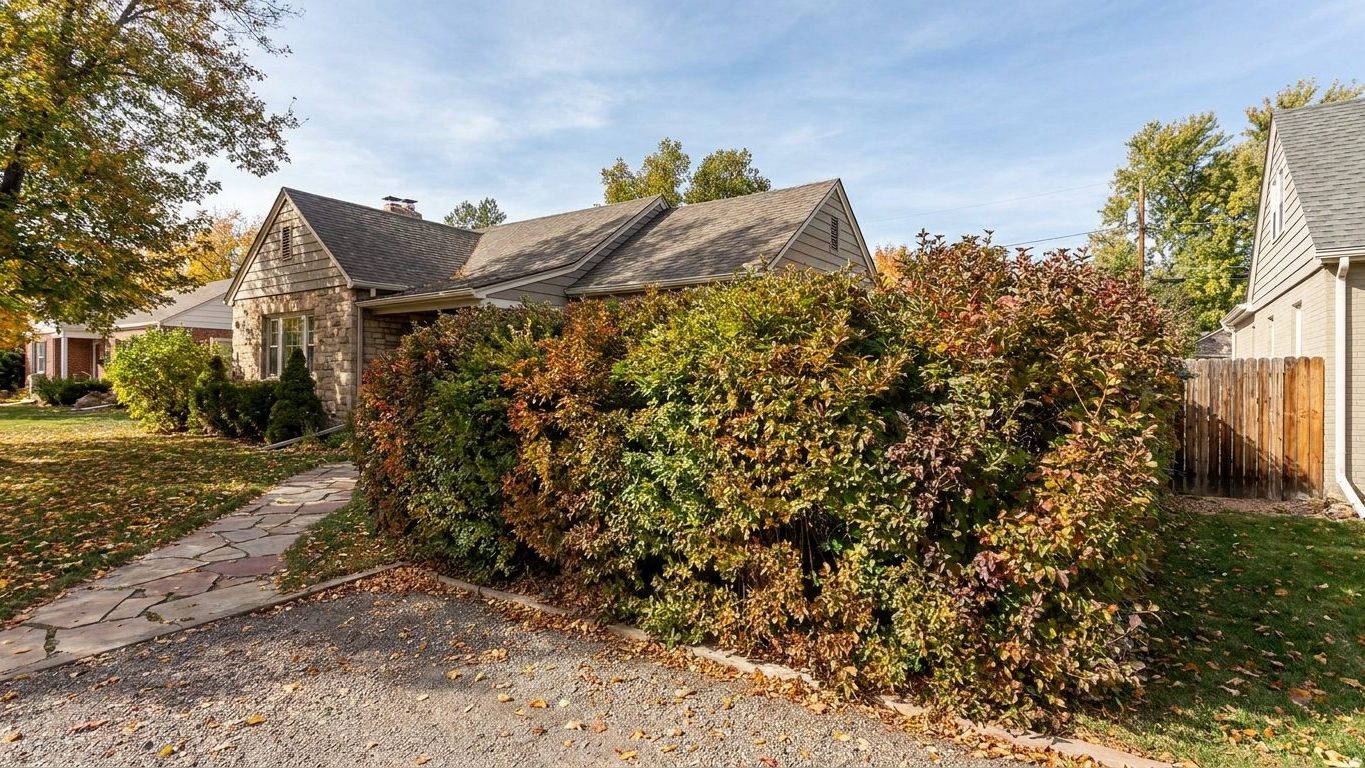

Florida has no hedge height law. The state sets no maximum for living hedges, so any single number quoted for “Florida” is either a guess or one town’s rule stretched across the map. Height limits, where they exist, come from your city or, in unincorporated areas, your county. Many codes say nothing about hedges at all. Below: where the rule lives, how to find yours with a short search, and what still applies when no height cap does.
There is no Florida hedge height law
Zoning power in Florida sits with local governments. A city commission or county commission writes the code, amends it when it feels like it, and enforces it through its own staff. The result is a patchwork. Land inside city limits falls under the city’s code, while land outside any city falls under the county’s. Two neighbors on opposite sides of a municipal boundary can face entirely different rules for the same row of shrubs.
That is why the “Florida hedge height” pages ranking on search engines should make you suspicious. A page that gives one figure for the whole state is wrong by design, because no such figure exists in state law. Florida has 67 counties and a long list of municipalities, each free to say something different or say nothing.
Hedge or fence: the word matters
Plenty of ordinances treat a fence as a structure, with a height limit, a permit and sometimes a required setback. A living hedge may be handled in a separate section, lumped in with “landscaping” or “vegetation,” or skipped entirely. So before you assume the fence limit covers your privacy screen, read the definitions. Does the code define a fence as a man-made barrier? Does it list “hedge,” “shrub” or “buffer” anywhere? The answer can decide whether you have a cap or not.
The one rule that tends to show up everywhere
The sight triangle. At a street corner or where a driveway meets a road, nothing may block a driver’s view of cross traffic or pedestrians, and the allowed height inside that zone is usually far lower than the general fence height. It applies even in towns that never mention hedges elsewhere. If your hedge sits near a corner, this is the rule most likely to catch you. The exact dimensions are set by your own municipality, so this page won’t quote one.
The same logic holds elsewhere. Readers in Alabama, Louisiana or North Dakota land in the same place: no state number, a local code, and a sight-line rule near intersections.
How to find the rule that actually applies to you
Start with the code itself. Most American municipal codes are published online by one of three companies, and your city’s code is almost certainly on one of them.
| Publisher | Web address |
|---|---|
| Municode | library.municode.com |
| American Legal Publishing | codelibrary.amlegal.com |
| eCode360 | ecode360.com |
Search for your city or county by name. If it isn’t on one site, try the next, or go to the municipality’s own website and look for a link labeled “code of ordinances.”
Once you’re in, the rule normally sits in the zoning chapter (sometimes called the land development code), under a heading such as “fences,” “walls and fences,” or “accessory structures.” Use the search box for these terms: hedge, fence, shrub, vegetation, buffer, visibility, sight triangle. The sight-triangle language often lives in a different chapter than the fence rules, under traffic or intersection visibility, so run that search separately.
Call the department that enforces it
Codes are written in dense language, and a phone call settles what a search can’t. Ask for the planning and zoning department, the building department, or code enforcement. Questions worth asking:
- Does the code regulate living hedges, or only fences and walls?
- Is there a height limit for the front yard, side yard and back yard?
- What is the required visibility area at corners and driveways?
- Is there a minimum distance between plants and the property line?
Write down the code section number the staffer gives you, plus the date and their name. If your address is in an unincorporated area, you want the county’s version of this department. If you aren’t sure which one governs you, the first office you reach can usually tell you in one call.
Two layers the code won’t show
An online code reflects the municipality’s rules, but it won’t show a homeowners association’s covenants. Those are a separate, private layer, and they can be stricter than the city. Your closing documents or the association’s management company will have them. Check the date on the code library too. Most sites note when the code was last updated, and a recently amended chapter is worth reading twice.
This page documents no specific city’s ordinance, and it won’t hand you a figure it can’t source. The method above is what gets you an answer you can rely on.
The branches that cross the line
Height is only half the hedge conversation. The other half starts when growth leaves its owner’s yard. In most states, a neighbor may cut back branches that cross onto their property, up to the boundary and no further, at their own expense. They may not kill the plant. That principle comes mostly from case law rather than statute, and it varies from state to state, so treat it as a general rule of thumb, not as Florida’s rule. Courts differ on how far “reasonable” trimming goes, and a few differ on what counts as harm to the plant.
The practical reading is simple. Cutting overhanging growth flush with the property line, from your own side, is the usual safe zone. Reaching over to shear the hedge into a shape you prefer is not. Neither is cutting so hard that the plant declines or dies, because that is where a neighbor’s complaint turns into a damage claim. Hedges are cheap to trim and expensive to argue over.
A few habits keep a small annoyance from becoming a fight:
- Talk before you trim, and offer to split the cost of a crew if the work is large.
- Photograph the overhang and the finished cut, with the date.
- Stay on your own land while you work, and keep the debris out of the neighbor’s yard.
- Put any request in writing if a conversation doesn’t resolve it.
Florida’s long growing season means a hedge in much of the state can put on new growth for most of the year, so a single trim doesn’t settle the matter. That makes an early, friendly understanding more useful than a one-time cleanup.
Two distinctions are worth keeping straight. A city ordinance may cap your hedge’s height or require a trim near an intersection, and that’s a government rule you answer to. A neighbor’s right to cut overhanging branches is a private-law matter between the two of you. They overlap but they don’t replace each other. A hedge can be perfectly legal under the code and still be spilling over a fence line, or the reverse.
This isn’t legal advice. If a neighbor has already cut your hedge hard, if yours has been cut without warning, or if a plant sits right on the boundary and ownership is unclear, that’s when to talk to a real estate or property lawyer. The municipality’s code enforcement office can help with what the code requires, but it won’t referee a private dispute over damaged plants.
What to check before you plant
The cheapest time to learn your rules is before anything goes in the ground. A mature hedge that violates a code means either a trimming bill or a removal order, and a fast-growing privacy screen tends to reach that point sooner than the nursery tag suggests.
Run through this list first:
- The municipal code. Look up fences, hedges and landscaping in the zoning chapter, then the visibility rules for corners and driveways.
- Setbacks from the line. Some codes require plantings to sit a minimum distance from the property line or sidewalk. If yours doesn’t, leave room anyway so you can trim without leaning over the boundary.
- Easements. Utility easements often run along rear or side lot lines, and the utility can remove what’s planted in them. Call 811 before you dig; it’s the national call-before-you-dig number, and it’s free.
- Association rules. If you have an HOA, get approval in writing for the plant type and the planned height.
- Mature size. Size the hedge to the height you’re allowed, not the height of the starter plants. Pick a species whose natural height stays under your limit, so you aren’t shearing it into submission every few weeks.
Corner lots deserve extra caution. A hedge that is fine along the back fence can run afoul of the sight triangle at the street side, and that rule applies even where height limits don’t. If a driver can’t see around your hedge, the city can order it cut back regardless of how the code treats hedges generally.
For how this plays out in other places, the Hedges section covers hedge height and law state by state, and each page makes the same point: the rule you need is a local one.
Common questions
What is the maximum hedge height in Florida?
There isn’t one at the state level. Height is set by city or county ordinance, and some local codes don’t limit hedges at all. Look up your municipality’s code in the zoning chapter, or call the planning and zoning department.
Does my city’s fence height limit apply to my hedge?
It depends on the wording. Many codes regulate fences as structures and treat living hedges separately, or not at all. Read how your code defines “fence” and search for “hedge” or “vegetation” before assuming the fence cap covers it.
Can my neighbor trim my hedge if it grows over the line?
As a general principle in most states, a neighbor can cut growth that crosses onto their property, up to the boundary and no further, at their own cost, and can’t kill the plant. This comes from case law and varies, so it isn’t a statement of Florida law. For an actual dispute, talk to a lawyer.
Who do I call to find out my local rule?
The planning and zoning department, the building department, or code enforcement at your city, or at your county if you live in an unincorporated area. Ask for the section number in writing. If you belong to an HOA, check its covenants too, since they can be stricter than the municipality.