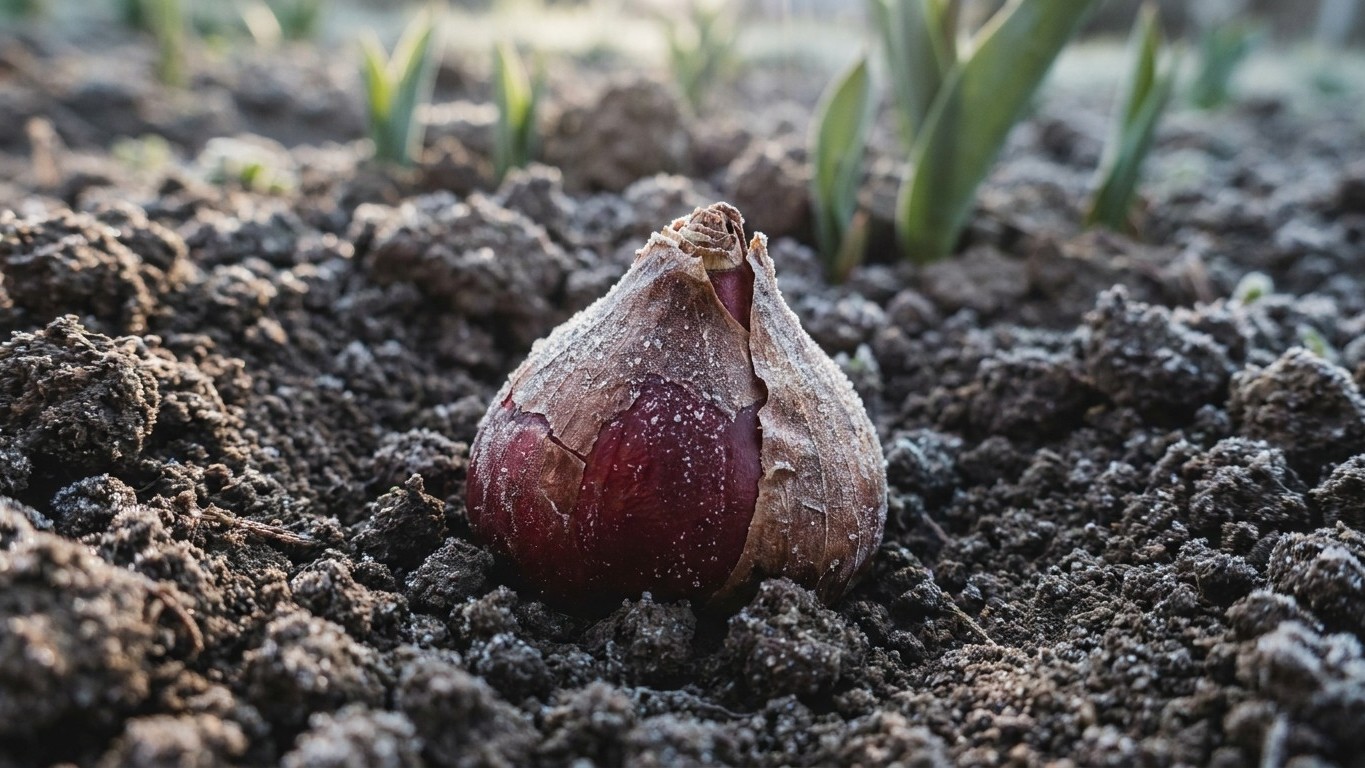

Garlic in North Dakota gets hit in two windows. Spring through early summer brings onion maggots, thrips, and grasshoppers in dry years, plus nematodes and wireworms working underground. The second window is the stretch after planting, when cloves sit in cold soil and diggers go after them. The calendar for both hangs on one date: when your first fall freeze arrives.
The short answer for North Dakota
The first fall frost at the reference airport station falls between September 25 and October 5, based on the 32°F freeze probabilities (30-70% band) in the NOAA NCEI U.S. Climate Normals for 1991-2020. That window is the anchor, because garlic is planted in autumn and lifted the following summer. Planting date decides how big the cloves’ roots are before the ground locks up, and that decides how well the plant fends off trouble in the following months.
A frost date is a midpoint, not a safe date. In one year out of two, the frost arrives later than the figure. In the other half, it arrives earlier. Treating September 25 as “the day it’s safe” misreads the number, since the same table that gives you a date also tells you the date is a coin flip.
These figures also come from an airport weather station. Suburban and rural gardens typically see their first fall frost earlier than that, often by one to two weeks, and more at elevation. Think of the range as the reference-city figure and not a state-wide guarantee.
Why does a pest article start with frost? Because each pest on the list below follows from where the garlic stands relative to that date. Cloves planted into warm soil send up top growth that winter will punish. Cloves planted too late never anchor, and weak plants are the ones maggots and rot find first. The exact planting week is covered in When to Plant Garlic in North Dakota: Counting Back From the First Frost. This page covers what shows up once the cloves are in.
Working it out for your own garden
Start with the reference range, September 25 to October 5, and adjust it for where you actually garden. The source warns that rural and suburban plots often freeze one to two weeks earlier. Run that arithmetic both ways:
- One week earlier than the airport: roughly September 18 to September 28.
- Two weeks earlier: roughly September 11 to September 21.
Then remember the midpoint rule. Half of all years the freeze lands after your date, half before. So plan around a window, not a single morning. Elevation, a large lake, or a river valley can slide the whole window about two weeks in either direction, which means a garden near a big body of water might run two weeks later, while a hilltop plot may run two weeks earlier than the reference.
Once you have your own date, the pest calendar follows in a predictable order. Here is how the main culprits line up around a fall planting and a summer lift:
| Pest | When it shows up | What it does |
|---|---|---|
| Wireworms | Soil-dwelling year-round; most noticed at planting and in spring | Chew cloves and bulbs, common where lawn or sod was recently turned |
| Bulb and stem nematodes | Active in cool, moist soil, spring growth | Distort and yellow plants, soften bulbs; travel in infested seed |
| Onion maggot | Spring and early summer | Larvae tunnel into the base of stems and bulbs |
| Thrips | Hot, dry stretches of summer | Silvery streaks on leaves, weaker bulb fill |
| Grasshoppers | Dry summers | Strip leaves |
| Mice, voles, and diggers | After planting through winter | Dig up or chew cloves, especially under early mulch |
Mark your own frost window on a calendar, then count forward. Spring pests meet garlic that has been growing for weeks, so they find plants that are either well rooted or not. By the time lifting comes, in summer, thrips and grasshoppers matter more for leaf loss than for the bulb itself, provided the plant is healthy. A wet, late-lifted bulb is a different problem, because maggots and rot move in on bulbs left sitting.
What changes across North Dakota
North Dakota is large and mostly open, so a state-level number hides real differences. In the east, the Red River Valley is flat, with heavy soils that stay wet and cold in spring. That favors the pests that like cool, damp ground (nematodes and maggots), and it makes clean seed stock more important there than anywhere else in the state.
Move west and the picture shifts. The drier western and southwestern parts of the state, including the badlands country, tend toward grasshopper trouble in dry years and thrips in hot spells. Wind is another factor on open ground, and it can dry beds out fast. Deer pressure runs higher along wooded river bottoms and around the Turtle Mountains, though garlic is generally less appealing to deer than most garden crops.
Frost timing follows geography too. Higher ground such as the Turtle Mountains runs colder than the surrounding plain, so those gardens should expect their first fall freeze toward the early end of your adjusted range, or ahead of it. Sites near big water, including Devils Lake and the Missouri River reservoirs, may run later by a week or so. How much later depends on the exact lot, and I would not guess. Your own thermometer will tell you.
For comparison, gardeners far to the north deal with an even shorter runway. See When to Plant Garlic in Northwest Territories: Counting Back From the First Frost and Garlic Varieties That Suit Northwest Territories Winters for how that plays out. Within North Dakota, variety choice matters for the same reason: Garlic Varieties That Suit North Dakota Winters covers which types handle these winters, and a plant that overwinters well also resists pests better. The broader overview is in Growing Garlic in North Dakota.
The mistakes this climate punishes
North Dakota winters are cold enough that errors in timing and depth cost you the whole crop, not just a few bulbs.
Planting too early
Cloves set out in warm September soil can push green shoots before winter. That tender growth is what freezes back, and it gives rot a way in. It is also a magnet for anything chewing. The fix is to wait for your own frost window, not the calendar’s first warm weekend. Since a frost date is a midpoint, your window has to stay flexible.
Planting too late, or too shallow
Cloves that go in after the soil has cooled hard never grow roots, and unrooted cloves are what freeze-thaw cycles push to the surface. Shallow planting does the same thing. A heaved clove sits exposed to cold, to birds, to squirrels and other diggers, and to drying wind. Plant deep enough that a hard winter will not lift it out.
Mulching too soon
Mulch is good protection, but applying it while the ground is still warm gives mice and voles a place to nest. Wait until the soil has begun to freeze, then spread a layer of straw. This one habit takes out a whole category of winter damage.
Saving seed from infested bulbs
Bulb and stem nematodes travel inside cloves and can persist in soil for years. Replanting cloves from a plant that was swollen, yellowed, or soft carries them into the next bed. Start from clean seed stock, and do not replant garlic or onions in the same ground year after year. Rotating beds also breaks the cycle for onion maggots, which favor ground where alliums grew the previous season.
Lifting late
Garlic is lifted the summer after planting. Leaving bulbs in wet soil past maturity gives maggots and rot time to work, so pull them when the tops have yellowed and dried down partway, and not when a rainy stretch has already set in.
Checking this against your county
The numbers on this page are reference-city figures, so confirm them locally. North Dakota State University Extension keeps county-level guidance and can tell you what pests are active in your area in a given year. Call your county office, describe the damage you see, and ask for the local frost window before you buy seed.
Common questions
What is the most common garlic pest in North Dakota?
No single pest wins every year. Onion maggots in spring and thrips or grasshoppers in dry summers are the usual leaf and bulb problems, while wireworms matter most in beds made from sod. Check with your county extension office for what is active locally, since this page does not publish a ranking.
When should I watch for pests on garlic?
Early spring through early summer is the busiest period, after the garlic resumes growth. A second watch starts after planting in fall, when mice, voles, and diggers can disturb cloves. Anchor both to your own first fall frost, which falls between September 25 and October 5 at the reference station and often one to two weeks earlier in rural gardens.
Does a later frost date mean I can plant later?
Not safely. The date is a midpoint, so in one year out of two the frost comes later than the figure and in the other half it comes sooner. Plant within your adjusted window, so the cloves root before the ground freezes.
Can I fix nematodes once they are in my soil?
Rotation is the main tool, because the pest persists in soil for years. Keep garlic and onions out of the affected bed for several seasons, and never replant cloves from plants that looked swollen, yellowed, or soft. Your extension office can advise on confirming the diagnosis before you pull a bed out of production.