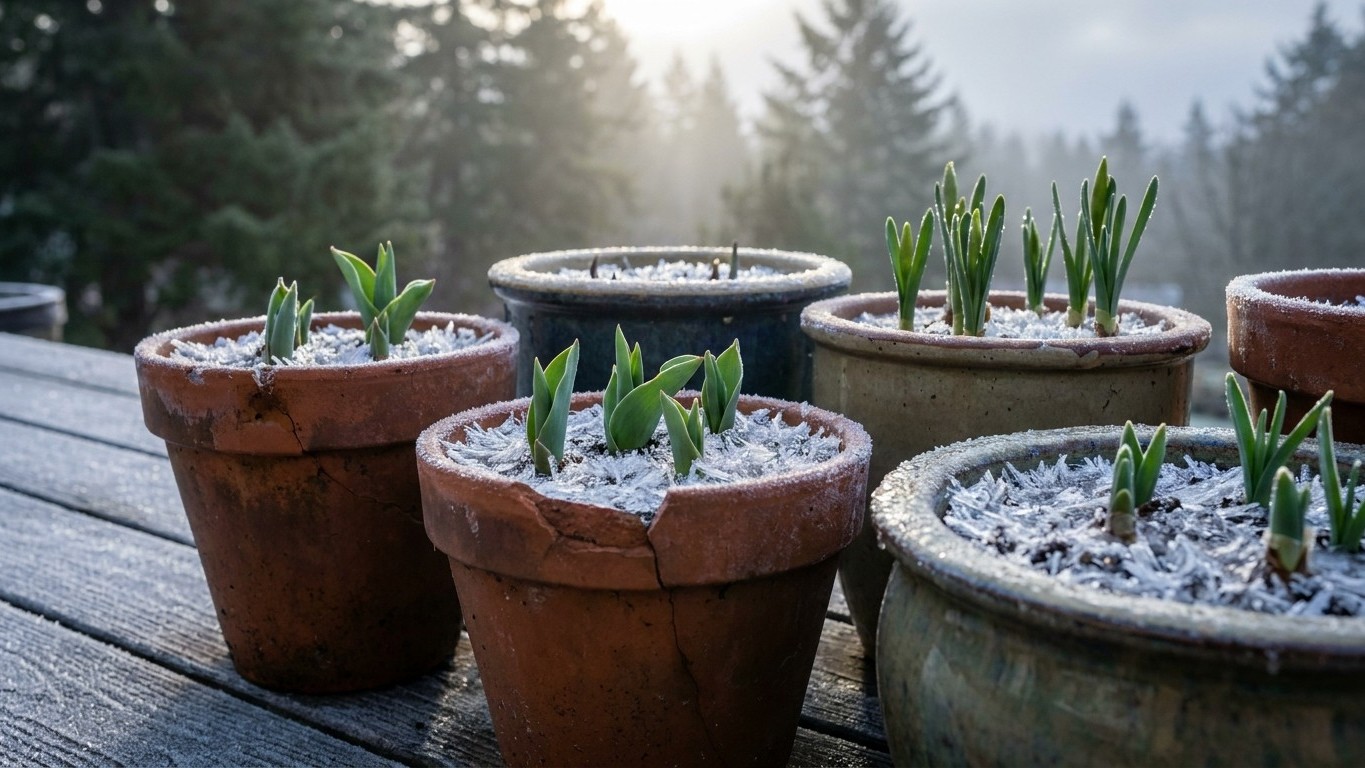

Lift dahlias, cannas and gladiolus about one to two weeks after the first frost blackens their foliage. At Huntsville’s reference weather station, that works out to roughly November 9 to November 30. Gardens in the southern part of Alabama can often skip lifting and mulch instead, while north Alabama and higher ground should plan on digging. Frost arrives earlier in colder pockets, so the work shifts earlier there too.
Do you have to dig them up in Alabama?
Alabama is a split verdict, because the state straddles a wide band of climate. The USDA Plant Hardiness Zone Map (2023), which rates a place on one variable only, the average annual extreme minimum temperature, puts Alabama at 7a-9a. In the milder end of that range the ground does not freeze deeply, and cannas and dahlias can winter in place under a thick mulch. In the colder end, they come up.
Where the line falls
The line runs roughly north to south, and elevation pulls it lower. Huntsville is a useful anchor. NOAA’s 1991-2020 Climate Normals put the mean daily minimum of its coldest month at 33.1°F, just above freezing. On an average winter night, then, the thermometer barely touches the freeze line, and the soil rarely locks up for long. That is why a mulched canna clump in a warm, sheltered bed often returns without any help.
An average is not a cold snap, though. Hardiness zones exist precisely because the occasional hard night is what kills a plant, not the typical one. A few nights well below freezing can still chill the top several inches of soil, which is where dahlia tubers and gladiolus corms sit. Farther north, and on ridges and hilltops, those nights come more often and last longer.
So plan to lift in north Alabama and at higher elevations, and treat leaving them in the ground under mulch as a reasonable bet only in the southern part of the state. If you are unsure which side of the line your yard falls on, your county Extension office can tell you how your area compares with the nearest weather station. Suburban and rural lots typically run colder than an airport reading.
Drainage matters as much as cold
Alabama gardeners lose more tubers to wet soil than to cold. Heavy red clay holds water through the winter, and a dahlia tuber sitting in cold, soggy ground rots long before a hard freeze reaches it. A bed that drains quickly, ideally a raised one or a slope, gives you a much better chance of leaving things in place. A low spot where water pools after a rain is a bed to dig, whatever the zone says.
The three plants also differ in how forgiving they are. Cannas are the toughest of the group and the most likely to overwinter outdoors. Dahlias fall in the middle, since their tubers need good drainage and a thick mulch. Gladiolus corms are the least dependable left in place, and they tend to weaken over the years anyway. For a deeper look at what survives where, see Which Spring Bulbs Survive Your Winter, and for the broader bulb picture visit Spring Bulbs.
When to lift them
The signal is a frost that blackens the foliage, and a plain calendar date is a poor substitute. Once the leaves of a dahlia or canna turn black and limp, the plant has stopped sending sugars down into its storage organs. That is the moment the tubers and rhizomes are as mature as they will get.
NOAA’s 1991-2020 Climate Normals, at the Huntsville airport reference station, give a 30-to-70 percent probability band for a first 32°F freeze of November 2 to November 16. Add a week or two for the plants to finish and lift between roughly November 9 and November 30, counting from whenever your own frost actually lands. That is a window, not a deadline, and it moves with the weather you actually get.
The airport figure is a starting point rather than a promise. Suburban and rural gardens usually see the first fall frost one to two weeks earlier than the station does, and more than that at elevation. A yard on a north Alabama hillside might see its blackening frost in late October, which pulls the lifting window earlier by the same margin. Colder place, earlier frost, earlier lifting. The reverse never applies. For more on the dates in your area, see First and Last Frost Dates in Alabama.
Why lifting early backfires
It is tempting to dig in October, before the weather turns, on the theory that you are getting ahead of the cold. The result is usually worse. While the foliage is green, the plant is still moving energy into its tubers, and tubers dug early have thin skins and soft flesh. Those immature tubers lose moisture quickly, bruise easily and rot in storage, often in a matter of weeks. Waiting for the frost, and then another week or so, lets the skins firm up so the tubers can handle curing and months in a box.
Gladiolus follow a slightly different cue. The foliage yellows and dies back on its own rather than being killed by frost, and the corms are ready when the leaves have turned yellow to brown. In many Alabama gardens that happens in the same stretch as the dahlia frost, but if your glads browned earlier, dig them earlier. Cut the stems back to a few inches before lifting dahlias and cannas, loosen the soil with a garden fork well out from the clump, and lift gently so you do not snap the necks of the tubers.
One caution on warm falls. If frost runs late and the plants are still green and growing, resist the urge to dig them just to get the job done. Let the foliage die back naturally, and keep an eye on the forecast so a hard freeze does not catch you with the plants still in the ground and no plan.
Storing them over winter
The routine is the same three steps for all of them: cure, clean lightly, then store cool, dark and slightly moist so they neither rot nor shrivel. The details differ by plant, and treating all three alike is a common way to lose one of them.
Cure first, then clean lightly
After lifting, shake off the loose soil and set the clumps somewhere sheltered, dry and out of direct sun, such as a covered porch or a garage. Leave them for a few days so the skins dry and any cuts heal. Do not wash them hard. A light brushing is enough, and a thorough hosing adds moisture you will regret later. For dahlias, trim the stems to a short stub, and divide the clumps now or wait until spring, when the eyes are easier to see.
How the three differ
| Plant | What you are storing | Packing | Main risk |
|---|---|---|---|
| Dahlia | Tuberous roots | Vented box or crate, packed in barely damp wood shavings, peat or vermiculite | Shriveling if too dry, rot if too wet |
| Canna | Fleshy rhizomes | Similar packing, kept slightly moist | Drying out into hard, wrinkled pieces |
| Gladiolus | Corms | Dry, in mesh or paper bags, in a single airy layer | Mold and rot if kept damp |
Gladiolus are the odd one out. Once they are cured, snap off the old shriveled corm at the base and set the small cormels aside or discard them. Then store the new corms completely dry. Moist packing that suits a dahlia will mold a gladiolus. Cannas lie between the two: their rhizomes are large and fleshy, and they shrivel faster than dahlia tubers, so they want a touch more moisture around them.
Where to put the boxes
The target is a spot that stays cool, dark and above freezing. In the South that rules out some of the usual choices. A garage or closet can run warm during a mild spell, and warm storage wakes the plants early, sending out sprouts in the dark. A cool interior room, an unheated but insulated space or a basement where one exists works better. Avoid anything that freezes, and keep the boxes off bare concrete floors.
The step that saves the most tubers is the simplest: open the boxes and check them once a month, from the day they go into storage until it is time to plant out after the last spring frost. Pull out anything soft, slimy or moldy before it spreads to its neighbors. If tubers look wrinkled, mist the packing lightly rather than soaking it. A monthly look takes a few minutes, and it catches problems when they affect one tuber rather than the whole box. When spring arrives, the planting side of the story is covered in Planting Spring Bulbs in Alabama.
What goes wrong
Most failures come down to moisture, timing or geography, and each one leaves clear evidence.
Rot
Rotted tubers turn soft and mushy, often with a sour smell, gray or white mold, or dark, sunken patches. It starts from a cut, bruise or too-damp packing and spreads fast in a closed box. The fix is prevention: let the tubers cure fully, pack them only slightly moist, keep the box ventilated and check monthly. Cut away small bad spots on a firm tuber and let the cut surface dry before repacking. Throw out anything that is soft all the way through, since it will not recover and it will infect the others.
Shriveling
The opposite problem shows up as wrinkled, leathery, rubbery tubers, and eventually hard, dry ones that will not sprout. Air that is too dry or packing that has gone bone dry is the usual culprit, and cannas and dahlias are most vulnerable. A light misting of the packing, or a switch to a slightly damper medium, usually stops it in time. Gladiolus corms are the exception: a dry feel is normal for them.
Lifting too early, or leaving them in too far north
Tubers dug while the foliage is still green are the ones that fail in storage. They look healthy at first, then soften and collapse by midwinter. The cure is patience: wait for the blackening frost, plus a week or so. The reverse mistake is leaving plants in the ground where the winters are too cold for them. In the colder, northern part of Alabama and at elevation, a cold snap can reach tubers that a mulch layer was never going to protect, and the clump simply never returns in spring. A gardener who is unsure should lift, because a box of stored tubers costs nothing but a little time, while a lost clump has to be replaced. For other timing questions across the state, the Alabama guides are a good place to start.
Common questions
Can I leave cannas in the ground in Alabama?
In the warmer southern part of the state, often yes, if the soil drains well and you add a thick mulch after the foliage dies back. In the colder northern part and at higher elevations, lift them or mulch very heavily and accept some risk. Cannas are the sturdiest of the three, but wet clay can still rot them.
Do I have to wait for a frost to dig dahlias?
Waiting is the better choice. Frost-blackened foliage tells you the plant has finished feeding its tubers, and digging a week or so after that gives firmer skins and better storage. The exception is a waterlogged bed, where tubers sitting in saturated soil are in more danger than the calendar suggests.
Will gladiolus survive winter outside in Alabama?
Some corms come back in the milder south, especially in a raised, well-drained bed. They are the least dependable of the three left in place, and the colder north of the state is a poor bet. Lifting once the foliage has turned yellow to brown, then storing the corms dry, is the safer route.
What should I do if my stored tubers start to shrivel or soften?
Shriveling means the air or packing is too dry, so mist the packing lightly. Softness means too much moisture or a rot starting, so remove any soft tuber, let healthy ones dry, and repack them in a drier, better-ventilated container. Gladiolus corms should stay dry throughout, so use these fixes for dahlias and cannas only.