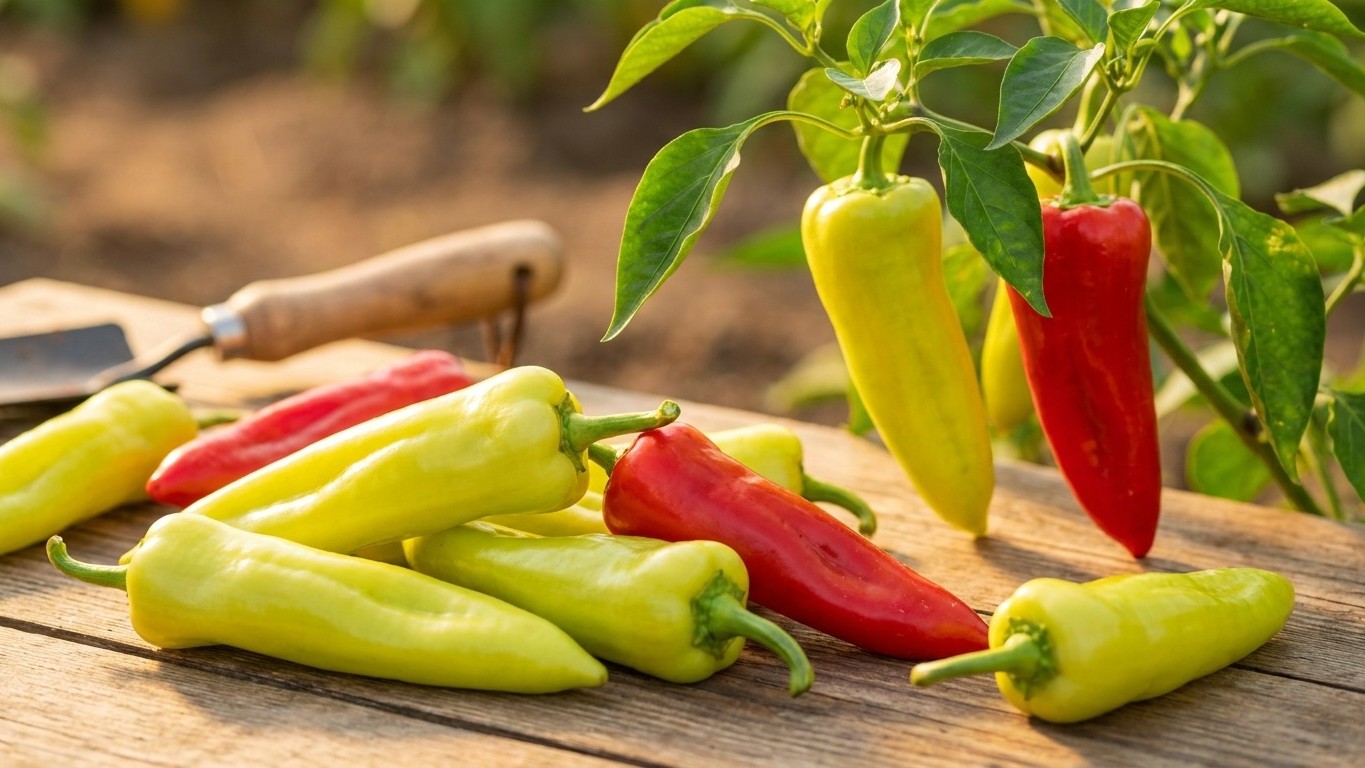

Pick peppers once they are full-size, firm and glossy, which Clemson Extension puts at about 70 to 85 days after transplanting. Then keep them out of the refrigerator. Whole peppers held below about 45 °F pit and go soft, a form of chilling injury, and the cold drawer where most people put them is the cause. A cool room gives them the best shot at lasting a couple of weeks.
Keeping them, and for how long
Clemson Cooperative Extension’s Home & Garden Information Center gives the storage conditions in one line. Peppers keep best at 45 to 50 °F with 80- to 90-percent relative humidity, and held that way they last two to three weeks. You can read the full pepper fact sheet from the extension service.
What temperature and humidity do peppers keep best in?
The humidity number matters as much as the temperature. Air at 80 to 90 percent keeps the skin plump. Dry air pulls water out of the fruit, and the pepper wrinkles long before it rots. A loosely closed or perforated bag helps hold moisture around the fruit without trapping so much that it sweats. Keep the peppers dry and unwashed until you use them, since a wet skin invites mold.
Why does the refrigerator ruin peppers?
A domestic refrigerator runs colder than that 45 to 50 °F range. Below about 45 °F, peppers suffer chilling injury. The skin develops small sunken pits, the flesh softens, and rot gets in through the damaged spots. It is the mistake nearly everyone makes, because the fridge feels like the careful choice for fresh produce.
The damage often hides at first. A pepper can look fine coming out of the crisper, then pit and slump a day or two later on the counter. If you have ever blamed a store-bought pepper for going bad “overnight,” the cold drawer was probably the culprit. The crisper is a little less harsh than the main shelves, but it still sits under the safe line in most kitchens.
How long will peppers actually last?
Two to three weeks is a ceiling. It describes a sound pepper, picked at the right stage, held at the right temperature and humidity the whole time. Anything less than ideal shortens it. Bruises, sunscald patches, cracks and insect bites all let rot start, and one soft pepper in a bag can spoil its neighbors. If a pepper shows chew marks or scars, the damage is likely to have started in the garden, and What Eats Pepper in Rhode Island, and When explains who is usually responsible.
Check the stored peppers every few days. Pull out any with a soft spot and use them first. Plan on eating, freezing or drying the rest well inside the two-to-three-week window, rather than counting on the last day.
Where in the house that actually is
Start by ruling things out. The refrigerator is too cold, as covered above. Any heated living space, including the kitchen, runs well above 50 °F, so peppers there ripen and soften fast. A counter is fine for the few days before you cook them, but it is not storage. The garage looks tempting, yet it follows the weather. On a sunny fall afternoon it warms up, and on a clear night in late autumn it can drop low enough to chill or even freeze the fruit.
The closest match in most Rhode Island homes is a cool basement, especially one with a concrete or stone foundation, away from the furnace and water heater. Basements tend to be damp, which suits the 80 to 90 percent humidity target. An unheated pantry, a cold-side closet or an enclosed back porch can also work, but only in the weeks when outdoor nights stay mild. In midwinter those spots are likely to be too cold, though by then your garden peppers are long finished.
Whatever spot you choose, test it before you rely on it. Leave a thermometer in the spot and check it before you trust it, and skipping that step can cost you the whole basket to pitting and soft rot. A min/max thermometer is best, because a reading at noon says little about what the room does at 5 a.m. A small hygrometer, the kind sold for humidors and reptile tanks, will show whether the humidity lands near the target.
If the spot reads too warm, shorten your plan. Eat or freeze the peppers sooner and check them more often. If it reads below 45 °F at any point, move the peppers to a warmer shelf or a different room. A spot that holds steady in the target range is worth using all fall.
When are peppers ready to pick in Rhode Island?
The clock starts at transplanting. Seedlings need 8 to 10 weeks indoors, and they go out when the soil reaches 60 °F, after frost is past. At the reference weather station in Providence, NOAA’s 1991-2020 climate normals put the last spring frost between April 7 and April 17. Suburban and rural gardens usually see it one to two weeks later, and more at elevation, so check your own county with the local extension office. Soil warms after the last frost, so your transplant date will sit well past that window.
Take your own transplant date and add 70 to 85 days. That gives the stretch when the first full-size peppers should be ready. Heat and cold along the way can push it either direction. Utah State University Extension notes that fruit set fails at both ends of the temperature range, with nights below 55 °F or days above 90 °F. The Providence station averages 9.4 days a year at 90 °F or more, so extreme heat is a short list of days. Cool nights are the part to track yourself with a thermometer by the garden, because blossoms dropped during a cold snap mean a gap in the harvest weeks later. Why Peppers Fail to Set Fruit in Rhode Island goes through both causes. For the whole season plan, see Growing Peppers in Rhode Island.
When fruit reaches the size the variety is supposed to be, check the skin. It should be firm, glossy and taut, and it should feel heavy for its size. Cut the stem with pruners and leave a short piece of stalk on the fruit. Pepper branches snap easily, and pulling by hand can tear off a whole limb. Peppers left on the plant to turn red, yellow or orange become sweeter but take longer. Picking regularly keeps the plant producing.
In fall, watch the forecast rather than the calendar. Frost-tender peppers do not survive a freeze, and gardens outside the city usually get that first frost earlier than the reference station does, often by one to two weeks. When a frost night is forecast, pick every pepper that has reached usable size and bring them in.
Common questions
Can peppers go in the refrigerator at all?
Whole, uncut peppers do better in a cool room at 45 to 50 °F. Once a pepper is cut, cooked or stuffed, it belongs in the refrigerator in a sealed container, because you will eat it within a few days and chilling injury has less time to show.
How can I tell if a pepper is ready to pick?
Look for full size for the variety, firm flesh and a glossy, tight skin. A pepper that feels light, soft or dull is either past its best or not yet mature. Count days as a check: roughly 70 to 85 days after transplanting is the general window for first harvest.
Should I pick everything before the first fall frost?
Yes, pick all fruit of usable size when a frost is forecast. Gardens in suburban and rural areas typically get frost one to two weeks earlier in fall than the reference station in Providence, so check your own county’s pattern and keep an eye on the forecast.
What do I do with more peppers than I can use in three weeks?
Freeze them sliced or diced on a tray, then bag them, or dry hot peppers whole. Start with the ones that have scars or soft spots, and keep the best-looking fruit for fresh eating from the cool storage spot.