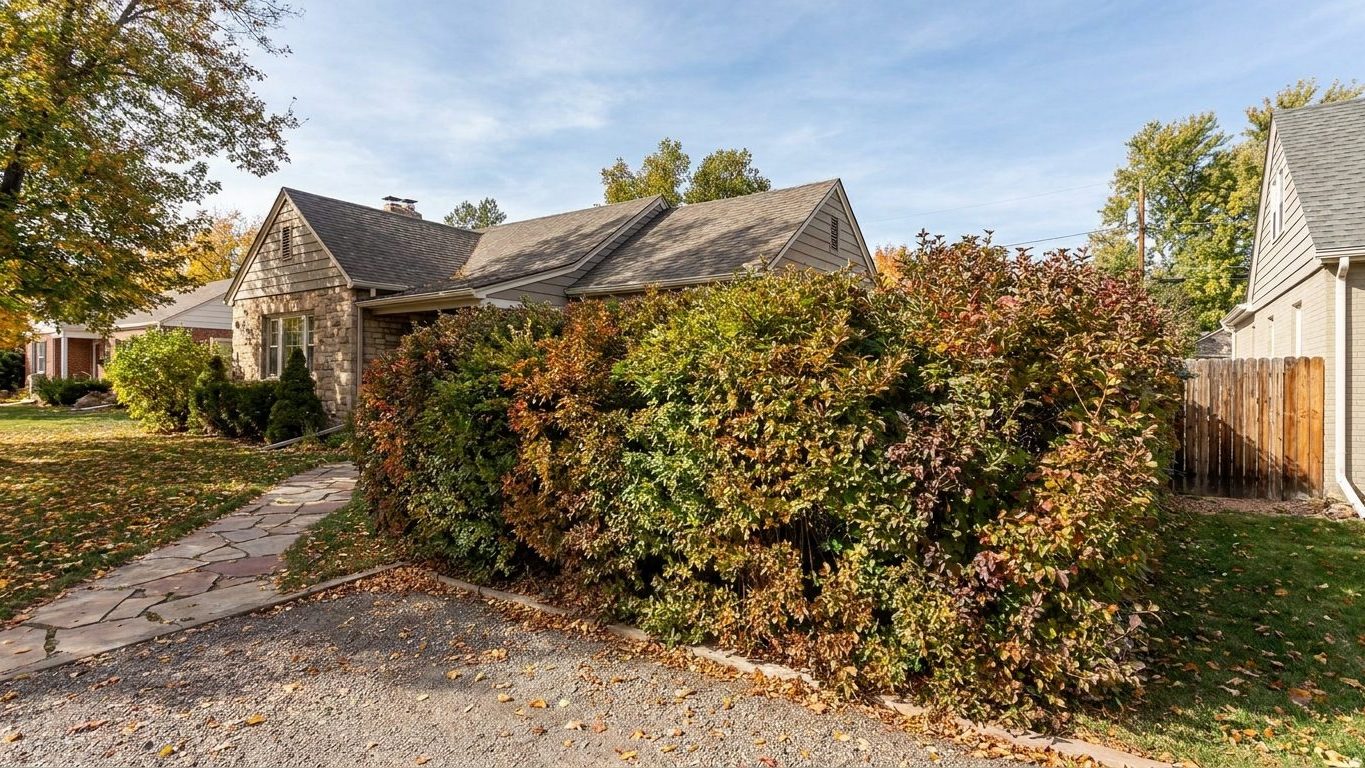

Wisconsin has no statewide hedge height limit. None. The number that applies to your hedge comes from the city, village or town where you live, and it can change from one municipality to the next. Some codes cap fences and say nothing about living plants. Others name hedges outright. One rule shows up almost everywhere: at corners and driveways, a hedge cannot block a driver’s view. What follows covers how to find your local rule and what to check before you trim or plant.
There is no Wisconsin hedge height law
Search for a legal hedge height in Wisconsin and you will find pages that give one number for the whole state. Treat them with suspicion. There is no state-level hedge height limit in Wisconsin, and no state in the country has one. Height is set by municipal ordinance, town by town. A page that quotes a single figure for the entire state is repeating a guess, and acting on it could leave you trimming a hedge that was legal or leaving one that is not.
Why can two Wisconsin neighbors have different hedge rules?
Wisconsin is divided into cities, villages and towns, and each can adopt its own zoning and property rules. A dense city lot with a shared driveway gets different treatment than a few acres along a county road. In unincorporated areas, the town or the county may be the body that writes the rule, and some rural spots have no hedge rule at all. A limit in one village tells you nothing about the village next door.
The same patchwork runs across the country. The guides for How High Can a Hedge Be in Michigan? What the Law Actually Says and How High Can a Hedge Be in Minnesota? What the Law Actually Says reach the same conclusion for Wisconsin’s neighbors. So do the ones for How High Can a Hedge Be in Mississippi? What the Law Actually Says and How High Can a Hedge Be in New Hampshire? What the Law Actually Says. For the wider picture on planting and shaping, start at the Hedges hub.
Does a fence limit apply to a hedge?
Often it does not. Many ordinances regulate fences as structures, built of wood, metal, vinyl or masonry, and treat living hedges separately or leave them out. Some codes define “fence” broadly enough to include a row of shrubs used as a barrier. You cannot know until you read the definitions section of your own code. Look for the words your municipality actually uses: fence, hedge, shrub, vegetation, landscaping, screening, accessory structure.
The sight triangle is the exception that follows you almost everywhere. At a street corner or where a driveway meets the road, nothing may block a driver’s view of cross traffic or of a child on the sidewalk. The allowed height inside that triangle is usually far lower than the general fence height, and it applies even in places with no other hedge rule. A hedge that is perfectly legal along the back lot line can still be a violation where it meets the street.
Private rules sit on top of public ones. A homeowners association, a subdivision covenant or a deed restriction can set a stricter height than the city does, and the city will not enforce it for you. If your lot belongs to one, read those documents too.
How to find the rule that actually applies to you
You need three things: your municipality’s name, the right chapter of its code, and the right search words. Most people can have an answer quickly. If the online code is unclear, one phone call settles it. Start with the code, because a written section number is something you can point to later if a neighbor or an inspector disagrees with you.
Where is a Wisconsin municipal code published online?
Most American municipalities publish their code through one of three companies: Municode (library.municode.com), American Legal Publishing (codelibrary.amlegal.com) or eCode360. Search the municipality’s name plus “code of ordinances” and one of those sites usually comes up. Small villages and towns sometimes post a PDF on their own website, and a few keep the code only at the clerk’s office. If you cannot find it, call rather than assume there is no rule.
Once you are in the code, go to the zoning chapter. The hedge or fence rule almost always sits there, under a heading such as “fences,” “fences and walls,” “accessory structures” or “yard requirements.” Use the site’s search box for “fence” first, then “hedge,” “shrub” and “vegetation.” Then search “sight triangle,” “vision clearance” or “visibility at intersections,” since the corner rule often lives in a separate section, sometimes in the traffic or street chapter instead of zoning.
Who do you call at city hall?
Ask for the zoning administrator. In many places that person sits in the planning and zoning department or the building inspection office. In a small village or town, the clerk can tell you who handles zoning. Have your address ready, and ask three things: whether hedges are regulated or only fences, what the height limit is in the front, side and rear yards, and what the sight-triangle rule is for your corner or driveway. Ask for the code section number and, if you are planning a big planting, a short email confirming what you were told.
Codes get amended, and the online version can lag behind a recent council vote. That is the reason for the confirming call. It is quick and prevents the situation where you trim to the number on the screen and the number in force turns out to be different.
The branches that cross the line
Height is only half of hedge trouble. The other half is growth that reaches over a property line. In most states, a neighbor may cut back branches and roots that cross onto their land, up to the property line and no further. They do the work at their own expense, and they may not kill the plant. That principle comes from court decisions, not from a statute, and it varies. Treat it as a general rule of thumb, not as Wisconsin law.
The practical meaning is narrower than most people expect. Cutting what hangs over your side is one thing. Reaching across the line to take the top off the whole hedge, or cutting so hard the plant dies, can turn you from the injured party into the one who owes money.
A few steps keep a small disagreement from becoming a legal one:
- Photograph the branches and the property line before anyone cuts.
- Talk to the neighbor first, and offer to split the cost of a tree service if the cutting is large.
- Find the actual line, using a survey or the property pins, rather than guessing from the fence.
- Stay on your side of that line with the saw and the ladder.
A hedge planted exactly on the boundary raises a different question, because ownership can be shared, and the rights of each owner depend on facts like who planted it and who has maintained it. Do not settle that by trimming. A survey comes first, and a real estate attorney after it.
Where a neighbor refuses to cut, where a hedge is killing something on your side, or where a threatening letter has already arrived, talk to a Wisconsin attorney. The municipality can tell you whether a hedge breaks a height or sight-line ordinance, but it generally will not referee a dispute over branches.
What to check before you plant
A hedge is a long commitment, and the rules are cheapest to learn before the shrubs are in the ground. Five checks cover most of the risk. Run through them in this order, and you will rarely have to dig anything out.
- Which word your code uses. Confirm whether your municipality regulates hedges at all, or only fences, and which section applies.
- The setback from the property line. Some ordinances require plantings to sit a set distance back from the line or the sidewalk. Ask the zoning office for the number that applies to your lot.
- The sight triangle. Mark the corner or driveway on your plan, and plan on a low planting or a gap there.
- Covenants and easements. Check association rules, utility easements along the lot line and overhead wires where a tall species would eventually reach them.
- Underground lines. Call 811 before you dig. It is free, and utility locators mark buried lines.
Then work out the mature size of the plant, not the nursery size. A useful rule is to set the row back from the line, plus a little extra for a path to prune from. A row that must be kept low to comply with a limit does better with a naturally compact shrub than with a tall species held down by constant shearing.
Timing matters in a cold-winter climate. Shrubs planted in fall need root growth before the ground freezes, and bare-root or evergreen stock can behave differently from container plants. Your county extension office can tell you what works locally and when the window closes in your part of the state.
Common questions
How tall can a hedge be in Wisconsin?
It depends on your municipality, because Wisconsin has no statewide limit. Some codes set a height for fences and ignore plants, some cover hedges directly, and some rural areas have no rule. Look up your city, village or town code, or call the zoning office, for the figure that applies to your lot.
Is a hedge treated as a fence under Wisconsin city codes?
Sometimes, but often not. Many ordinances regulate fences as structures and handle living hedges separately or leave them out. Check the definitions in your own code before you assume a fence limit covers your plants.
Can I trim my neighbor’s hedge if it grows over my yard?
In most states, a property owner may cut growth that crosses onto their land, up to the line and no further, at their own cost, without killing the plant. That comes from case law and varies. For anything beyond routine trimming, talk to your municipality or a Wisconsin attorney first.
Where do I find my local hedge ordinance?
Look up your municipal code on Municode, American Legal Publishing or eCode360, or on your city, village or town website. The rule is usually in the zoning chapter, under fences or accessory structures. If you cannot find it, the zoning administrator or clerk can point you to it.