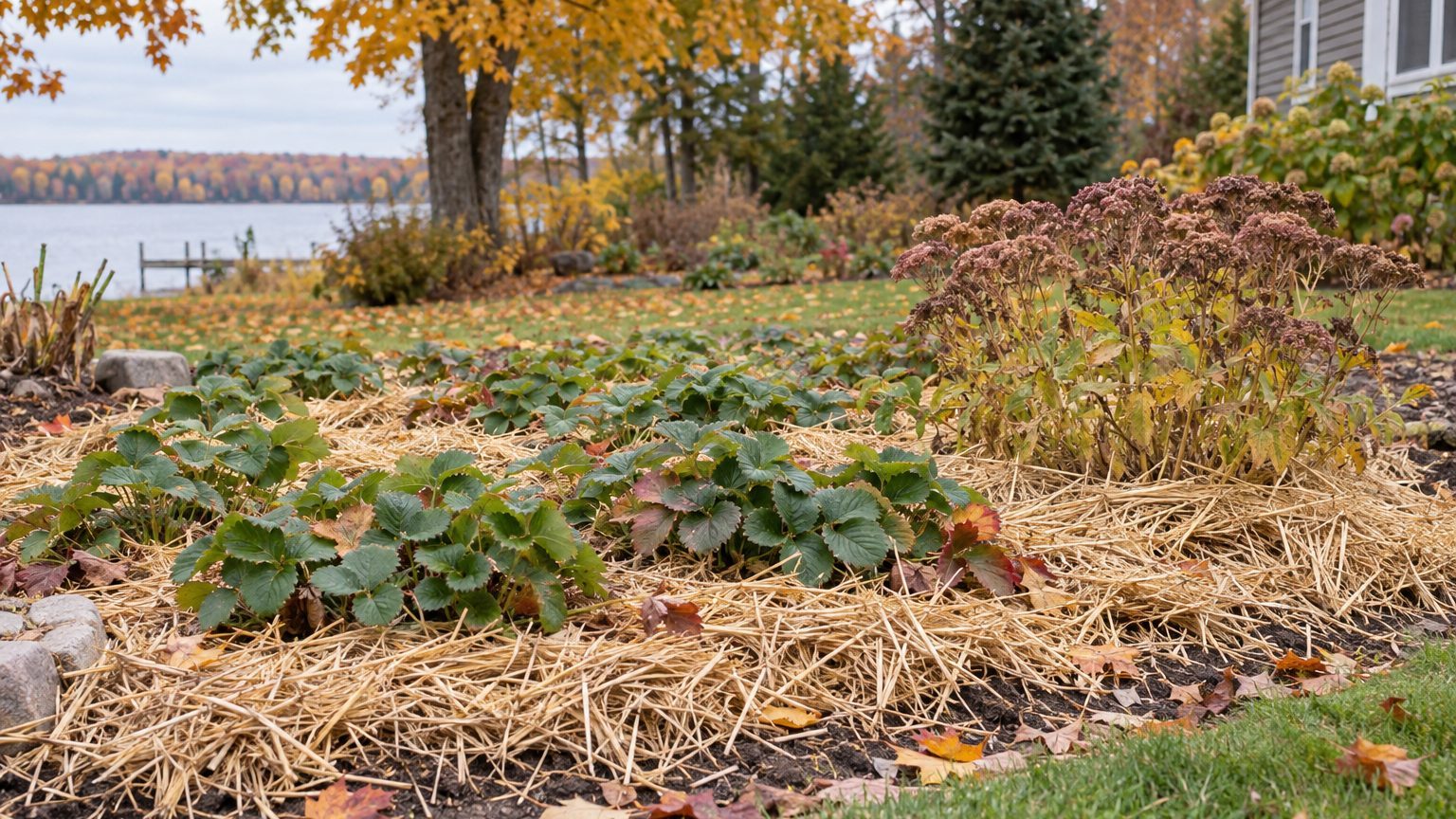

Winter mulch goes on after the ground starts to freeze, not after the first frost. At Central Park, NOAA’s 1991-2020 normals put the first 32°F freeze between November 14 and November 27 (the 30 to 70 percent probability band). For strawberries and most perennials in New York City, the mulch window opens after that, from late November into December. Upstate, frost arrives earlier, so mulching moves earlier too.
When to put winter mulch down in New York
Winter mulch is there to keep soil frozen. A blanket of straw or shredded leaves won’t make the ground warmer. It slows the swings between freezing and thawing that wreck shallow roots. In New York City the mean daily minimum of the coldest month is 27.9°F, according to NOAA NCEI Climate Normals 1991-2020, so the soil usually freezes at least on and off in an ordinary winter, and this logic applies. Colder parts of the state run harder than that.
Why does winter mulch go on after the ground freezes?
Plants need a few frosty nights to slow down and go dormant. Cover them while the soil is still mild and they keep growing under the blanket. Damp straw or leaves sitting against warm soil also holds moisture around the crown, which is how rot starts. The same cozy layer attracts mice and voles looking for a winter pantry.
The real damage comes later, in the thaws of January and February. Soil that freezes, softens, and freezes again expands and contracts, and it pushes shallow-rooted plants up out of the ground. A mulch layer that went on once the soil was already cold keeps it frozen through those mild spells.
What dates work in New York City and upstate?
The Central Park range of November 14 to November 27 is a New York City figure. It comes from NOAA NCEI U.S. Climate Normals 1991-2020, and Central Park is a dense urban site that stays warmer than the countryside around it. Upstate New York and the Adirondacks get their first freeze well before that, and spring comes later there. Fall tasks like mulching move earlier as you go north or uphill, and uncovering moves later in spring.
For the city and its close suburbs, the rule to write on the calendar is: mulch from late November into December, once the soil surface stays stiff through the afternoon. A simple test is to push a trowel in at midday. If the top crust resists and puddles keep a skin of ice, go ahead. If the soil is still soft and workable, wait another week. The First and Last Frost Dates in New York page lets you check your own county, and farther north you should move every step of this schedule earlier in the fall.
Mulch depth matters as much as timing. Our Mulching Without Killing the Plant guide covers the general method, and the winter version follows the same limits on depth, which come up below.
Strawberries
Strawberry plants are low, and the crown, the short stem where leaves and roots meet, sits right at the soil surface. That makes it one of the most exposed parts of the plant. Cold on its own can injure a bare crown, and heaving lifts it out of the ground so the roots tear or dry in the wind. Both problems are worst in winters with open stretches and sudden thaws.
What mulch and how deep for strawberries?
Clean straw is the standard choice. It fluffs up, lets air through, and sheds some water. Hay is a poor substitute because it often carries a lot of seed and can fill the bed with grass and weeds next summer. Whole leaves tend to mat into a wet sheet over the crowns, so skip them here.
For depth, aim for about 2 to 3 inches of straw once it has settled, which matches Cornell’s guidance for strawberries. NC State Extension’s woody ornamentals chapter gives the same figure for mulch around shrubs and trees, in a weed-control context: “A 2-inch to 3-inch layer of mulch suppresses most annual weed seeds and makes it easy to hand-pull any that do germinate.” A loose layer of straw in that range covers the plants and leaves, and the same layer carries its weed-suppression benefit into spring. Piling it deeper is not safer, because thick straw packs down and stays wet. You can read the woody ornamentals chapter of the handbook on the NC State Extension site.
Spread the straw over the whole bed, covering the leaves and crowns, after the first hard freezes have put the plants to sleep. In New York City that means the same late November to December window as other winter mulch, and a bit earlier upstate. Plants that are still putting out fresh green leaves in mid-fall are not ready. The leaves should look dull and a little flattened first.
When do you pull strawberry mulch back in spring?
Leave the straw on until growth restarts. The signal to write down: uncover the crowns when new leaves push up pale yellow under the straw, and rake the straw into the aisles. The pale color means the plants are reaching for light and will turn green quickly once exposed. Leave it too long and the new growth stretches, weakens, and rots.
Do not throw the straw away. Left in the aisles, it keeps weeds down and keeps berries off the dirt later on. Keep it within reach during bloom, because a frost night after the flowers open can kill them, and you can pull straw back over the plants for that night. The Growing Strawberries guide covers the rest of the year, from planting to renovation. Cold spring weather upstate pushes the uncovering later than in the city.
Perennials and borderline plants
Not every perennial wants winter mulch. The USDA Plant Hardiness Zone Map 2023 is built on a single number, the average annual extreme minimum temperature, and it places New York State anywhere from zone 3b to 7b depending on the spot. That range is too wide to plan from, so judge by your own location. New York City is the reference point for the dates in this article, and your garden may be colder or warmer than that.
Which perennials benefit from winter mulch in New York?
The plants that gain the most are those on the edge of their cold tolerance, and anything planted in the last few weeks. A perennial set out this fall hasn’t anchored its roots, so it heaves easily. Established, tough plants like daylilies, hostas, and sedum usually get by with nothing.
| Plant type | What mulch does for it | How to apply |
|---|---|---|
| Perennials planted this fall | Keeps the soil frozen so shallow roots stay put | Mulch after the ground freezes, in a ring around the plant |
| Plants rated near the cold limit for your spot, such as lavender, sage, and similar herbs | Evens out soil temperature and moisture through thaws | Mulch the root zone and keep the crown clear |
| Established hardy perennials | Little needed, mostly weed and moisture control | A thin layer, or none |
Perennial herbs are the usual borderline case. Lavender, sage, and thyme object more to wet crowns than to cold, so a light touch matters. The Getting Perennial Herbs Through the Winter guide goes through them one by one.
How do you mulch around a crown without smothering it?
Think donut, not volcano. The mulch forms a ring around the plant, with a bare patch of soil right at the stems or crown so air can reach it and moisture does not sit against it. Piled on top, mulch holds water against the growing point, and that is where rot starts. For depth, use the NC State range of 2 to 3 inches. For woody plants the same handbook says: “Provide a 3-inch layer of mulch to reduce water loss and maintain uniform soil moisture and temperature around roots.” The two sentences give the same order of depth, and going beyond them does not add protection.
The decision to write down: apply the ring after the ground freezes, at 2 to 3 inches, with the crown left bare. Shredded leaves, bark chips, and straw all work around perennials. Whole wet leaves are the main thing to avoid on plants that keep green foliage through winter, since they mat down and trap water.
What goes wrong
Four common problems cause winter mulch to fail: starting too early, using something that packs down, inviting rodents, and leaving the mulch on too long in spring. Each is easy to spot and easy to avoid.
Can you mulch too early, and what happens if it mats?
Mulch laid on warm soil in October keeps plants growing when they should be hardening off. It also holds moisture against crowns and stems. The result shows up in spring as mushy, dark crowns on strawberries and perennials that never leaf out. The fix is to wait for the freeze, using the Central Park range of November 14 to November 27 as the starting point, and to start earlier upstate, since frost comes sooner there.
Matting works the same way. Whole leaves, especially large flat ones like maple, pack into a wet layer that smells sour when you lift it. Use straw on strawberries, and shred leaves with a mower before using them on perennials.
How do you keep voles out of winter mulch and uncover in time?
Voles and mice nest in thick, undisturbed mulch, then chew bark and crowns through the winter. Keeping the layer to 2 to 3 inches, pulling it back from stems and trunks, and waiting until the ground is frozen all reduce the damage. Young shrubs and fruit trees can also get a collar of hardware cloth around the base.
The last mistake is forgetting the mulch exists. Straw left on strawberries through spring smothers the new growth. Check under the mulch during the first mild spell of late winter, and pull it back as soon as pale new leaves show. Upstate, that check happens later than in the city.
Common questions
Should I mulch strawberries right after the first frost?
No. A first frost, even a light one, only starts the slowdown. In New York City the first 32°F freeze typically comes between November 14 and November 27 (the 30 to 70 percent probability band), and the mulch goes on after the ground begins to freeze, which is later. Mulching right after a light frost leaves the soil warm under the straw.
Can I use fall leaves as winter mulch?
Shredded leaves work around perennials and shrubs. Whole leaves mat down and stay wet, so they are a poor choice over strawberry crowns or evergreen perennials. Straw is the better pick for strawberries.
How deep should winter mulch be?
NC State Extension gives 2 to 3 inches for mulch around woody ornamentals and 3 inches for freeze protection of woody plants. Keep within those figures and keep the layer away from stems and crowns. More than that holds water against the plant.
Does upstate New York mulch on the same dates?
No. The colder, higher parts of the state get their first freeze earlier than the Central Park range of November 14 to November 27, so mulching moves earlier there, and uncovering in spring moves later. Your county extension office can tell you the local timing. For other parts of the state, start with the New York guides.