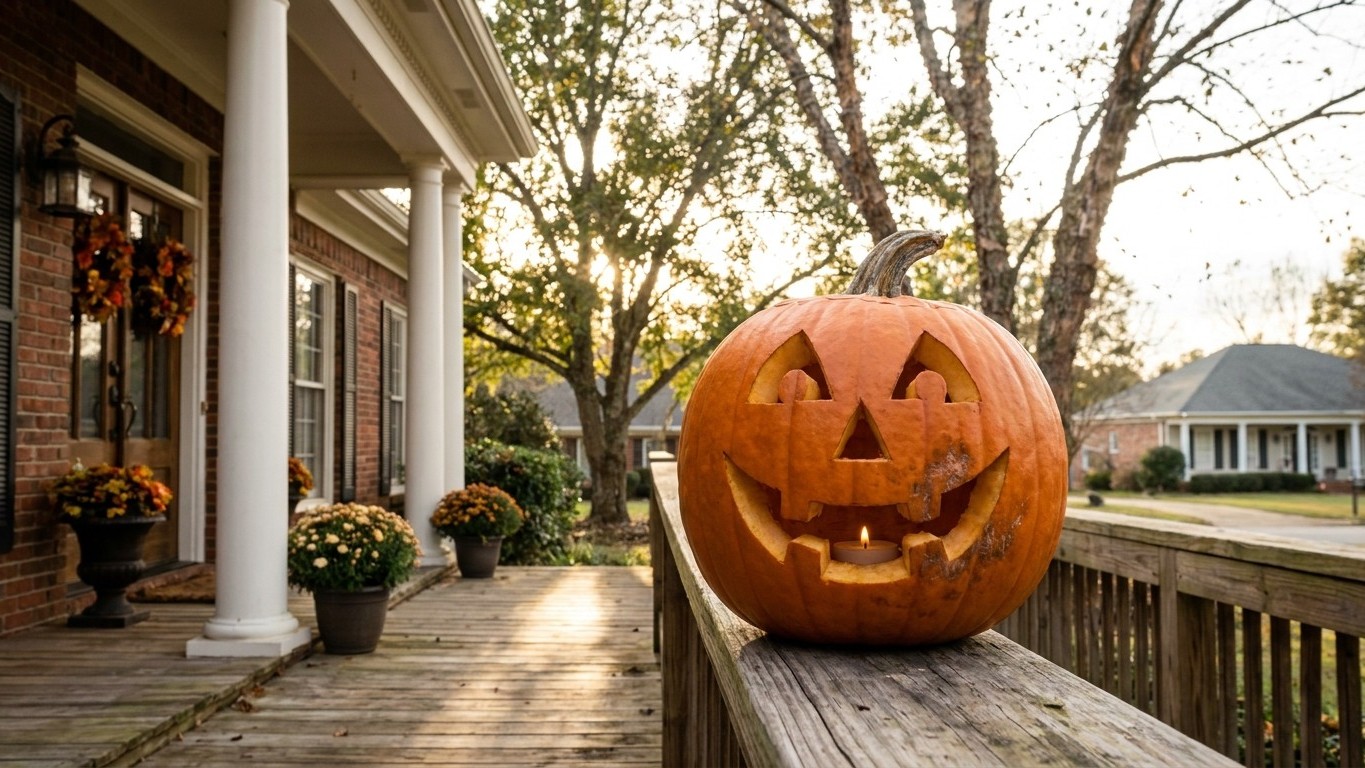

Around Huntsville, the mean first fall frost lands somewhere between November 2 and November 16, according to NOAA’s 30-year climate normals. That’s well past Halloween, sometimes by more than two weeks. For a pumpkin sitting on an Alabama porch until October 31, frost simply isn’t part of the equation. The carving window here isn’t set by cold at all. It’s set by heat, and that changes the calendar entirely.
The short answer

If you’re waiting for a chill to tell you it’s time to carve, Alabama won’t give you one. The reference frost date sits after Halloween, not before it, so the usual northern logic (carve before the freeze ruins the flesh) doesn’t apply south of the Tennessee Valley. What applies instead is warmth, and warmth works against a carved pumpkin faster than most people expect.
A whole, uncut pumpkin stores well between 45 and 50 degrees Fahrenheit, according to University of Illinois Extension. That’s a specific band, and late October in Alabama rarely gets anywhere close to it, especially during the day. Even after sunset, temperatures in most of the state stay well above that range through the last week of October. That mismatch is the whole story here: the pumpkin isn’t fighting frost, it’s fighting a climate that never gets cold enough to slow it down.
So the practical window is short. Carve one to three days before Halloween, not a week out. A carved pumpkin has no skin left to protect the flesh, and in a climate that stays warm into November, that exposed surface starts breaking down almost immediately. The closer you carve to the day you display it, the better it holds its shape for trick-or-treaters.
This doesn’t mean the whole pumpkin is fragile before you cut it. A whole pumpkin, kept properly, can last three to six months in a cool, dark spot, per University of Illinois Extension. The problem is entirely about the gap between “whole” and “carved.” Once you cut into it, none of that three-to-six-month runway applies anymore, and no extension service publishes a shelf life for a carved jack-o’-lantern, because there isn’t a standardized one to publish. What they do publish is guidance on picking a pumpkin that starts strong: look for one with an inch or two of stem still attached, since that stem is the seal that keeps the top of the pumpkin from drying out and inviting rot before you even get it home.
Around Alabama, that means the smart sequence is: buy early if you want the pick of the patch, store it whole and cool for as long as you like, then carve late, close to Halloween itself. The frost date isn’t your deadline. The thermometer on your porch is.
Frost or heat: which one gets it here
The cold end
Alabama’s frost risk is real, just not in October. NOAA’s climate normals put the mean first fall frost at USW00003856 somewhere between November 2 and November 16, a two-week window that reflects how variable the timing can be from one year to the next. That’s an average, not a promise, and it can shift earlier or later depending on the year and the specific spot in the state. But even at its earliest, that window opens after Halloween has come and gone. For carving purposes, frost is a non-issue in this state. Nobody in Alabama needs to race a freeze to get a pumpkin carved before Halloween.
Worth separating here: a frost and a hard freeze aren’t the same thing, and neither one should be confused with the state’s broader hardiness zone, which describes winter survival for perennial plants, not the timing of a single autumn cold snap. The frost date above is specific to fall cold onset, and it’s the only cold-related number that matters for this question.
The warm end
The real constraint in Alabama is heat, and it shows up in a different number: 33.1 degrees Fahrenheit, the mean daily minimum for the coldest month at the Huntsville reference station. That’s January’s average low, not October’s, but it tells you something important about this climate overall: winters here are mild, and if January mornings only dip into the low 30s on average, late October evenings are nowhere near cool enough to hold a pumpkin in that 45-50 degree storage band.
That’s the mismatch that matters. A pumpkin wants a cool, dark spot to slow it down. Alabama in late October, even in the evening hours, typically runs warmer than that target range across most of the state. Warmth accelerates softening, invites mold growth, and shortens the display life of anything already cut open. In this state, heat management, not frost avoidance, is the entire game.
Where to keep it until you carve
Finding 45-50 degrees and dark in an Alabama home in October takes some searching, since the outdoor air rarely cooperates. Here’s where to look and what to avoid along the way.
- Start with an interior closet or a windowless hallway. These spots stay several degrees cooler and darker than anywhere with direct sun exposure, which matters more in Alabama than in colder states since outdoor storage isn’t reliably cool here.
- A garage works if it’s shaded and not attached to a sun-facing wall. Concrete floors hold cooler temperatures than the air above them, so setting the pumpkin directly on the floor, not on a shelf near the ceiling, helps.
- Basements, where they exist, beat almost everything else. They’re naturally several degrees cooler than the rest of the house and stay dark most of the day, which is close to ideal for a whole pumpkin waiting its turn.
- Avoid a covered front porch unless it’s shaded most of the day. Direct or reflected sun on a porch in late October Alabama can push surface temperatures well past the storage range, even when the air feels mild.
- Keep it away from apples, potatoes, and tomatoes wherever you store it. Ripening fruit gives off ethylene gas, and that gas ages a pumpkin faster, according to University of Illinois Extension. A fruit bowl on the same counter is enough to shorten its life.
- Handle it by the base, never the stem. The stem isn’t a handle, it’s a seal. Break it off and you’ve opened a spot for rot to start weeks before you planned to carve.
Checking this against your own county
The frost dates and storage guidance above come from a single reference station and a national research extension, and Alabama covers a lot of ground between the Gulf Coast and the northern hill country. Local conditions shift that window in both directions, sometimes by a week or two, especially at higher elevations in the northeast part of the state.
For a reading specific to your own county, the Alabama Cooperative Extension System is the place to check. They track local frost timing and seasonal patterns county by county, which is a more reliable guide than a single statewide average when you’re deciding exactly when to bring a pumpkin home and when to finally cut into it.
Common questions
Does frost ever threaten a pumpkin in Alabama before Halloween?
Based on the reference station’s climate normals, no. The mean first fall frost falls in early-to-mid November, after Halloween has already passed, so frost isn’t the risk driving the carving timeline in this state.
How long does a carved pumpkin last in Alabama’s climate?
No university extension publishes a specific shelf life for a carved pumpkin, and none recommends a preservation protocol like a bleach dip or petroleum jelly coating. What’s actually published is guidance on picking a sound pumpkin with an intact stem and storing it whole until you’re ready. Carving close to Halloween, rather than days in advance, is the practical response to a climate that stays warm well into fall.
What’s the ideal spot to store a whole pumpkin in an Alabama home?
A basement, interior closet, or shaded garage floor, kept away from ripening fruit like apples and tomatoes. These spots come closest to the 45-50 degree, dark storage conditions University of Illinois Extension recommends, which outdoor Alabama air in October usually can’t provide.
Should I pick a pumpkin with a long stem?
Look for one to two inches of stem, per University of Illinois Extension. It’s not decorative, it’s the seal that keeps the top from drying out and rotting early. Never lift or carry a pumpkin by the stem, since breaking it off exposes that spot to spoilage.