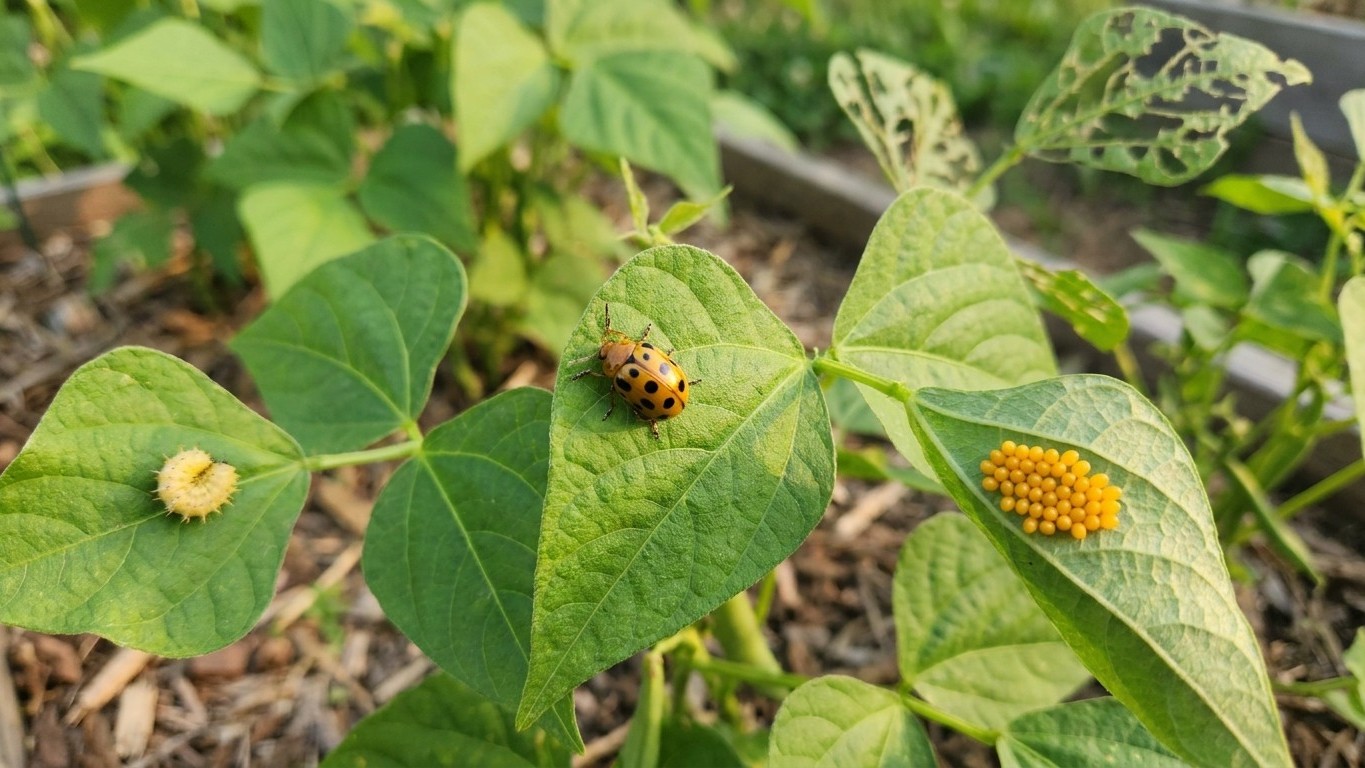

Mexican bean beetles typically appear in Alabama gardens between late March and early April along the Gulf Coast, and closer to May in the northern counties near the Tennessee Valley. Once they arrive, the fastest way to stop them is a combination of early handpicking, floating row covers until bloom, and releasing or attracting the parasitic wasp Pediobius foveolatus, which has become a reliable biological control in warm-season states like Alabama.
Identifying the Mexican Bean Beetle in Alabama Gardens

Gardeners often mistake this pest for a beneficial ladybug, and that mix-up costs a lot of bean plants. The adult Mexican bean beetle (Epilachna varivestis) measures about a quarter to three-eighths of an inch, with a rounded, copper-to-yellow body marked by sixteen black spots arranged in three rows. True ladybugs are usually darker, shinier, and carry fewer spots in a different pattern.
The larvae are the more destructive stage and look nothing like the adult. They’re pale yellow, oval, and covered in branching spines that give them a fuzzy, almost intimidating appearance under a hand lens. Eggs show up in tight clusters of 40 to 60, glued to the underside of bean leaves, colored a bright yellow-orange that’s easy to spot once you know to flip the leaves over.
- Adult: copper-yellow, 16 black spots, oval shell
- Larva: spiny, pale yellow, feeds on leaf undersides
- Eggs: orange-yellow clusters on leaf backs
- Damage: lacy, skeletonized leaves with veins left intact
That last detail, the skeletonized leaf, is often the first clue a homeowner notices. Both larvae and adults feed on the tissue between leaf veins, leaving a lace-like pattern that weakens the plant’s ability to photosynthesize and, eventually, produce beans.
When Mexican Bean Beetles Show Up in Alabama
Alabama’s long growing season works against gardeners here. In states with shorter summers, Mexican bean beetles might complete one or two generations. Alabama’s USDA hardiness zones, ranging from 7b in the north to 8b along the coast, support up to three overlapping generations between spring and fall.
Adults overwinter in leaf litter, garden debris, and the edges of wooded areas, sometimes just a few yards from where last year’s bean patch stood. As soil temperatures climb into the 60s, usually by late March in Mobile and Baldwin counties and a few weeks later near Huntsville, those adults emerge and head straight for the nearest young bean plants.
The first generation lays eggs through April and May, and those larvae do noticeable damage by early June. A second generation follows in mid-summer, often the most destructive because populations have built up and plants are already stressed by Alabama heat. A partial third generation can appear in September in the southern part of the state before beetles retreat to overwinter again.
Snap beans, lima beans, and cowpeas are the primary garden hosts, but Alabama’s substantial soybean acreage means this insect isn’t just a backyard nuisance. Commercial growers watch for the same emergence windows, particularly in the Black Belt and Tennessee Valley production areas.
What Stops Mexican Bean Beetles
No single tactic wipes out an established population, but stacking a few methods together works well in most Alabama home gardens.
Cultural and Physical Controls
Row covers installed at planting and removed once flowers open keep the earliest adults off young seedlings, buying time before the first generation can lay eggs. Handpicking egg clusters and larvae off the undersides of leaves, then dropping them into soapy water, remains one of the most effective free options for a small plot. Check plants every three to four days once beetles are spotted, since egg-to-adult development can take as little as three weeks during Alabama’s hot summer stretch.
Crop rotation matters more than most gardeners assume. Moving bean plantings to the opposite side of the yard, or at least 100 feet from the previous season’s patch, forces overwintering adults to search farther for a meal, which reduces early infestation pressure.
Biological Control
The parasitic wasp Pediobius foveolatus has become the standout biological tool against this pest across the Southeast. The wasp lays its own eggs inside bean beetle larvae, and the developing wasps kill the host before it reaches adulthood. Because the wasp doesn’t overwinter reliably in most of Alabama, it’s typically released fresh each season, timed to the appearance of the first generation of larvae in late spring. Home gardeners can source releases through university extension programs or agricultural supply companies that specialize in beneficial insects.
Spined soldier bugs and certain ground beetles also feed on bean beetle eggs and young larvae, so avoiding broad-spectrum insecticide use early in the season helps these natural predators stick around.
Organic and Chemical Options
Neem oil and insecticidal soap work best against young larvae, since the waxy spines on older larvae and the hard shell of adults make contact sprays less effective as the insect matures. Pyrethrin-based products offer a stronger organic option for heavier infestations, though they can harm beneficial insects if applied without care about timing.
For larger infestations, particularly in commercial soybean or cowpea fields, growers sometimes turn to labeled synthetic insecticides. Alabama Cooperative Extension System agents can help identify current recommended products, since labels and resistance patterns shift from year to year. Whatever product is chosen, spraying in the early morning or evening protects pollinators visiting bean flowers during the day.
Preventing the Beetles From Coming Back
Fall cleanup does more to reduce next year’s population than almost anything applied during the growing season. Because adults overwinter in plant debris, mulch piles, and leaf litter close to where they fed, clearing out dead bean plants and surrounding weeds after harvest removes their preferred hiding spots. Tilling the soil in fall also exposes overwintering adults to birds and cold temperatures, cutting survival rates before spring.
Choosing bean varieties with some natural resistance helps too. Certain soybean cultivars and a handful of snap bean varieties show reduced feeding damage, though resistance in home garden bean varieties remains limited compared to commercial soybean breeding programs.
Staggering plantings so that not every bean plant reaches its most vulnerable seedling stage at the same time can also spread out beetle pressure, giving gardeners more time to spot and remove early arrivals before populations explode into that damaging second summer generation.
Gardeners who plant beans every year in the same general area of Alabama should expect this pest to show up annually, since the insect is now well established statewide rather than an occasional visitor. Treating it as a predictable seasonal task, rather than a surprise emergency, tends to produce the best bean harvests over time.