Everything we have worked out for Arizona: what to plant and
when, which varieties finish in time, the pests that actually turn up here, and
the jobs that pay off month by month. We also cover the rest of the property,
from lawns and soil to home care and energy, because a garden rarely stops at
the vegetable bed.
The numbers first, because everything else follows from them. Measured at
the weather station in Phoenix,
the last spring freeze falls around no freeze in most years; a rare cold snap can bring 32F between late December and mid January and the first fall freeze falls around no reliable fall freeze; see the note, USDA zones 4b-10b, 8,014 growing degree days in the year.
Heat, not frost, is what shortens the season here: above 86 °F tomato pollen goes sterile, so growers run a spring crop and an autumn one rather than a single long season. Garlic is the awkward one: only 0 weeks below 40 °F, where it needs six to split into cloves. Chill the cloves before planting, or grow a softneck type.
Figures from
NOAA's 1991-2020 climate normals.
A state is not one climate: elevation, a large lake or the coast can move these
dates by two weeks either way, so check your own county with the extension service before you spend money.
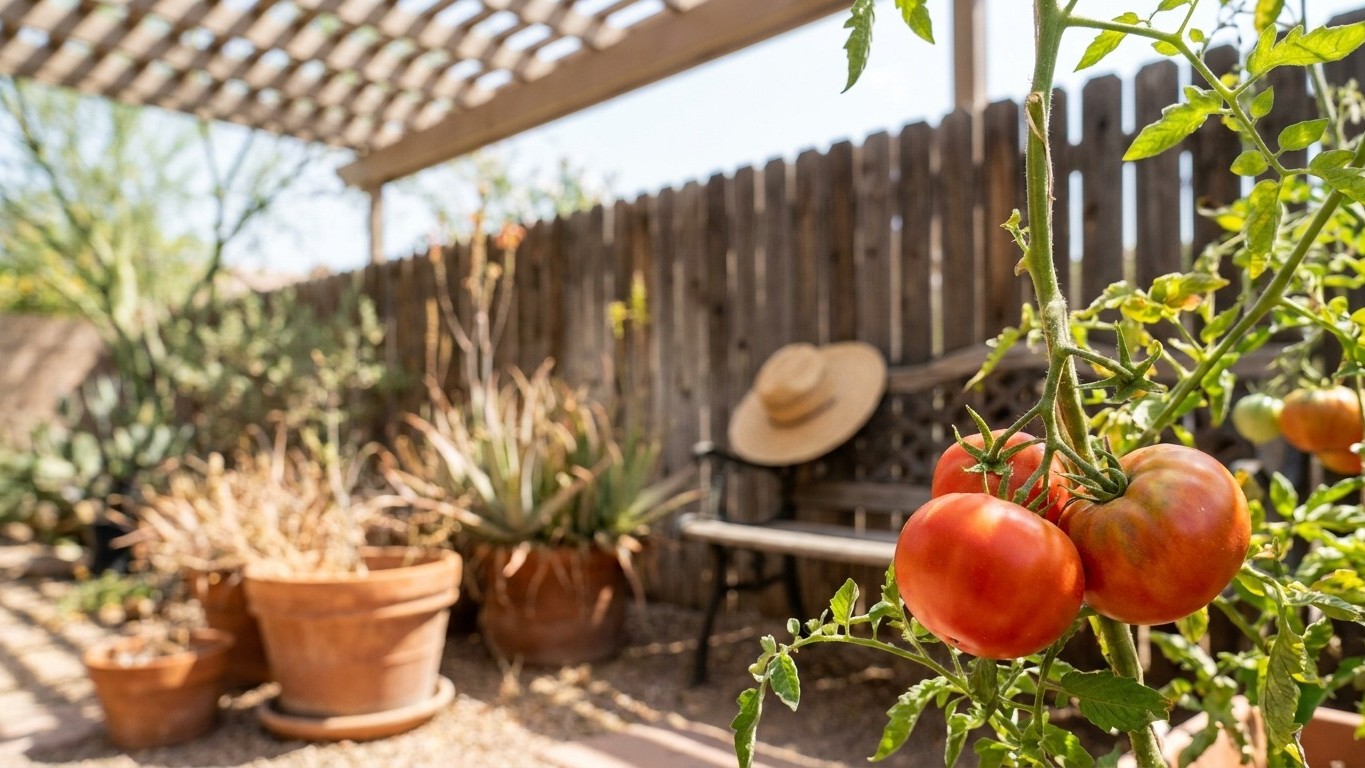
Phoenix almost never sees frost, so Arizona tomato growers plan around summer heat instead, choosing quick-maturing varieties and timing transplants through University of Arizona Cooperative Extension.