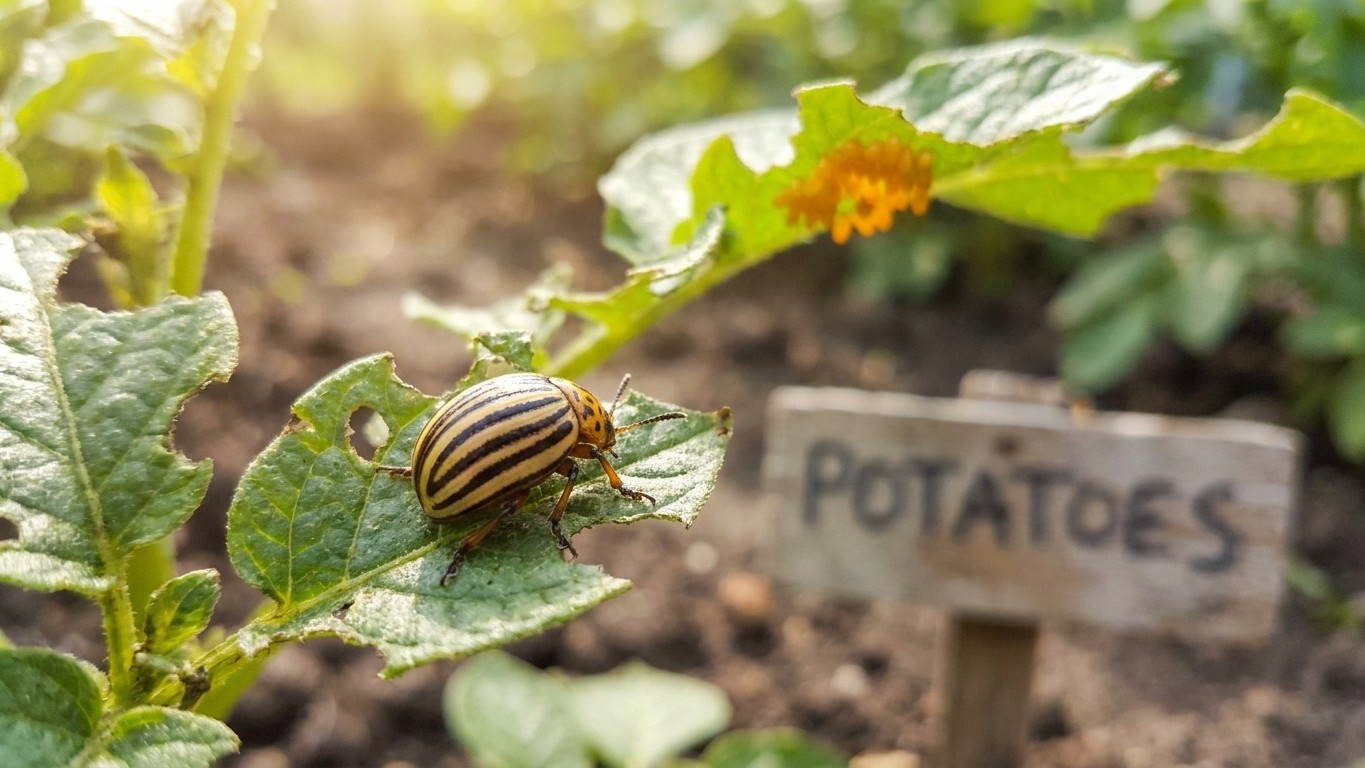

Colorado potato beetles show up in British Columbia as soon as soil temperatures climb into the low 50s Fahrenheit, which typically happens in late April in the Okanagan and Fraser Valley and can stretch into late May in cooler interior pockets. Overwintering adults crawl out of the ground, head straight for the nearest potato or tomato patch, and start feeding within days. Stopping them comes down to disrupting that emergence window with barriers and rotation, then backing that up with targeted biological sprays before larvae hit their most destructive stage.
When Colorado Potato Beetles Emerge in British Columbia

These beetles don’t migrate into BC from somewhere else each year. They spend the winter right in your garden soil, burrowed four to six inches down as adults, waiting out the cold. Once the ground warms, they dig themselves out and walk to the nearest host plant, usually within a few days.
The Okanagan Valley and the Fraser Valley tend to see the earliest activity because their growing season starts sooner and soil warms faster than in the Cariboo or the Peace region. A grower near Kelowna might spot the first adults in late April, while someone gardening near Prince George could wait until early June. Either way, the beetles’ internal clock runs on soil temperature, not the calendar.
Once active, adults feed for one to two weeks before mating and laying eggs. Females lay clusters of 20 to 40 bright orange eggs on the undersides of leaves, and a single female can produce several hundred eggs over her lifetime. In BC’s warmer valleys, this cycle can repeat, producing a second generation of adults by late summer. In shorter-season regions, only one generation typically completes before frost shuts things down.
Why the First Two Weeks Matter Most
The period right after emergence is the easiest window to intervene. Beetles that have just crawled up from the soil can’t fly well yet, their wing muscles haven’t warmed up for sustained flight, and they’re concentrated near where they overwintered rather than spread across a whole field. Missing this window means dealing with a mobile population that’s already laying eggs.
Identifying the Beetle at Every Life Stage
Adults are about 3/8 inch long, with a rounded, hard-shelled body striped in black and cream-yellow, ten stripes total running down the back. They’re often confused with the false potato beetle, a lookalike that doesn’t cause economic damage, so a close look at stripe count and body shape matters before treating anything.
Larvae are the real crop destroyers. They start out dark red with black heads, molt through several stages, and end up plump, orange-red, and humpbacked, with two rows of black spots along each side. A single larva can eat through a surprising amount of foliage before pupating in the soil, and a heavy infestation can strip a potato plant to bare stems within a week.
Eggs are the easiest stage to catch early. They’re glossy, football-shaped, and orange, laid in tight clusters of 20 to 40 on the underside of leaves near the plant’s growing tip. Checking leaf undersides every few days during May and June catches problems before they hatch.
What Actually Stops Colorado Potato Beetles in BC Gardens and Fields
No single method wipes out this pest completely. It’s famous among entomologists for developing resistance to chemical insecticides faster than almost any other agricultural pest, which means growers who rely on one spray year after year usually watch it stop working within a few seasons. The approach that holds up is layering several tactics so the beetle never gets a clean run at the crop.
Crop Rotation and Physical Barriers
Since adults overwinter in the soil right where last year’s potatoes grew, moving your potato or tomato bed at least 50 to 100 feet away each year forces newly emerged beetles to walk farther to find food. Many die of exhaustion or predation before they get there, especially if the new bed is separated by a lawn, gravel path, or another non-host crop.
Trench barriers work surprisingly well for home gardens. Digging a narrow trench lined with plastic sheeting around a potato bed traps walking beetles before they can climb in, since freshly emerged adults crawl rather than fly during their first days above ground. Straw mulch piled a few inches deep around plants creates a similar obstacle and also shelters some of the beetle’s natural predators.
Hand-Picking and Row Covers
For small plots, checking plants every two to three days from late April through June and hand-crushing adults, larvae, and egg clusters remains one of the most reliable tactics available. It sounds tedious, but a 20-plant potato patch takes only a few minutes to inspect, and catching the first wave of adults before they lay eggs prevents the population explosion that follows.
Floating row covers keep beetles off young plants entirely, provided the edges are sealed with soil or clips. The catch is that potatoes and tomatoes need pollinator access once they flower, so covers work best in the early weeks and need to come off before bloom.
Biological Controls That Fit BC’s Growing Conditions
A bacterial insecticide called Bacillus thuringiensis var. tenebrionis (often labeled Bt-tenebrionis) targets young larvae specifically and leaves bees, ladybugs, and other beneficial insects alone. It works best applied when larvae are small, since older larvae are less susceptible. This makes timing more important than the product itself.
Spinosad, derived from a soil bacterium, is another option registered for use against Colorado potato beetle larvae and is commonly available at garden centers across BC. Both products break down in sunlight within a few days, so reapplication after heavy rain or a week of feeding activity is usually necessary.
Natural predators already living in most BC gardens help too. Ground beetles, lady beetles, and certain stink bugs feed on Colorado potato beetle eggs and small larvae. Avoiding broad-spectrum insecticides preserves these predators, which is one more reason targeted biological products outperform blanket chemical sprays over a full season.
Fall Cleanup Reduces Next Year’s Population
Since adults overwinter in soil near host plants, removing potato and tomato debris after harvest and tilling the bed in fall exposes some beetles to cold and predators before they can burrow deep enough to survive winter. This won’t eliminate the local population, but it measurably reduces how many adults emerge the following spring, especially in gardens where rotation isn’t practical due to limited space.
Regional Notes Across British Columbia
The Okanagan and Similkameen valleys, with their long warm seasons, see the highest pressure and the best odds of a second generation completing before fall. Growers there benefit most from strict rotation and early-season trench barriers, since the beetle has time to bounce back from a single missed treatment.
The Fraser Valley’s milder, wetter climate supports steady beetle activity from May through August, though the extra rainfall also washes off biological sprays faster, meaning more frequent reapplication after storms. Interior regions like the Cariboo and Thompson-Nicola typically get a shorter window of activity, often limited to one generation, which gives gardeners a real chance to break the cycle with aggressive early monitoring.
Coastal areas around Vancouver Island report lower overall pressure, likely tied to cooler soil temperatures delaying emergence and slightly shorter warm seasons limiting the beetle to a single generation in most years. That doesn’t mean the pest is absent, just less explosive than in the interior valleys where potatoes are grown at commercial scale.
Home gardeners dealing with a beetle outbreak for the first time often assume they’re facing something exotic, when in fact this is one of the best-studied agricultural pests in North America, with control strategies refined over more than a century of potato farming. Checking under leaves every few days during May and June, and rotating where potatoes and tomatoes go each year, stops most backyard infestations before they need any spray at all.